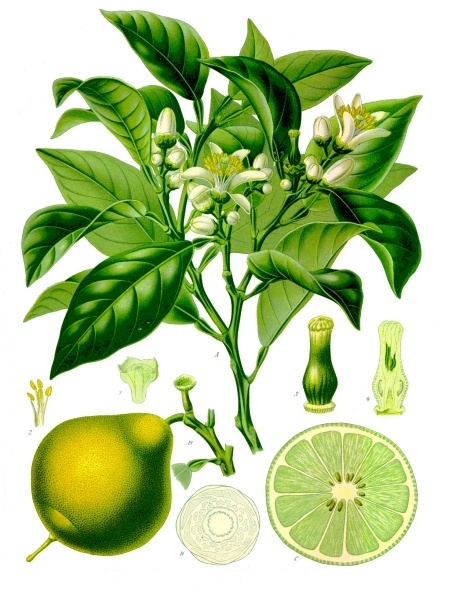
ベルガモット
Cam Bergamot, Cam hương
Citrus bergamia
Bergamot phototoxic mức trung bình. Có dấu hiệu photocarcinogenic trong nghiên cứu thử nghiệm trên động vật khi kết hợp với tia UV.
Bỏng da đã được ghi nhận trong nhiều ca lâm sàng. Bệnh nhân tự bôi bergamot nồng độ cao rồi tắm nắng hoặc dùng sunbed có thể bị bỏng dày toàn lớp da. Trường hợp nặng phải nhập viện.
Đổi sắc tố da kéo dài có thể xảy ra. Hiện tượng này được gọi là berloque dermatitis.
Mang thai. Dữ liệu hiện có không cho thấy bergamot gây nguy hiểm trong thai kỳ.
Bergamot is moderately phototoxic. Animal studies suggest a photocarcinogenic effect when combined with UV light.
Skin burns have been recorded in multiple clinical cases. Self-application of undiluted bergamot followed by sun or sunbed exposure has produced full-thickness burns. Severe cases required hospitalization.
Prolonged skin pigmentation can occur. The condition is known as berloque dermatitis.
Pregnancy. Available data does not indicate that bergamot poses a risk during pregnancy.
| Limonene | 27.4 – 52.0 % |
| Linalyl acetate | 17.1 – 40.4 % |
| Linalool | 1.7 – 20.6 % |
| Sabinene | 0.8 – 12.8 % |
| γ-Terpinene | 5.0 – 11.4 % |
| β-Pinene | 4.4 – 11.0 % |
| α-Pinene | 0.7 – 2.2 % |
| β-Myrcene | 0.6 – 1.8 % |
| Neryl acetate | 0.1 – 1.2 % |
| Bergamottin | 0.68 – 2.75 % |
| 5-Geranyloxy-7-methoxycoumarin | 0.08 – 0.68 % |
| Citropten | 0.01 – 0.35 % |
| Bergapten | 0.11 – 0.33 % |
| Bergaptol | 0 – 0.19 % |
| 5-Methoxy-7-geranoxycoumarin | 0.04 – 0.15 % |
| Psoralen | 0 – 0.0026 % |
Bergamot là một loài cam quýt vùng Calabria, miền Nam nước Ý. Cây cho quả nhỏ, vỏ dày, không ăn được.
Tinh dầu lấy từ vỏ quả. Phương pháp ép (expression), không qua nhiệt.
Họ thực vật Rutaceae. Tên đầy đủ Citrus bergamia Risso và Poit. Đồng nghĩa thực vật Citrus aurantium subsp. bergamia.
Bergamot is a citrus species native to Calabria in southern Italy. The tree produces small, thick-skinned, inedible fruit.
The essential oil is extracted from the peel by cold expression. No heat is applied.
Family Rutaceae. Full botanical name Citrus bergamia Risso & Poit. Botanical synonym Citrus aurantium subsp. bergamia.
Bergamot phototoxic vì các hợp chất furocoumarin trong vỏ quả. Bergapten là chất chính. Bergamottin và psoralen góp phần thêm.
Khi tinh dầu thấm vào da và da tiếp xúc tia UV, bergapten chuyển sang trạng thái kích hoạt. Phân tử kích hoạt gắn vào DNA tế bào da, gây tổn thương.
Hậu quả lâm sàng gồm bỏng, phồng rộp, đổi sắc tố kéo dài. Trên động vật thí nghiệm, có dấu hiệu tăng khả năng sinh khối u khi kết hợp với UV. Bản thân bergamot, khi không có UV, không gây ung thư.
Bergapten cũng được dùng trong y học. PUVA (Psoralen plus UVA) là liệu pháp điều trị bệnh vẩy nến. Trong cosmetic, đặc tính tương tự là rủi ro cần kiểm soát.
Phototoxicity in bergamot comes from furocoumarin compounds in the peel. Bergapten is the principal agent. Bergamottin and psoralen contribute.
When the oil penetrates the skin and the skin is exposed to UV, bergapten enters an activated state. The activated molecule binds to DNA in skin cells and causes damage.
Clinical outcomes include burns, blistering, and prolonged pigmentation. In animal studies, tumour formation increased when bergamot was combined with UV. Bergamot alone, without UV, is not carcinogenic.
Bergapten also has a medical use. PUVA (Psoralen plus UVA) is a treatment for psoriasis. In cosmetic use, the same property becomes a risk to manage.
Bergamot oil thường bị làm giả bằng linalool và linalyl acetate tổng hợp. Hoặc bị pha trộn với cam, chanh, các loại citrus rẻ hơn.
Bergamot có chứng nhận Consorzio del Bergamotto (vùng Calabria) đảm bảo nguyên chất.
Ho oil đã rectified hoặc đã acetylated là một dạng adulterant khác đã được ghi nhận.
Bergamot oil is commonly adulterated with synthetic linalool and linalyl acetate. Or blended with cheaper citrus oils such as orange and lemon.
Bergamot oil certified by Consorzio del Bergamotto (Calabria) is guaranteed unadulterated.
Rectified or acetylated ho oil is another adulterant on record.
Bergamot FCF là phiên bản đã loại bỏ bergapten và các furocoumarin khác bằng chưng cất phân đoạn hoặc lọc.
Không gây phototoxic. Không bị giới hạn nồng độ trên da.
Mùi nhẹ hơn so với bergamot ép lạnh truyền thống. Một phần đặc trưng đã mất theo các phân tử furocoumarin.
Bergamot FCF is a variant with bergapten and other furocoumarins removed by fractional distillation or filtration.
Not phototoxic. No dermal concentration limit applies.
The aroma is lighter than traditional cold-pressed bergamot. Part of the signature character is lost with the furocoumarins.