ネロリ
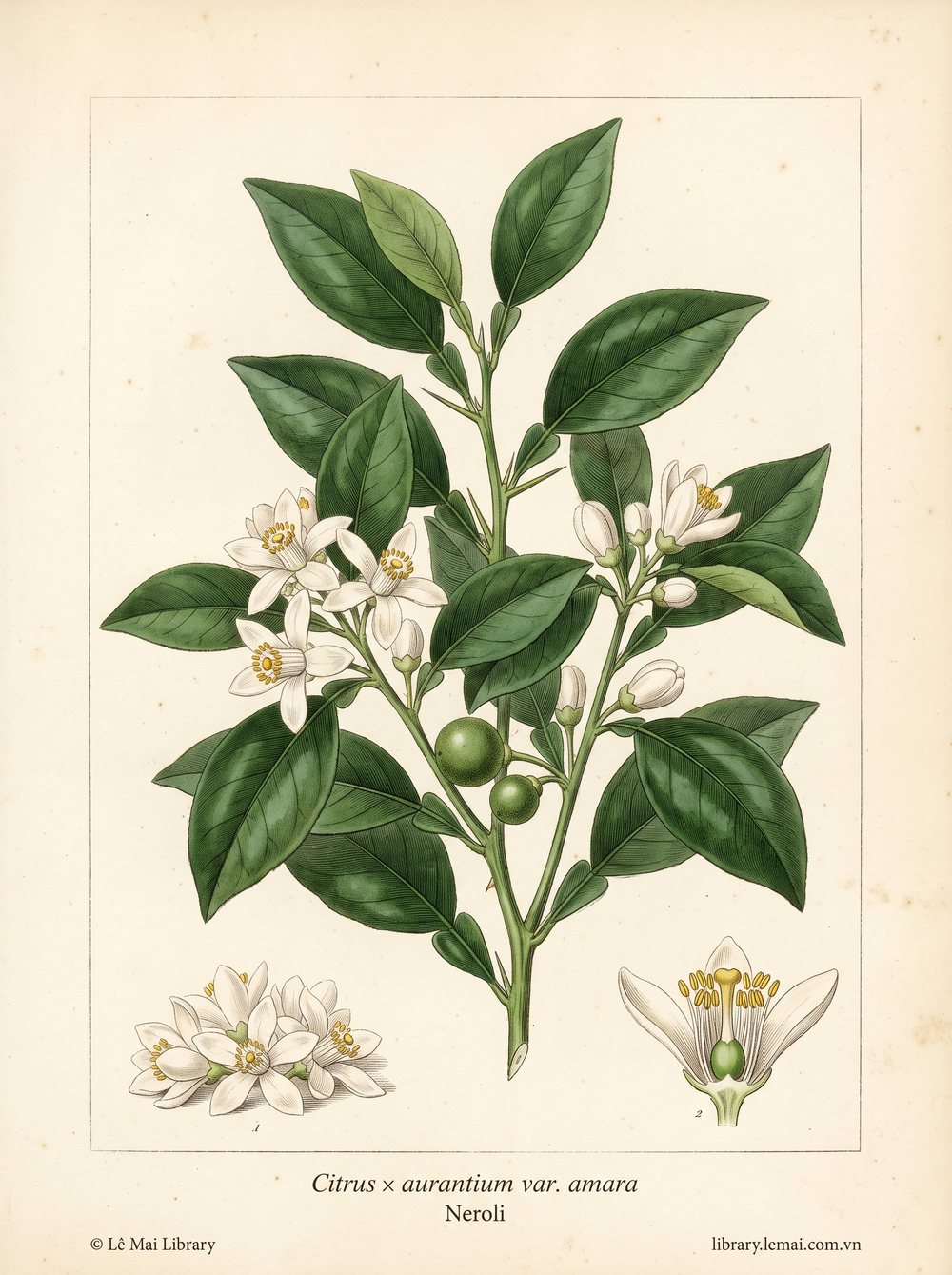
Neroli, Hoa cam đắng
Citrus x aurantium var. amara
Orange blossom, Bitter orange blossom
Neroli được xếp loại GRAS bởi FDA Hoa Kỳ. Không có giới hạn IFRA cụ thể.
Khả năng nhạy ứng da rất thấp. Tinh dầu rất an toàn cho da nhạy cảm.
Không phototoxic, khác với các tinh dầu citrus ép từ vỏ quả. Neroli chưng cất từ hoa, không chứa furocoumarin.
Không có dữ liệu cho thấy nguy hiểm trong thai kỳ. Được xem là một trong những tinh dầu an toàn nhất cho phụ nữ mang thai và trẻ em.
Sản phẩm oxy hóa của linalool có thể gây nhạy ứng da. Bảo quản chai tối, kín, lạnh, thêm chất chống oxy hóa khi formulation.
Phù hợp cho aromatherapy thư giãn, giảm lo âu, hỗ trợ giấc ngủ.
Neroli is classified as GRAS by the US FDA. No specific IFRA restriction.
Very low risk of skin sensitization. Safe for sensitive skin.
Not phototoxic, unlike citrus oils expressed from peel. Neroli is distilled from flowers and contains no furocoumarins.
No data indicates hazard in pregnancy. Considered among the safest oils for pregnant women and children.
Linalool oxidation products may sensitize skin. Store in dark, sealed, refrigerated container and add antioxidant when formulating.
Suited for aromatherapy aimed at relaxation, anxiety reduction, and sleep support.
| Linalool | 31.4 – 54.3 % |
| (+)-Limonene | 6.0 – 17.9 % |
| Linalyl acetate | 0.6 – 10.0 % |
| β-Pinene | 3.5 – 13.0 % |
| (E)-β-Ocimene | 4.6 – 7.0 % |
| α-Terpineol | 1.1 – 5.8 % |
| Geranyl acetate | 0.7 – 4.1 % |
| (E)-Nerolidol | 1.3 – 4.0 % |
| Geraniol | 0.8 – 3.6 % |
| (E,E)-Farnesol | 0.7 – 3.2 % |
| β-Myrcene | 1.4 – 3.1 % |
| Sabinene | 0.4 – 2.8 % |
| Neryl acetate | 0.3 – 2.1 % |
| Nerol | 0.5 – 1.3 % |
Citrus x aurantium var. amara là cây cam đắng (bitter orange). Cây cho ra ba tinh dầu khác nhau: neroli (hoa, chưng cất hơi), bitter orange (vỏ quả, ép lạnh, phototoxic), và petitgrain bigarade (lá và cành non, chưng cất).
Hoa cam trắng tinh khôi, mùi rất thơm. Mỗi hoa nhỏ phải hái bằng tay vào sáng sớm khi sương vẫn còn.
Năng suất tinh dầu thấp, khoảng 0.1 phần trăm khối lượng hoa tươi. Cần khoảng 1,000 kg hoa cam đắng để cho 1 kg neroli oil.
Sản xuất chính Maroc, Tunisia, Ai Cập, Pháp, Italy, Tây Ban Nha. Egyptian neroli và Spanish neroli là hai chuẩn truyền thống.
Tên 'neroli' từ Anna Maria de la Trémoille, công nương Nerola (1646-1700, Italy), người yêu thích và phổ biến mùi hoa cam đắng trong giới quý tộc châu Âu.
Họ Rutaceae, cùng họ với bergamot, lemon, lime, mandarin.
Citrus x aurantium var. amara is the bitter orange tree. The tree yields three distinct essential oils: neroli (flowers, steam-distilled), bitter orange (peel, cold-pressed, phototoxic), and petitgrain bigarade (leaves and young twigs, distilled).
The pure white orange blossoms are intensely fragrant. Each small flower must be hand-picked in the early morning while dew remains.
Oil yield is low, about 0.1 percent of fresh flower weight. About 1,000 kg of bitter orange blossoms are needed for 1 kg of neroli oil.
Main production: Morocco, Tunisia, Egypt, France, Italy, Spain. Egyptian neroli and Spanish neroli are the two traditional benchmarks.
The name 'neroli' comes from Anna Maria de la Trémoille, Princess of Nerola (1646-1700, Italy), who loved and popularized the orange-blossom scent among European nobility.
Family Rutaceae, same family as bergamot, lemon, lime, and mandarin.
Neroli oil đắt và thường bị làm giả nhiều. Reconstituted oils (tổng hợp từ các thành phần riêng lẻ) có thể bị thêm vào hoặc bán dưới tên neroli.
Một adulteration phổ biến là chưng cất hỗn hợp lá và cành non cùng với hoa, sản phẩm này gần petitgrain hơn neroli thật về chemistry và mùi.
Egyptian neroli có linalool cao hơn (43-54%) so với Spanish neroli (31-47%). Spanish có (+)-limonene cao hơn (13-18% so với 6-10%).
Verify chất lượng bằng GC-MS chiral analysis. Tỷ lệ enantiomer của linalool và linalyl acetate là chỉ dấu quan trọng.
Mùi neroli thật: hoa tinh khôi, tươi, ngọt nhẹ, có note xanh và slight bitter, không thể tổng hợp giả mạo hoàn hảo.
Neroli oil is expensive and frequently adulterated. Reconstituted oils (synthesized from individual components) may be added or sold as neroli.
A common adulteration is distilling a mix of leaves and young twigs along with flowers, the result is closer to petitgrain than true neroli in chemistry and aroma.
Egyptian neroli has higher linalool (43-54%) than Spanish neroli (31-47%). Spanish has higher (+)-limonene (13-18% vs 6-10%).
Verify quality by chiral GC-MS analysis. The enantiomer ratio of linalool and linalyl acetate is an important indicator.
True neroli aroma: pristine floral, fresh, lightly sweet, with a green note and slight bitterness, not perfectly replicable by synthesis.
| 4711 Echt Kölnisch Wasser | 4711 · 1799 · nốt đáy base |
| Eau de Cologne Impériale | Guerlain · 1853 · nốt giữa heart |
| Habit Rouge | Guerlain · 1965 · nốt giữa heart |
| Neroli Portofino | Tom Ford · 2011 · nốt chính main note |
| Néroli Outrenoir | Guerlain · 2016 · nốt giữa heart |
Theo danh sách nốt hương do nhà sản xuất công bố. Tên nước hoa và thương hiệu thuộc chủ sở hữu tương ứng.Based on note lists published by each house. Fragrance names and marks belong to their owners.
Trong perfumery, neroli là một trong những note trung tâm của Eau-de-Cologne cổ điển và '4711' truyền thống Đức. Cũng là note quan trọng trong fine fragrance hiện đại.
Trong aromatherapy, neroli được nghiên cứu cho tác dụng giảm lo âu, hạ huyết áp nhẹ, hỗ trợ giấc ngủ. Hoa cam đắng truyền thống được dùng làm thuốc nhuận tràng nhẹ và an thần trong y học châu Âu.
Trong cosmetic, neroli là nguyên liệu cao cấp cho sản phẩm chăm sóc da nhạy cảm, sản phẩm cho phụ nữ mang thai, kem dưỡng đêm.
Hai sản phẩm phụ từ chưng cất neroli: orange flower water (nước hoa cam đắng) là phần nước được tách ra sau chưng cất, dùng trong ẩm thực Trung Đông và Bắc Phi. Orange flower absolute chiết xuất bằng dung môi từ hoa, mùi đậm hơn neroli.
In perfumery, neroli is one of the central notes of classical Eau-de-Cologne and the traditional German '4711'. Also an important note in modern fine fragrance.
In aromatherapy, neroli has been studied for anxiolytic effects, mild antihypertensive action, and sleep support. Bitter orange blossom was traditionally used as a mild laxative and sedative in European medicine.
In cosmetics, neroli is a premium ingredient for sensitive skin care, pregnancy-safe products, and night creams.
Two byproducts of neroli distillation: orange flower water (the aqueous phase separated after distillation), used in Middle Eastern and North African cuisine; and orange flower absolute, solvent-extracted from flowers, with a deeper aroma than neroli.