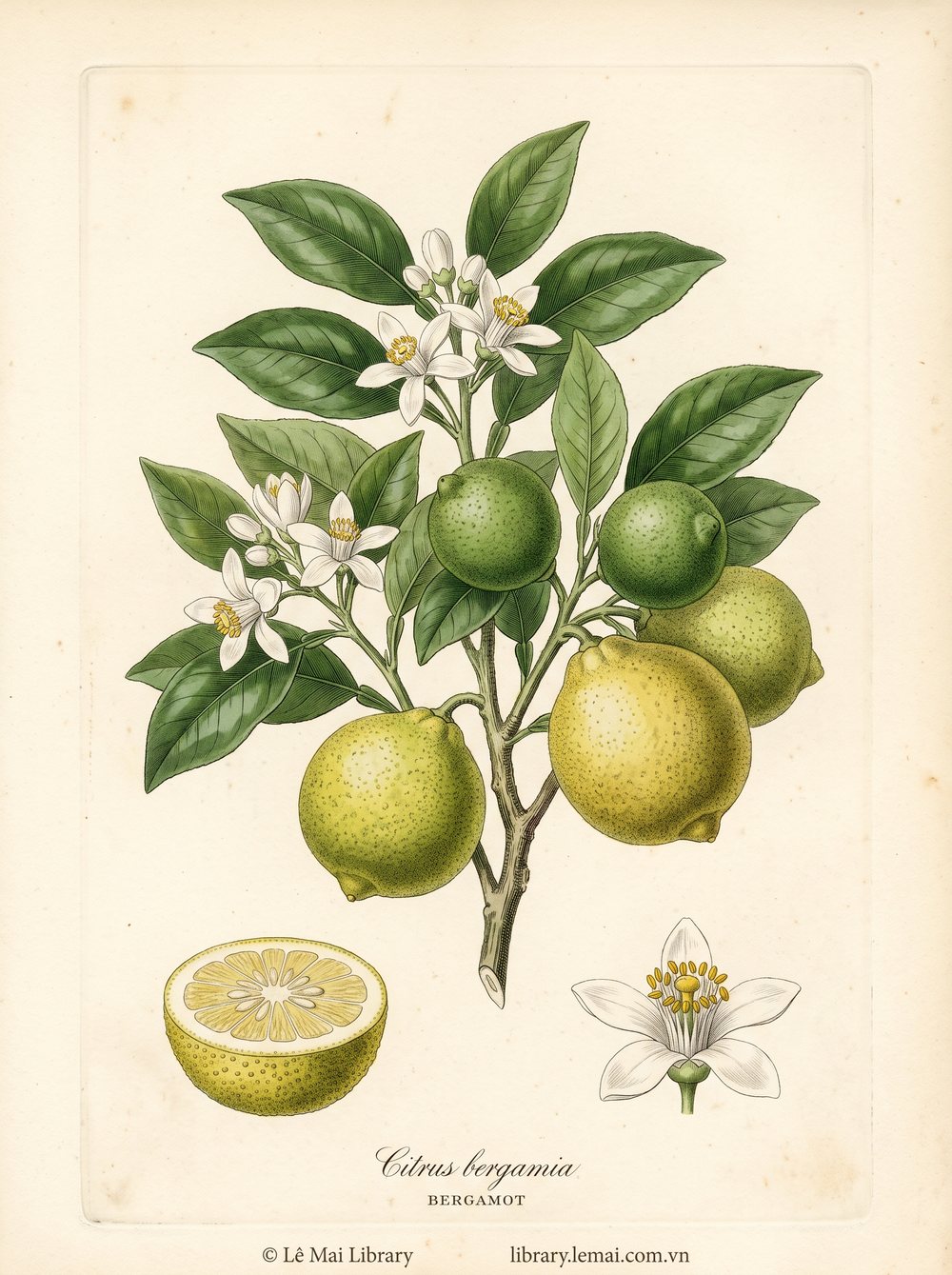
ベルガモット
Cam Bergamot, Cam hương
Citrus bergamia
Bergamot is moderately phototoxic. Animal studies suggest a photocarcinogenic effect when combined with UV light.
Skin burns have been recorded in multiple clinical cases. Self-application of undiluted bergamot followed by sun or sunbed exposure has produced full-thickness burns. Severe cases required hospitalization.
Prolonged skin pigmentation can occur. The condition is known as berloque dermatitis.
Pregnancy. Available data does not indicate that bergamot poses a risk during pregnancy.
| Limonene | 27.4 – 52.0 % |
| Linalyl acetate | 17.1 – 40.4 % |
| Linalool | 1.7 – 20.6 % |
| Sabinene | 0.8 – 12.8 % |
| γ-Terpinene | 5.0 – 11.4 % |
| β-Pinene | 4.4 – 11.0 % |
| α-Pinene | 0.7 – 2.2 % |
| β-Myrcene | 0.6 – 1.8 % |
| Neryl acetate | 0.1 – 1.2 % |
| Bergamottin | 0.68 – 2.75 % |
| 5-Geranyloxy-7-methoxycoumarin | 0.08 – 0.68 % |
| Citropten | 0.01 – 0.35 % |
| Bergapten | 0.11 – 0.33 % |
| Bergaptol | 0 – 0.19 % |
| 5-Methoxy-7-geranoxycoumarin | 0.04 – 0.15 % |
| Psoralen | 0 – 0.0026 % |
Bergamot is a citrus species native to Calabria in southern Italy. The tree produces small, thick-skinned, inedible fruit.
The essential oil is extracted from the peel by cold expression. No heat is applied.
Family Rutaceae. Full botanical name Citrus bergamia Risso & Poit. Botanical synonym Citrus aurantium subsp. bergamia.
Phototoxicity in bergamot comes from furocoumarin compounds in the peel. Bergapten is the principal agent. Bergamottin and psoralen contribute.
When the oil penetrates the skin and the skin is exposed to UV, bergapten enters an activated state. The activated molecule binds to DNA in skin cells and causes damage.
Clinical outcomes include burns, blistering, and prolonged pigmentation. In animal studies, tumour formation increased when bergamot was combined with UV. Bergamot alone, without UV, is not carcinogenic.
Bergapten also has a medical use. PUVA (Psoralen plus UVA) is a treatment for psoriasis. In cosmetic use, the same property becomes a risk to manage.
Bergamot oil is commonly adulterated with synthetic linalool and linalyl acetate. Or blended with cheaper citrus oils such as orange and lemon.
Bergamot oil certified by Consorzio del Bergamotto (Calabria) is guaranteed unadulterated.
Rectified or acetylated ho oil is another adulterant on record.
Bergamot FCF is a variant with bergapten and other furocoumarins removed by fractional distillation or filtration.
Not phototoxic. No dermal concentration limit applies.
The aroma is lighter than traditional cold-pressed bergamot. Part of the signature character is lost with the furocoumarins.