β-Pinene
6,6-Dimethyl-2-methylenebicyclo[3.1.1]heptane
Nopinene · Pseudopinene · Terebenthene
化学組成 · Constituent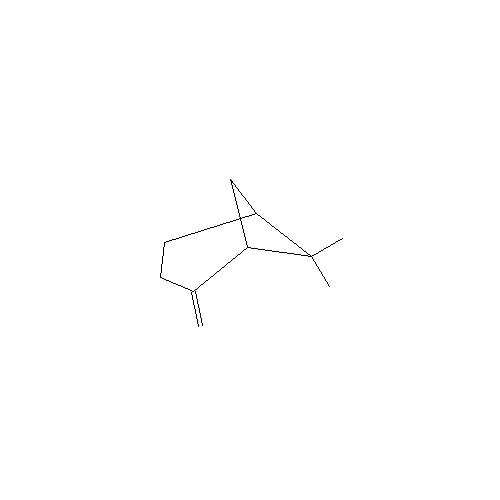
6,6-Dimethyl-2-methylenebicyclo[3.1.1]heptane
Nopinene · Pseudopinene · Terebenthene
化学組成 · Constituent
β-Pinene thường xuất hiện cùng α-pinene trong cùng tinh dầu, nhưng ở hàm lượng thấp hơn. Hợp chất ít có khuynh hướng tạo peroxide gây dị ứng hơn α-pinene.
Trên da. Patch test ở 70 đến 80 phần trăm β-pinene tươi không oxi hoá gây kích ứng ở hầu hết bệnh nhân. Ở 12 phần trăm trên 25 tình nguyện không kích ứng và không gây mẫn cảm. Trên 1.200 bệnh nhân viêm da patch test với 1 phần trăm β-pinene, có hai phản ứng dị ứng, tỉ lệ 0.17 phần trăm.
Đường uống và hô hấp. LD50 cấp tính trên chuột vượt 5 g/kg. LD50 da trên thỏ vượt 5 g/kg. Hơi β-pinene gây kích ứng mắt, mũi, phổi và ảnh hưởng hệ thần kinh trung ương.
Sinh sản. Chuột, chuột nhắt và hamster mang thai cho ăn β-pinene tối đa 43 đến 99 mg/kg/ngày không có tác dụng phụ trên thai và mẹ.
Đột biến gen và ung thư. Không gây đột biến trong Ames test, không gây độc gen ở tế bào hamster. (-)-β-Pinene có hoạt tính chống tăng sinh tế bào ung thư vú, hắc tố và gan ở mức trung bình in vitro.
β-Pinene usually occurs alongside α-pinene in the same oils but at lower levels. It is less prone to form allergenic peroxides than α-pinene.
Skin. Patch testing with 70 to 80 percent fresh unoxidized β-pinene irritated most patients. At 12 percent on 25 volunteers it was neither irritating nor sensitizing. Among 1,200 dermatitis patients patch-tested with 1 percent β-pinene, two allergic reactions occurred at a rate of 0.17 percent.
Oral and respiratory. Acute oral LD50 in rats exceeded 5 g/kg. Acute dermal LD50 in rabbits exceeded 5 g/kg. β-Pinene vapor irritates eyes, nose and lungs, and affects the central nervous system.
Reproductive. Pregnant rats, mice and hamsters given β-pinene at up to 43 to 99 mg/kg/day showed no adverse effects on offspring or maternal survival.
Mutagenicity and cancer. Not mutagenic in the Ames test, not genotoxic in Chinese hamster ovary cells. (-)-β-Pinene shows moderate in vitro antiproliferative activity against breast, melanoma and liver cancer cell lines.
Sau khi tiêm tĩnh mạch cho người, khoảng 43 phần trăm β-pinene được thải qua khí thở ra. Ở thỏ, hợp chất hydroxyl hoá tạo nhiều rượu và axit, trong đó có (E)-pinocarveol và axit myrtenic. (-)-β-Pinene được chuyển hoá ở thỏ thành (-)-10-pinanol và (-)-1-p-menthene-7,8-diol.
After intravenous administration to humans, about 43 percent of β-pinene was excreted in expired air. In rabbits, the compound undergoes hydroxylation to several alcohols and acids including (E)-pinocarveol and myrtenic acid. (-)-β-Pinene is metabolized in rabbits to (-)-10-pinanol and (-)-1-p-menthene-7,8-diol.
Sản phẩm phân huỷ chính của β-pinene khi phản ứng với gốc hydroxyl là nopinone và formaldehyde, kèm theo lượng nhỏ acetone và acetaldehyde. So với α-pinene, β-pinene ít gây mẫn cảm hơn khi cũ và oxi hoá.
The principal degradation products of β-pinene reacting with hydroxyl radicals are nopinone and formaldehyde, with smaller amounts of acetone and acetaldehyde. Compared to α-pinene, β-pinene is less sensitizing when aged and oxidized.