Nerol
(2Z)-3,7-Dimethyl-2,6-octadien-1-ol
(Z)-Geraniol · cis-Geraniol
化学組成 · Constituent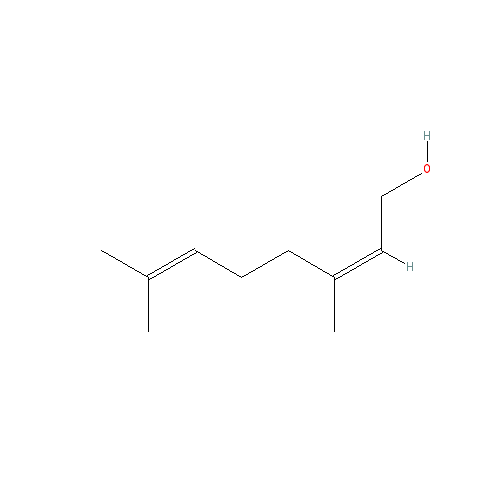
(2Z)-3,7-Dimethyl-2,6-octadien-1-ol
(Z)-Geraniol · cis-Geraniol
化学組成 · Constituent
Nerol là đồng phân Z của geraniol, xuất hiện trong nhiều tinh dầu hoa và lá chanh. Có hoạt tính gây mẫn cảm da đáng kể.
Trên da. Nerol chưa pha loãng gây kích ứng vừa cho da thỏ. Thử nghiệm patch ở 4 phần trăm trên 25 người tình nguyện không gây kích ứng và không gây mẫn cảm. Tuy nhiên, trong nghiên cứu đa trung tâm toàn cầu trên 218 bệnh nhân viêm da nhạy cảm với hương liệu, 13 (6.0 phần trăm) phản ứng với 5 phần trăm nerol. Trong thử nghiệm in vitro, nerol không gây độc ánh sáng.
Độc tính cấp. LD50 cấp tính trên chuột qua đường uống 4.5 g/kg. LD50 cấp tính qua da trên thỏ vượt 5 g/kg.
Sinh sản. Trên phôi gà 72 giờ, nerol có giá trị quái thai 11.9 phần trăm so với 7.9 phần trăm của nhóm chứng. Là đồng phân của linalool, mức độ độc tính sinh sản có thể tương tự. Trong nghiên cứu trên chuột mang thai, linalool đến 1.000 mg/kg/ngày không gây độc thai hay quái thai.
Nerol is the Z-isomer of geraniol, occurring in many floral and citrus leaf oils. The compound shows significant skin sensitization activity.
Skin. Undiluted nerol was moderately irritating to rabbit skin. A 4 percent patch test on 25 volunteers caused no irritation and no sensitization. However, in a worldwide multicenter study on 218 dermatitis patients with proven fragrance sensitization, 13 (6.0 percent) reacted to 5 percent nerol. In an in vitro assay, nerol was non-phototoxic.
Acute toxicity. Acute oral LD50 in rats 4.5 g/kg. Acute dermal LD50 in rabbits exceeded 5 g/kg.
Reproductive. On chick embryos at 72 hours, nerol had a teratogenicity value of 11.9 percent versus 7.9 percent control. As an isomer of linalool, reproductive toxicity may be similar. In pregnant rat studies, linalool up to 1,000 mg/kg/day caused no fetal toxicity or teratogenicity.
| Húng quế chanh · Basil (lemon) | 13.0 – 15.3 % |
| Davana (Artemisia pallens) · Davana | 10.0 % |
| Hoa hồng Damask · Rose (Damask) | 0.8 – 8.7 % |
| Lá chanh vàng · Lemon leaf | 1.3 – 7.4 % |
| Hoa cam · Orange flower | 0.9 – 4.0 % |
| Nước hoa cam · Orange flower water (absolute) | 3.0 – 3.7 % |
| Hoa hồng Provence · Rose (Provence) | 0 – 3.0 % |
| Sim mật ong · Myrtle (honey) | 2.8 % |
| Tía tô đất Úc · Lemon balm (Australian) | 1.9 % |
| Cỏ xạ hương chanh · Thyme (lemon) | 1.9 % |
| Rễ Ghandi (Homalomena) · Ghandi root | 1.4 % |
| Cam Bergamot hoang · Bergamot (wild) | 0.8 – 1.4 % |
| Tía tô đất · Melissa | 0.6 – 1.3 % |
| Neroli | 0.3 – 1.3 % |
| Phong lữ · Geranium | 0 – 1.2 % |
| Màng tang · May chang | 0.2 – 1.1 % |
Khoảng 25 đến 30 phần trăm liều uống 17 đến 55 g nerol được phục hồi dưới dạng cặp acid dicarboxylic, được cho là hình thành qua một diol trung gian từ oxi hoá nhóm methyl allylic. Một phần nerol cũng được phục hồi dưới dạng glucuronide.
Approximately 25 to 30 percent of an oral dose of 17 to 55 g nerol is recovered as a pair of dicarboxylic acids, presumably formed via an intermediate diol from oxidation of one allylic methyl group. Some nerol is also recovered as the glucuronide.
Nerol là đồng phân với geraniol và linalool. Cả ba có hoá học gần nhau và cùng đóng vai trò trong ký họa mùi hoa hồng.
Nerol is isomeric with geraniol and linalool. All three share close chemistry and contribute to rose aroma signatures.