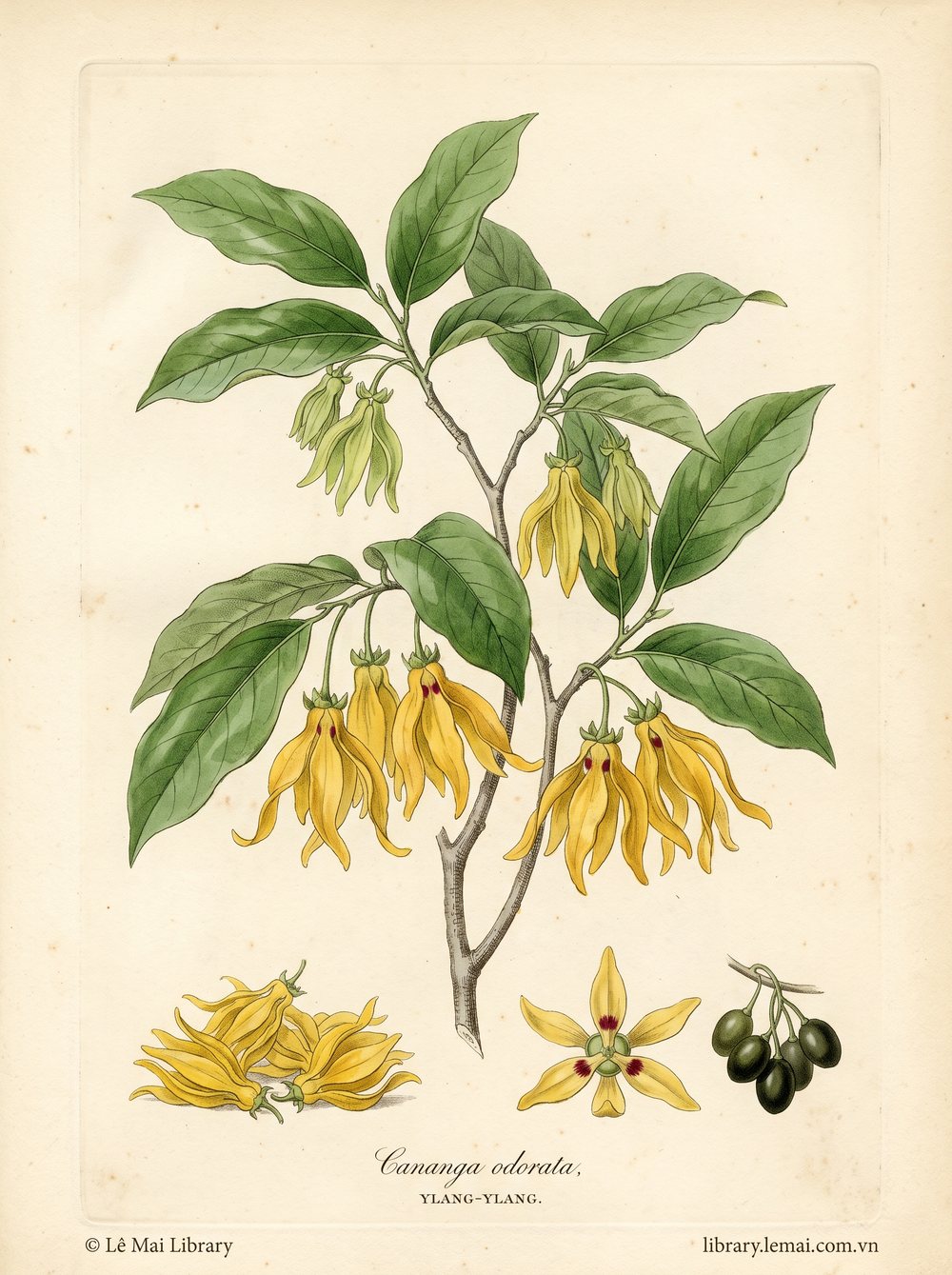
イランイラン
Ngọc lan tây
Cananga odorata
Cananga
Ylang-ylang được xếp loại GRAS bởi FDA Hoa Kỳ.
Khả năng nhạy ứng da thấp ở các grade thông thường. Trong 25 người tình nguyện ở nồng độ 10 phần trăm: không kích ứng hoặc nhạy ứng.
Tỷ lệ phản ứng da: trong 1,200 bệnh nhân viêm da tiếp xúc thử với 2 phần trăm: 13 phản ứng (1.1 phần trăm). Tỷ lệ trung bình so với essential oils khác.
Khuyến cáo dermal tối đa 0.8 phần trăm cho extra, I, II grades. Complete có thể cao hơn.
Không phototoxic. Không có dữ liệu cho thấy nguy hiểm trong thai kỳ.
Đặc biệt: ylang-ylang có 5 grades khác nhau tùy vào fraction của chưng cất, Extra (đầu tiên, đắt nhất), I, II, III, và Complete (toàn bộ). Mỗi grade có mùi và ứng dụng khác nhau.
Ylang-ylang is classified as GRAS by the US FDA.
Low skin sensitization risk at usual grades. In 25 volunteers at 10 percent: no irritation or sensitization.
Skin reaction rate: in 1,200 contact dermatitis patients tested at 2 percent: 13 reactions (1.1 percent). Average rate compared with other essential oils.
Recommended dermal maximum 0.8 percent for extra, I, II grades. Complete may be higher.
Not phototoxic. No data indicates hazard in pregnancy.
Notable: ylang-ylang has 5 different grades based on distillation fractions, Extra (first, most expensive), I, II, III, and Complete (whole). Each grade has different aroma and use.
| Linalool | 11.0 – 25.0 % |
| Geranyl acetate | 5.0 – 18.0 % |
| β-Caryophyllene | 5.0 – 15.0 % |
| Benzyl acetate | 3.0 – 12.0 % |
| Methyl benzoate | 2.0 – 10.0 % |
| p-Cresyl methyl ether | 1.0 – 8.0 % |
| Methyl salicylate | 0.5 – 5.0 % |
| α-Farnesene | 1.0 – 8.0 % |
| Benzyl benzoate | 1.0 – 6.0 % |
| Germacrene D | 1.0 – 5.0 % |
Cananga odorata là cây gỗ nhiệt đới có nguồn gốc Philippines, Indonesia. Hoa vàng dài như ribbon, mùi cực kỳ nồng nàn.
Tên 'ylang-ylang' từ Filipino 'ilang-ilang', nghĩa 'wilderness' hoặc 'rare'.
Sản xuất chính: Comoros, Madagascar (lớn nhất), Indonesia, Philippines.
Hoa hái bằng tay vào sáng sớm. Chưng cất kéo dài 14-24 giờ, phân thành 5 fractions:
Extra: 1-2 giờ đầu, đắt nhất, mùi đậm nhất, dùng fine perfumery.
I: 3-4 giờ tiếp, vẫn premium.
II: 5-7 giờ, dùng perfumery thương mại.
III: phần cuối, mùi gỗ hơn, rẻ nhất.
Complete: toàn bộ quá trình không phân đoạn, dùng aromatherapy.
Cananga oil (từ var. macrophylla) khác, chemistry tương tự nhưng mùi 'thô' hơn.
Họ Annonaceae.
Cananga odorata is a tropical tree native to the Philippines and Indonesia. Long ribbon-like yellow flowers with an intensely fragrant aroma.
The name 'ylang-ylang' from Filipino 'ilang-ilang', meaning 'wilderness' or 'rare'.
Main production: Comoros, Madagascar (largest), Indonesia, Philippines.
Flowers hand-picked at dawn. Distillation runs 14-24 hours, fractionated into 5 grades:
Extra: first 1-2 hours, most expensive, deepest aroma, used in fine perfumery.
I: next 3-4 hours, still premium.
II: 5-7 hours, used in commercial perfumery.
III: final portion, woodier aroma, cheapest.
Complete: the entire distillation without fractionation, used in aromatherapy.
Cananga oil (from var. macrophylla) differs, similar chemistry but cruder aroma.
Family Annonaceae.
Ylang-ylang bị làm giả thường xuyên. Adulterant phổ biến: synthetic linalool, geranyl acetate; gurjun balsam; cananga oil (rẻ hơn ylang); benzyl benzoate, propylene glycol.
Verify chất lượng bằng GC-MS chiral analysis. Tỷ lệ linalool và (E,E)-α-farnesene là chỉ dấu chính.
Comoros và Madagascar ylang được coi là chuẩn vàng. Indonesian cũng quality cao.
Phân biệt 5 grades, chỉ Extra và I dùng cho fine perfumery. Complete phổ biến cho aromatherapy.
Ylang-ylang is frequently adulterated. Common adulterants: synthetic linalool, geranyl acetate; gurjun balsam; cananga oil (cheaper than ylang); benzyl benzoate, propylene glycol.
Verify quality by chiral GC-MS analysis. Linalool and (E,E)-α-farnesene ratios are key indicators.
Comoros and Madagascar ylang are the gold standard. Indonesian is also high quality.
Distinguish the 5 grades, only Extra and I are used in fine perfumery. Complete is common in aromatherapy.
| N°5 | Chanel · 1921 · nốt giữa heart |
| Samsara | Guerlain · 1989 · nốt đầu top |
| J'adore | Dior · 1999 · nốt giữa heart |
| Iris Poudre | Frédéric Malle · 2000 · nốt đầu top |
| Eau Mohéli | Diptyque · nốt chính main note |
Theo danh sách nốt hương do nhà sản xuất công bố. Tên nước hoa và thương hiệu thuộc chủ sở hữu tương ứng.Based on note lists published by each house. Fragrance names and marks belong to their owners.
Ylang-ylang là một trong những note floral 'tropical white' đặc trưng, cùng nhóm với tuberose, jasmine, gardenia. Trong perfumery, ylang là note heart quan trọng.
Trong fragrance signature: Chanel No. 5 (1921) dùng ylang đáng kể như note heart. Joy của Patou, Calvin Klein Obsession đều có ylang đậm.
Trong văn hóa Indonesia, Philippines, hoa ylang được rải trên giường cưới như biểu tượng tình yêu.
Trong aromatherapy, ylang-ylang được nghiên cứu cho giảm huyết áp, giảm lo âu, hỗ trợ tâm trạng. Cũng dùng trong massage.
Trong cosmetic, ylang là nguyên liệu cao cấp cho fine fragrance, body lotion, sản phẩm chăm sóc tóc, sản phẩm thư giãn.
Đối với Lê Mai brand quiet luxury VN+JP, ylang-ylang (extra grade) là một trong những signature ingredients tiềm năng, phù hợp với fragrance Á Đông và quiet luxury feminine.
Ylang-ylang is one of the distinctive 'tropical white' floral notes, alongside tuberose, jasmine, and gardenia. In perfumery, ylang is an important heart note.
In signature fragrances: Chanel No. 5 (1921) uses ylang significantly as a heart note. Joy by Patou and Calvin Klein Obsession both feature prominent ylang.
In Indonesian and Philippine culture, ylang flowers are scattered on wedding beds as a symbol of love.
In aromatherapy, ylang-ylang has been studied for lowering blood pressure, anxiety reduction, and mood support. Also used in massage.
In cosmetics, ylang is a premium ingredient for fine fragrance, body lotion, hair care, and relaxation products.
For the Lê Mai quiet luxury VN+JP brand, ylang-ylang (Extra grade) is a potential signature ingredient, aligned with East Asian fragrance and quiet luxury feminine sensibility.