Methyl salicylate
Methyl 2-hydroxybenzoate
2-Hydroxybenzoic acid methyl ester · Wintergreen oil constituent
化学組成 · Constituent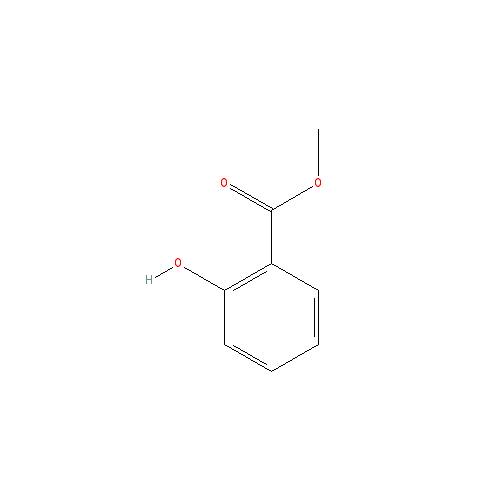
Methyl 2-hydroxybenzoate
2-Hydroxybenzoic acid methyl ester · Wintergreen oil constituent
化学組成 · Constituent
Methyl salicylate là cấu tử chủ đạo của tinh dầu wintergreen và birch ngọt, với hàm lượng trên 90 phần trăm. Có rủi ro độc cấp nghiêm trọng và tương tác thuốc đáng kể. Mức ngộ độc thực tế ở người cao hơn dự đoán từ động vật.
Trên da. Methyl salicylate chưa pha loãng kích ứng vừa cho da thỏ. Thử nghiệm ở 8 phần trăm trên 25 người tình nguyện không gây kích ứng và không gây mẫn cảm. Ở 30 hoặc 60 phần trăm trên 9 người tình nguyện, gây kích ứng. Trong các nghiên cứu trên hàng nghìn bệnh nhân viêm da, tỷ lệ phản ứng dị ứng với 2 phần trăm trung bình 0.33 phần trăm.
Độc tính cấp. LD50 đường uống người lớn ước tính 500 mg/kg, trẻ em LDlo 170 mg/kg. Liều 4 mL methyl salicylate đã gây tử vong cho trẻ sơ sinh. Một thìa cà phê (5 mL) tương đương khoảng 7.0 g salicylate, hay 21.7 viên aspirin. Đường uống là nguyên nhân nhiều ca tử vong do tai nạn ở trẻ em.
Tương tác thuốc. Methyl salicylate bôi ngoài da có thể tăng hiệu lực chống đông của warfarin, gây xuất huyết nội. Có ca 22 tuổi với INR tăng cao sau khi bôi gel chứa methyl salicylate lên gối hằng ngày trong 8 ngày.
Sinh sản. Salicylate gây dị tật bẩm sinh phụ thuộc liều ở động vật, đi qua nhau thai. Tiêm phúc mạc 200 hoặc 400 mg/kg trên chuột mang thai ngày 9 và 10 gây giảm phát triển não, gan, phổi, thận thai. Bôi ngoài da chuột không pha loãng 2 g/kg gây chết 25 phần trăm mẹ và tiêu thai 100 phần trăm.
Tim mạch. Bôi 5 g chế phẩm 30 phần trăm methyl salicylate gây ức chế tiểu cầu đáng kể sau 6 giờ, tương đương uống 162 mg aspirin.
Đột biến gen và ung thư. Không gây độc gen trên tế bào hamster Trung Quốc, không gây đột biến trong Ames test. Trong nghiên cứu trên chuột nhắt, tiêm phúc mạc methyl salicylate không tăng tỷ lệ u phổi.
Khuyến nghị an toàn. Liều uống tối đa đề xuất 2.5 mg/kg/ngày, dựa trên NOAEL sinh sản chuột 3 thế hệ 25 mg/kg với hệ số 10. Tương đương giới hạn 2.4 phần trăm qua da.
Methyl salicylate is the dominant constituent of wintergreen and sweet birch oils, often over 90 percent. The compound carries serious acute toxicity risk and significant drug interactions. Actual human poisoning levels exceed predictions from animal data.
Skin. Undiluted methyl salicylate was moderately irritating to rabbit skin. An 8 percent test on 25 volunteers caused no irritation and no sensitization. At 30 or 60 percent on 9 volunteers, it was irritating. Across thousands of dermatitis patients, average allergic reaction rate to 2 percent was 0.33 percent.
Acute toxicity. Adult oral LD50 estimated at 500 mg/kg, child LDlo 170 mg/kg. A 4 mL dose of methyl salicylate has been fatal in infants. One teaspoon (5 mL) is equivalent to approximately 7.0 g of salicylate, or 21.7 adult aspirin tablets. Oral ingestion has been the cause of many accidental child deaths.
Drug interactions. Topical methyl salicylate can potentiate warfarin's anticoagulant effect, causing internal hemorrhage. A 22-year-old presented with elevated INR after applying methyl salicylate-containing gel to knees daily for 8 days.
Reproductive. Salicylates cause dose-dependent congenital abnormalities in animals and cross the placenta. Ip injection of 200 or 400 mg/kg in pregnant rats on gestational days 9 and 10 caused reduced development of fetal brain, liver, lung and kidney. Topical application of undiluted 2 g/kg on rats killed 25 percent of mothers and resorbed 100 percent of embryos.
Cardiovascular. Applying 5 g of a 30 percent methyl salicylate preparation caused significant platelet inhibition after 6 hours, equivalent to ingesting 162 mg of aspirin.
Mutagenicity and cancer. Non-genotoxic in Chinese hamster cells, non-mutagenic in the Ames test. In a mouse study, ip injection of methyl salicylate did not increase lung tumor incidence.
Safety recommendation. Proposed maximum oral dose 2.5 mg/kg/day, based on rat 3-generation reproductive NOAEL of 25 mg/kg with uncertainty factor 10. Equivalent to dermal limit 2.4 percent.
| Lộc đề · Wintergreen | 96.0 – 99.5 % |
| Bạch dương ngọt · Birch (sweet) | 90.4 % |
| Ngọc lan tây · Ylang-ylang | 0 – 10.4 % |
| Hoa huệ Mexico · Tuberose | 8.4 % |
| Hoa Cassie · Cassie | < 5.0 % |
| Bakul (Mimusops elengi) · Bakul | 1.9 % |
Sau khi bôi ngoài da, methyl salicylate được chuyển hoá rộng thành salicylic acid trong da và mô dưới da người. Đường uống được thuỷ phân nhanh và rộng thành salicylic acid ở chuột và chó, ở người chậm hơn. Sau khi uống 0.42 mL trên 6 người tình nguyện, trung bình 39 phần trăm sau 15 phút và 21 phần trăm sau 90 phút methyl salicylate nguyên dạng được tìm thấy trong máu.
Hấp thu qua da đáng kể. Trong test in vitro trên da người, lượng đi qua biểu bì dao động 11.0 đến 32.0 phần trăm. In vivo, hấp thu qua da ước tính 12.0 đến 20.0 phần trăm sau 10 giờ. Hấp thu cao hơn từ nồng độ thấp hơn.
Vận chuyển vào sữa mẹ và dịch sinh học khác. Trong các ca ngộ độc, methyl salicylate được phát hiện trong nước bọt, mật, sữa, dịch tuỷ sống, dịch khớp và phúc mạc.
After topical application, methyl salicylate is extensively metabolized to salicylic acid in human dermal and subcutaneous tissues. Oral methyl salicylate is rapidly and extensively hydrolysed to salicylic acid in rats and dogs, more slowly in humans. After oral ingestion of 0.42 mL in 6 volunteers, a mean of 39 percent after 15 minutes and 21 percent after 90 minutes of unchanged methyl salicylate was found in blood.
Significant dermal absorption. In vitro tests on human skin showed 11.0 to 32.0 percent passing through the epidermis. In vivo, dermal absorption is estimated at 12.0 to 20.0 percent over 10 hours. Absorption is higher from lower concentrations.
Transfer into breast milk and other biological fluids. In poisoning cases, methyl salicylate has been detected in saliva, bile, milk, spinal, synovial and peritoneal fluid.
Methyl salicylate được dùng rộng rãi trong sản phẩm bôi ngoài da điều trị nhiễm trùng và làm chất kích thích phản kích cho rối loạn thấp khớp. Một số nguồn cũ dùng 'methyl salicylate' và 'wintergreen oil' như từ đồng nghĩa. Là phenol thế, methyl salicylate là acid yếu có thể ăn mòn mô.
Ngộ độc methyl salicylate có lịch sử nổi tiếng về tiên lượng xấu. Một báo cáo từ 1937 cho thấy 25 trên 43 ca ở Mỹ (59 phần trăm) tử vong. Tại Đông Nam Á, đóng gói và ghi nhãn không đầy đủ dẫn đến nhiều ca ngộ độc.
Methyl salicylate is widely used in topical preparations for skin infections and as a counterirritant for rheumatic disorders. Some older sources use 'methyl salicylate' and 'wintergreen oil' as synonyms. As a substituted phenol, methyl salicylate is a weak acid that can be corrosive to tissues.
Methyl salicylate poisoning has a notorious history of poor prognosis. A 1937 report showed 25 of 43 US cases (59 percent) were fatal. In Southeast Asia, inadequate labeling and packaging have led to numerous poisoning cases.