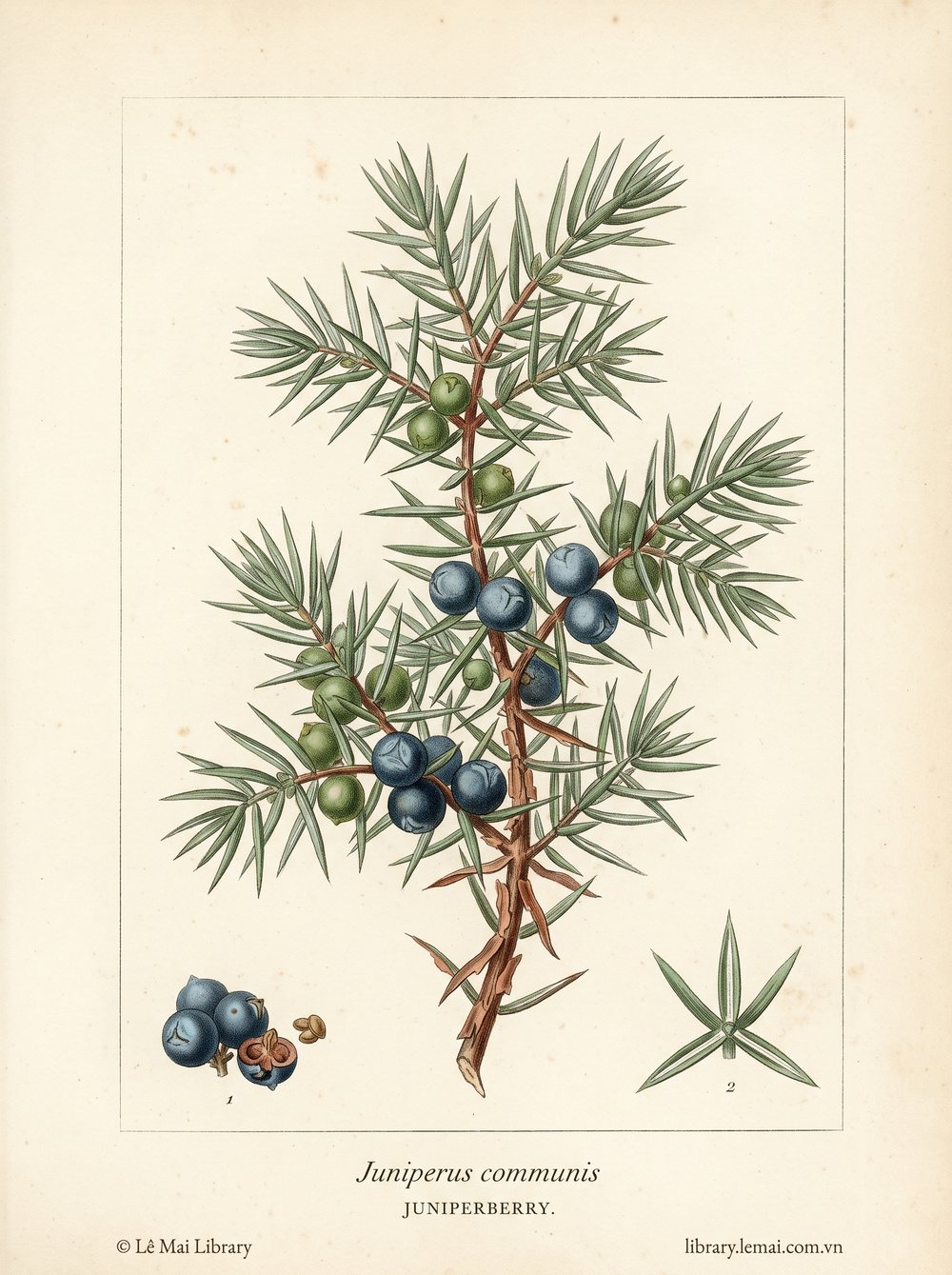
ジュニパーベリー
Bách xù (quả)
Juniperus communis
Juniper
Sản phẩm oxy hóa của α-pinene có thể gây nhạy ứng da.
Bảo quản chai tối, kín, lạnh. Thêm chất chống oxy hóa.
Có GRAS status.
Không có lý do để xem juniperberry oil chưa oxy hóa là nguy hiểm. Hai lý do tại sao juniperberry có 'tiếng xấu':
1) Nhầm lẫn giữa juniper (Juniperus communis) và savin (Juniperus sabina), savin chắc chắn gây sảy thai, juniperberry thì không.
2) Quả juniper trong gin có tiếng abortifacient, nhưng nồng độ tinh dầu trong gin chỉ 0.006 phần trăm, không thể gây tác dụng đáng kể. Phần lớn juniperberry oil thương mại là phụ phẩm của gin, từ trái lên men, không thơm lắm.
Lá juniper chứa isocupressic acid gây sảy thai ở gia súc, chất này không có trong tinh dầu quả.
Cảnh báo kidney irritation trong Commission E Monograph không có cơ sở, nghiên cứu 28 ngày trên chuột với liều 1000 mg trên kg không gây thay đổi chức năng/hình thái thận. Juniperberry oil có hoạt tính bảo vệ thận.
Oxidation products of α-pinene may sensitize skin.
Store in dark, sealed, refrigerated container. Add an antioxidant.
GRAS status.
There is no reason to regard unoxidized juniperberry oil as hazardous. Two reasons for its 'tainted' reputation:
1) Confusion between juniper (Juniperus communis) and savin (Juniperus sabina), savin is certainly abortifacient, juniperberry is not.
2) Juniper berries in gin have an abortifacient reputation, but essential oil concentration in gin is only 0.006 percent, too low to cause meaningful effect. Most commercial juniperberry oil is a gin by-product from fermented fruits, not very aromatic.
Juniper needles contain isocupressic acid, which is abortifacient in cattle, but this constituent is not in the berry oil.
The Commission E Monograph kidney irritation warning has no basis, a 28-day rat study at 1000 mg per kg caused no kidney function or morphological changes. Juniperberry oil shows renoprotective activity.
| α-Pinene | 24.1 – 55.4 % |
| Sabinene | 0 – 28.8 % |
| β-Myrcene | 0 – 22.0 % |
| Terpinen-4-ol | 1.5 – 17.0 % |
| (+)-Limonene | 0 – 10.9 % |
| β-Pinene | 2.1 – 6.0 % |
| γ-Terpinene | 0 – 5.8 % |
| δ-3-Carene | 0 – 3.0 % |
| α-Terpinene | 0 – 2.6 % |
| β-Caryophyllene | 1.3 – 2.2 % |
| p-Cymene | 0 – 2.0 % |
| Terpinolene | 0 – 1.9 % |
| Azzaro pour Homme | Azzaro · 1978 · nốt giữa heart |
| Original Santal | Creed · 2005 · nốt đầu top |
| Gypsy Water | Byredo · nốt đầu top |
| Orphéon | Diptyque · nốt chính main note |
| Blue Santal | Comme des Garçons · nốt chính main note |
Theo danh sách nốt hương do nhà sản xuất công bố. Tên nước hoa và thương hiệu thuộc chủ sở hữu tương ứng.Based on note lists published by each house. Fragrance names and marks belong to their owners.
Juniperus communis là cây bụi/thông nhỏ vùng ôn đới Bắc bán cầu. Quả mọng đen-xanh chứa tinh dầu thơm, là gia vị thiết yếu cho gin.
Sản xuất chính từ phụ phẩm gin (trái đã lên men), oil này không thơm lắm. Oil chất lượng cao đến từ chưng cất quả tươi.
Họ Cupressaceae. Cùng họ với cypress, cedarwood (Texan/Virginian).
Juniperus communis is a small shrub or tree of the Northern Hemisphere temperate zone. The blue-black berries contain aromatic oil, essential to gin production.
Main production is as a gin by-product (from fermented fruits), this oil is not very aromatic. High-quality oil comes from distilling fresh berries.
Family Cupressaceae. Same family as cypress, cedarwood (Texan/Virginian).
Có thể bị làm giả bằng oil từ trái lên men, oil gỗ và cành juniper, oil turpentine, phân đoạn terpene hydrocarbon. So sánh phân tích cho thấy 15 thành tố vi lượng trong oil chưng cất phòng thí nghiệm có thể không có trong oil thương mại.
May be adulterated with fermented-fruit oil, juniper wood and twig oil, turpentine oil, terpene hydrocarbon fractions. Comparative analysis showed 15 minor constituents present in lab-distilled oil may be missing in commercial oil.