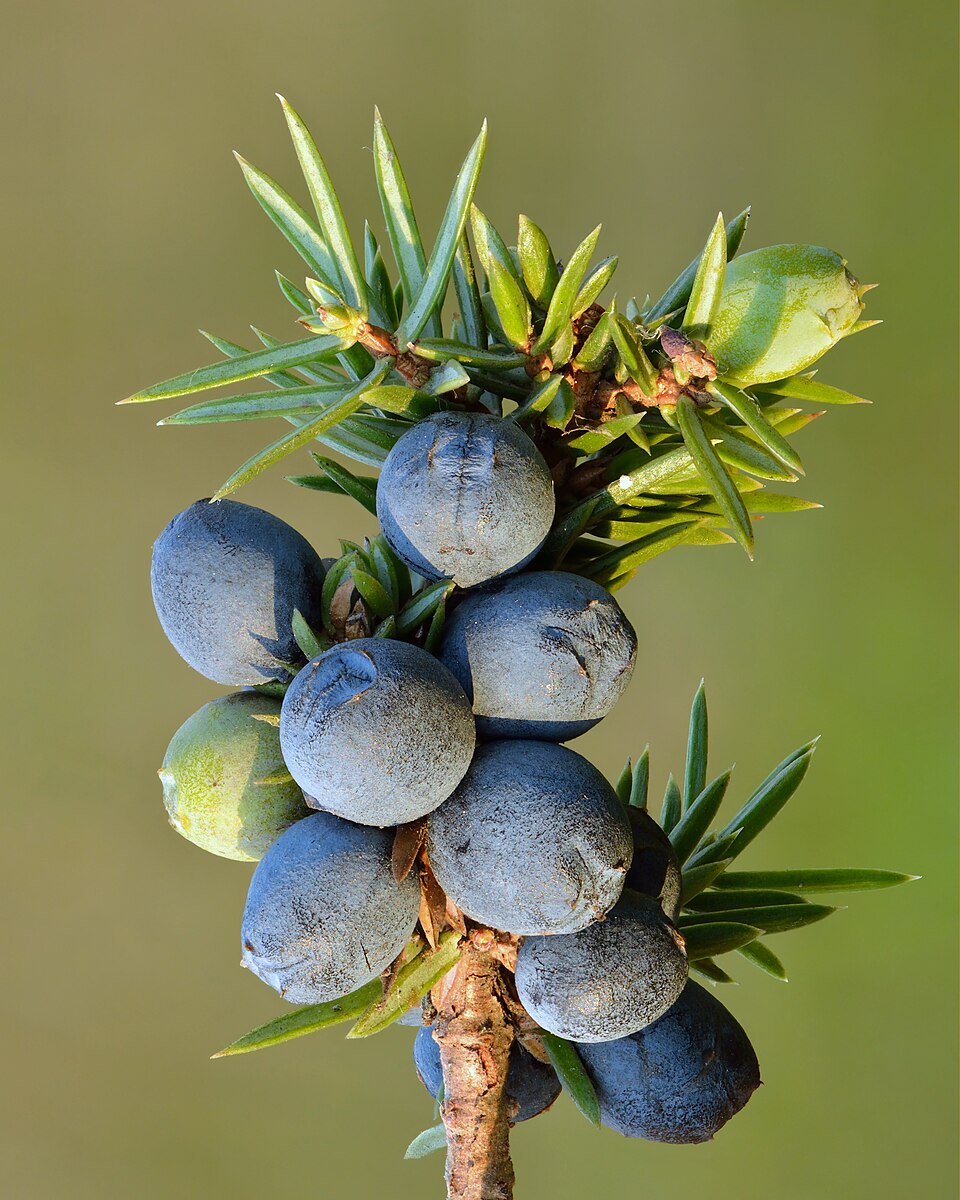
ジュニパーベリー
Bách xù (quả)
Juniperus communis
Juniper
Oxidation products of α-pinene may sensitize skin.
Store in dark, sealed, refrigerated container. Add an antioxidant.
GRAS status.
There is no reason to regard unoxidized juniperberry oil as hazardous. Two reasons for its 'tainted' reputation:
1) Confusion between juniper (Juniperus communis) and savin (Juniperus sabina), savin is certainly abortifacient, juniperberry is not.
2) Juniper berries in gin have an abortifacient reputation, but essential oil concentration in gin is only 0.006 percent, too low to cause meaningful effect. Most commercial juniperberry oil is a gin by-product from fermented fruits, not very aromatic.
Juniper needles contain isocupressic acid, which is abortifacient in cattle, but this constituent is not in the berry oil.
The Commission E Monograph kidney irritation warning has no basis, a 28-day rat study at 1000 mg per kg caused no kidney function or morphological changes. Juniperberry oil shows renoprotective activity.
| α-Pinene | 24.1 – 55.4 % |
| Sabinene | 0 – 28.8 % |
| β-Myrcene | 0 – 22.0 % |
| Terpinen-4-ol | 1.5 – 17.0 % |
| (+)-Limonene | 0 – 10.9 % |
| β-Pinene | 2.1 – 6.0 % |
| γ-Terpinene | 0 – 5.8 % |
| δ-3-Carene | 0 – 3.0 % |
| α-Terpinene | 0 – 2.6 % |
| β-Caryophyllene | 1.3 – 2.2 % |
| p-Cymene | 0 – 2.0 % |
| Terpinolene | 0 – 1.9 % |
Juniperus communis is a small shrub or tree of the Northern Hemisphere temperate zone. The blue-black berries contain aromatic oil, essential to gin production.
Main production is as a gin by-product (from fermented fruits), this oil is not very aromatic. High-quality oil comes from distilling fresh berries.
Family Cupressaceae. Same family as cypress, cedarwood (Texan/Virginian).
May be adulterated with fermented-fruit oil, juniper wood and twig oil, turpentine oil, terpene hydrocarbon fractions. Comparative analysis showed 15 minor constituents present in lab-distilled oil may be missing in commercial oil.