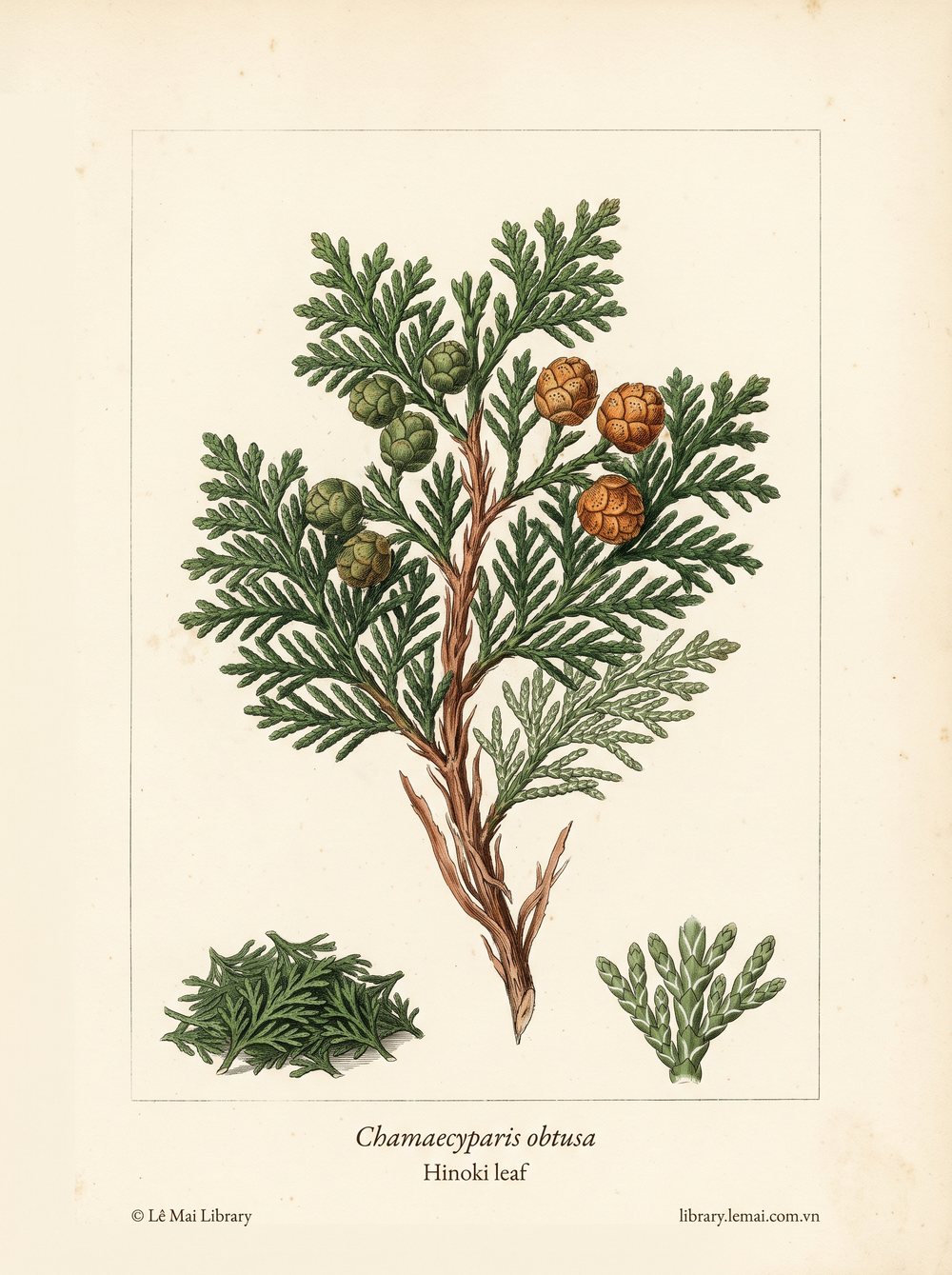
ヒノキ リーフ
Hinoki (lá)
Chamaecyparis obtusa
Hinoki false cypress (var. obtusa), Formosan hinoki (var. formosana)
Không có chống chỉ định cụ thể trong dữ liệu hiện có.
Không có thông tin về phản ứng da hoặc độc tính cấp cho hinoki leaf oil.
Không chứa carcinogen đã biết. (+)-Limonene và γ-eudesmol có hoạt tính chống ung thư.
Hinoki leaf oil induced CYP2B1 ở chuột thí nghiệm, không ở mức gợi ý tương tác thuốc đáng kể.
Var. formosana (Formosan hinoki) đã được UNEP-WCMC đề xuất CITES bổ sung vào danh sách thực vật đe dọa.
No specific contraindications in available data.
No information on dermal reactions or acute toxicity for hinoki leaf oil.
Contains no known carcinogens. (+)-Limonene and γ-eudesmol display anticarcinogenic activity.
Hinoki leaf oil induced CYP2B1 in rat studies, not at a level suggesting significant drug interaction.
Var. formosana (Formosan hinoki) has been proposed by UNEP-WCMC for CITES addition to the threatened plant list.
| α-Pinene | Major |
| Longifolene | Major |
| Sabinene | Variable |
| Thujopsene | Variable |
| Elemol | Variable |
Chamaecyparis obtusa là cây thân gỗ đặc hữu Nhật Bản và Đài Loan. Gỗ hinoki là một trong những vật liệu xây dựng quý giá nhất Nhật Bản, dùng cho đền chùa, nhà gỗ truyền thống.
Hai biến thể: var. obtusa (Hinoki false cypress, Nhật Bản) và var. formosana (Formosan hinoki, Đài Loan).
Họ Cupressaceae. Cùng họ với cypress và cedar Chinese/Port Orford.
Chamaecyparis obtusa is a tree endemic to Japan and Taiwan. Hinoki wood is one of the most prized building materials in Japan, used for temples, shrines, traditional wooden architecture.
Two varieties: var. obtusa (Hinoki false cypress, Japan) and var. formosana (Formosan hinoki, Taiwan).
Family Cupressaceae. Same family as cypress and Chinese/Port Orford cedars.