Terpinen-4-ol
4-Methyl-1-(1-methylethyl)-3-cyclohexen-1-ol
Terpin-4-ol · Terpinenol-4 · 4-Terpineol · 4-Carvomenthol · p-Menth-1-en-4-ol
化学組成 · Constituent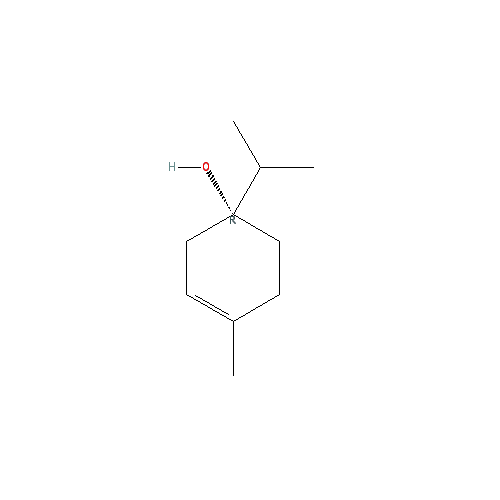
4-Methyl-1-(1-methylethyl)-3-cyclohexen-1-ol
Terpin-4-ol · Terpinenol-4 · 4-Terpineol · 4-Carvomenthol · p-Menth-1-en-4-ol
化学組成 · Constituent
Terpinen-4-ol là cấu tử chính của tinh dầu tea tree và là chất kháng khuẩn quan trọng của tinh dầu này. Dữ liệu cho thấy hợp chất an toàn ở nồng độ thông thường.
Trên da. Ở 5 phần trăm trên 25 tình nguyện không kích ứng và không gây mẫn cảm. Trên 7 bệnh nhân mẫn cảm tea tree, chỉ 1 phản ứng với 1 phần trăm terpinen-4-ol. Ở 10 phần trăm không gây mẫn cảm cho 11 bệnh nhân mẫn cảm tea tree. Hợp chất còn giảm phù do quá mẫn tiếp xúc.
Đường uống. LD50 cấp tính trên chuột 1.3 g/kg. LD50 da trên thỏ vượt 2.5 g/kg.
Thận. Liều 400 mg/kg/ngày uống trong 28 ngày không gây thay đổi chức năng hay hình thái thận.
Mãn tính. Sau khi dùng dài hạn trên chuột nhắt, không có thay đổi bệnh lý đáng kể.
Đột biến gen và ung thư. Không gây đột biến trong Ames test. Có hoạt tính chống ung thư in vitro với nhiều dòng tế bào ung thư người, gồm bạch cầu, ung thư cổ tử cung, ung thư gan và u hắc tố.
Terpinen-4-ol is the principal constituent of tea tree oil and the main antibacterial component. Available data indicates it is safe at standard concentrations.
Skin. At 5 percent on 25 volunteers it was neither irritating nor sensitizing. Among 7 tea tree-sensitized dermatitis patients, only 1 reacted to 1 percent terpinen-4-ol. At 10 percent it was not sensitizing in 11 tea tree-sensitized patients. The compound also reduces edema associated with contact hypersensitivity.
Oral. Acute oral LD50 in rats was 1.3 g/kg. Acute dermal LD50 in rabbits exceeded 2.5 g/kg.
Kidney. Oral dosing at 400 mg/kg/day for 28 days produced no changes in kidney function or morphology.
Chronic. After chronic administration to mice, no discernible pathological changes occurred.
Mutagenicity and cancer. Not mutagenic in the Ames test. Shows in vitro anticancer activity against several human cancer cell lines including leukemia, cervical cancer, liver cancer and melanoma.
| Tràm trà · Tea tree | 30.0 – 48.0 % |
| Plai | 41.7 % |
| Kinh giới ngọt · Marjoram (sweet) | 16.4 – 31.6 % |
| Húng quế rậm lông · Basil (hairy) | 7.5 – 26.8 % |
| Kewda | 0 – 21.0 % |
| Rễ Ghandi (Homalomena) · Ghandi root | 17.2 % |
| Bách xù (quả) · Juniperberry | 1.5 – 17.0 % |
| Vỏ nhục đậu khấu · Mace | 4.4 – 14.0 % |
| Nhục đậu khấu Đông Ấn · Nutmeg (East Indian) | 1.0 – 10.9 % |
| Trà Labrador · Labrador tea | 7.6 % |
| Calamint nhỏ · Calamint (lesser) | 0 – 6.8 % |
| Nhục đậu khấu Tây Ấn · Nutmeg (West Indian) | 3.0 – 6.4 % |
| Lá cà ri · Curry leaf | 6.1 % |
| Hoa oải hương · Lavender | 0 – 6.0 % |
| Pteronia | 5.3 % |
| Saro (Mandravasarotra) · Saro | 3.0 – 5.0 % |
| Bạc hà cay · Peppermint | 0 – 5.0 % |
Terpinen-4-ol khác với α-terpinene và γ-terpinene về độ ổn định và rủi ro mẫn cảm. Hợp chất hiếm khi gây dị ứng và là cấu tử mà các phân tích chất lượng tea tree dựa vào để đảm bảo hoạt tính kháng khuẩn.
Terpinen-4-ol differs from α-terpinene and γ-terpinene in stability and sensitization risk. The compound rarely causes allergy and is the constituent that tea tree quality analyses use to verify antibacterial potency.