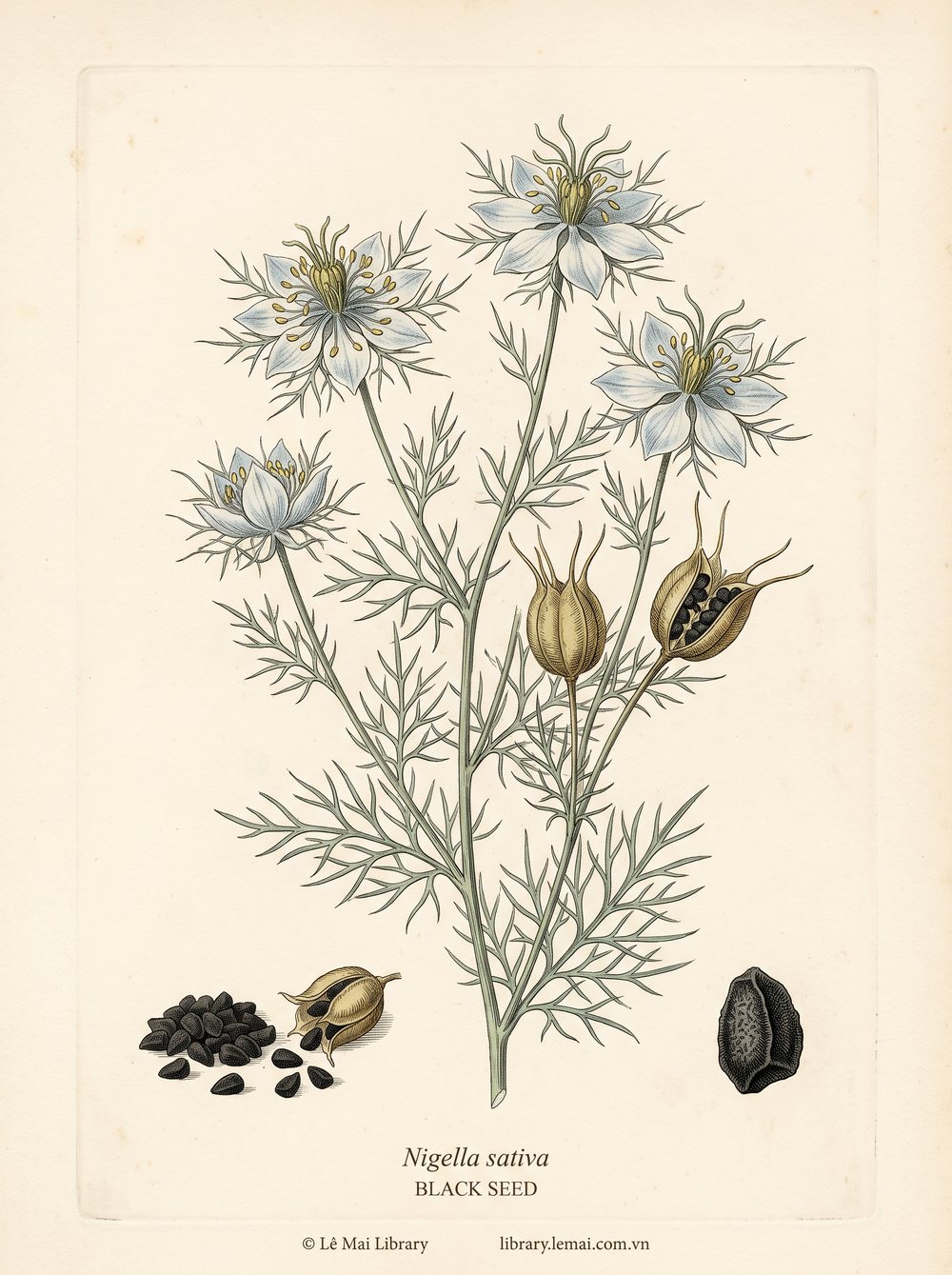
ブラックシード
Hạt đen, Hắc tô, Nigella
Nigella sativa
Black cumin, Black caraway, Roman coriander, Fennel flower, Nutmeg flower
Tương tác thuốc. Gây độc cho bào thai dựa trên hàm lượng thymoquinone. Nhạy ứng da rủi ro trung bình.
Chống chỉ định toàn diện: mang thai, cho con bú.
Đường uống: thận trọng với thuốc điều trị tiểu đường.
Dermal: tránh trên da nhạy cảm, da tổn thương, trẻ dưới 2 tuổi.
Thymoquinone là một chất gây dị ứng tiếp xúc tương đối mạnh. Nhiều ca dermatitis tiếp xúc do bôi black seed oil đã được ghi nhận.
Drug interactions. Fetotoxic based on thymoquinone content. Moderate risk of skin sensitization.
Broad contraindications: pregnancy, breastfeeding.
Oral: caution with diabetes medication.
Dermal: avoid on hypersensitive, diseased or damaged skin, and on children under 2 years.
Thymoquinone is a relatively potent contact allergen. Multiple cases of contact dermatitis from topical black seed oil have been recorded.
| Thymoquinone | 26.8 – 54.8 % |
| p-Cymene | 14.7 – 38.0 % |
| Longifolene | 1.2 – 10.2 % |
| α-Thujene | 1.3 – 10.1 % |
| Carvacrol | 0.5 – 4.2 % |
| α-Cubebene | 0.4 – 3.0 % |
| α-Pinene | 0.2 – 2.4 % |
| (+)-Limonene | 0.7 – 2.3 % |
| β-Pinene | 0.4 – 3.0 % |
| Sabinene | 0.2 – 1.6 % |
Nigella sativa là cây thảo một năm, hạt nhỏ màu đen, vùng Trung Đông và Nam Á. Tên dân gian black cumin, black caraway, fennel flower.
Trồng tại Ấn Độ và Trung Đông. Ít nhà sản xuất tinh dầu hiện nay; dữ liệu thành tố trên là tinh dầu chưng cất hơi từ hạt Iran.
Có chứa thymoquinone vốn là thành tố nghiên cứu y học vì hoạt tính chống ung thư, chống viêm, chống oxy hóa. Hàm lượng thymoquinone càng cao càng có giá trị dược lý, nhưng cũng càng có rủi ro nhạy ứng và độc bào thai.
Nigella sativa is an annual herb with small black seeds, native to the Middle East and South Asia. Folk names black cumin, black caraway, fennel flower.
Cultivated in India and Middle Eastern countries. Few producers currently make the essential oil; the constituent data above is for oil steam-distilled from Iranian seeds.
Contains thymoquinone, a constituent studied in medical research for anticancer, anti-inflammatory and antioxidant activity. Higher thymoquinone gives stronger pharmacological action, but also greater sensitization risk and fetotoxicity.
Có dầu cố định ép từ hạt cũng tên là 'black seed oil'. Dầu cố định chứa đến 0.5 phần trăm tinh dầu, do đó nhiều case dermatitis được báo cáo có thể là từ dầu cố định chứ không phải tinh dầu nguyên chất. Tuy nhiên cả hai đều chứa thymoquinone, nguyên nhân chính của phản ứng.
Hàm lượng thymoquinone biến động lớn theo nguồn. Dầu chưng cất vi sóng từ năm nước khác nhau cho thymoquinone từ 6.2 đến 18.4 phần trăm.
A fixed oil is also pressed from the seeds, also called 'black seed oil'. The fixed oil contains up to 0.5 percent essential oil, so many of the dermatitis cases reported may involve the fixed oil rather than the pure essential oil. Both contain thymoquinone, the main cause of reactions.
Thymoquinone content varies widely by source. Microwave-distilled oils from five countries showed thymoquinone from 6.2 to 18.4 percent.
Nigella sativa hạt là gia vị truyền thống ở Trung Đông, Bắc Phi, Nam Á, rắc trên bánh mì, sa-lát, cà ri. Đây là cách dùng an toàn vì hàm lượng tinh dầu trong hạt nguyên rất thấp.
Tinh dầu là vật khác, tập trung. Phải xử lý như một nguyên liệu dược lý hoạt tính.
Nigella sativa seeds are a traditional spice across the Middle East, North Africa and South Asia, sprinkled on bread, salads, curries. This is a safe use because essential oil content in the whole seed is very low.
The essential oil is a different object, concentrated. It must be handled as a pharmacologically active material.