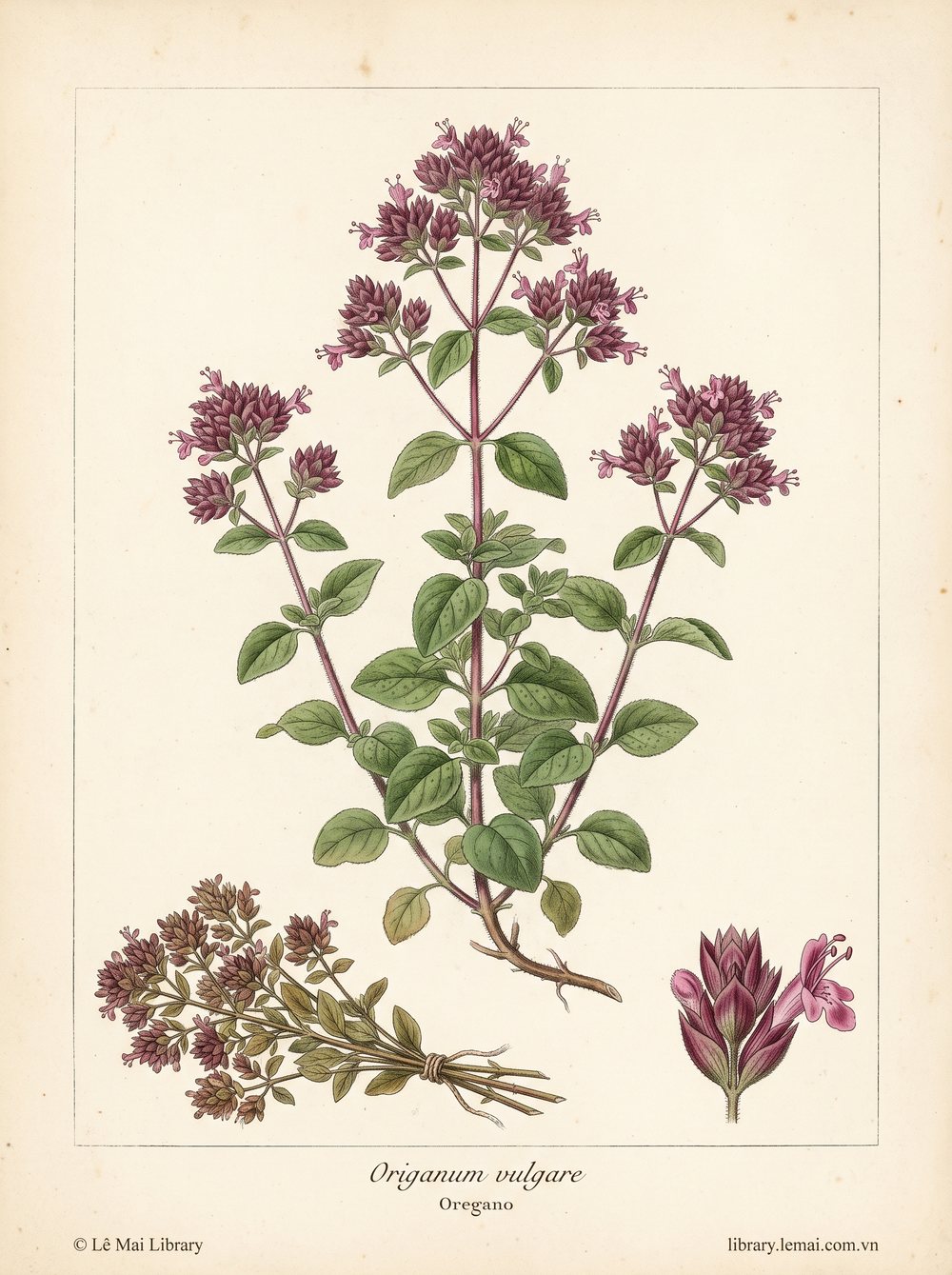
オレガノ
Kinh giới
Origanum vulgare
Wild marjoram, Greek oregano
Carvacrol và thymol là hai phenol chính, có thể chiếm tổng cộng tới 80 phần trăm. Gây kích ứng da và niêm mạc ở nồng độ cao.
Có thể ức chế kết tập tiểu cầu. Cẩn trọng nếu dùng oral với thuốc chống đông máu, sau phẫu thuật lớn, hoặc có rối loạn đông máu.
Cảnh báo oral: thuốc tiểu đường (tương tác với carvacrol và thymol).
Chống chỉ định trong thai kỳ và cho con bú do thiếu dữ liệu an toàn cụ thể.
Tránh đường mắt và niêm mạc.
Carvacrol and thymol are the two main phenols, together up to 80 percent. Skin and mucous membrane irritant at high concentrations.
May inhibit platelet aggregation. Use orally with caution alongside anticoagulants, after major surgery, or with bleeding disorders.
Oral caution: antidiabetic drugs (interaction with carvacrol and thymol).
Contraindicated in pregnancy and breastfeeding due to lack of specific safety data.
Avoid contact with eyes and mucous membranes.
| Carvacrol | 39.8 – 79.8 % |
| Thymol | 0 – 14.0 % |
| p-Cymene | 7.0 – 15.0 % |
| γ-Terpinene | 2.0 – 13.0 % |
| Linalool | 1.0 – 5.0 % |
| β-Caryophyllene | 1.0 – 5.0 % |
| α-Terpineol | 0.5 – 3.0 % |
Origanum vulgare là loài kinh giới dại vùng Địa Trung Hải. Cây nhỏ, lá nhỏ tròn, mùi nồng đặc trưng pizza.
Sản xuất chính Thổ Nhĩ Kỳ, Hy Lạp, Tây Ban Nha, Italy. Greek oregano và Turkish oregano là hai chuẩn truyền thống, chemistry khác nhau nhẹ.
Tên gọi đôi khi gây nhầm lẫn: 'oregano' đề cập tới Origanum vulgare hoặc các loài tương tự rich về carvacrol. 'Marjoram' đôi khi cũng được gọi là 'wild oregano'.
Họ Lamiaceae (Labiatae), cùng họ với marjoram, thyme, basil, rosemary.
Origanum vulgare is a Mediterranean wild oregano. A small plant with small round leaves and a pungent characteristic pizza-like aroma.
Main production: Turkey, Greece, Spain, Italy. Greek oregano and Turkish oregano are the two traditional benchmarks, slightly different chemistry.
The naming can be confusing: 'oregano' refers to Origanum vulgare or similar carvacrol-rich species. 'Marjoram' is sometimes also called 'wild oregano'.
Family Lamiaceae (Labiatae), same family as marjoram, thyme, basil, and rosemary.
Trong ẩm thực Địa Trung Hải, oregano khô là gia vị cho pizza, pasta sốt cà chua, salad Hy Lạp. Lá khô có aroma rộng hơn lá tươi.
Trong herbal medicine, oregano truyền thống dùng cho tiêu hóa và hô hấp. Tinh dầu được nghiên cứu cho hoạt tính kháng khuẩn mạnh.
Trong cosmetic, oregano oil dùng giới hạn do tính chất phenol. Phù hợp cho công thức wash-off như xà phòng và sản phẩm chăm sóc tóc gàu.
In Mediterranean cuisine, dried oregano is a seasoning for pizza, tomato-sauce pasta, and Greek salad. Dried leaves have a broader aroma than fresh.
In herbal medicine, oregano is traditionally used for digestion and respiratory support. The essential oil has been studied for strong antibacterial activity.
In cosmetics, oregano oil is used sparingly due to its phenolic nature. Suited to wash-off formulations like soap and dandruff hair care.