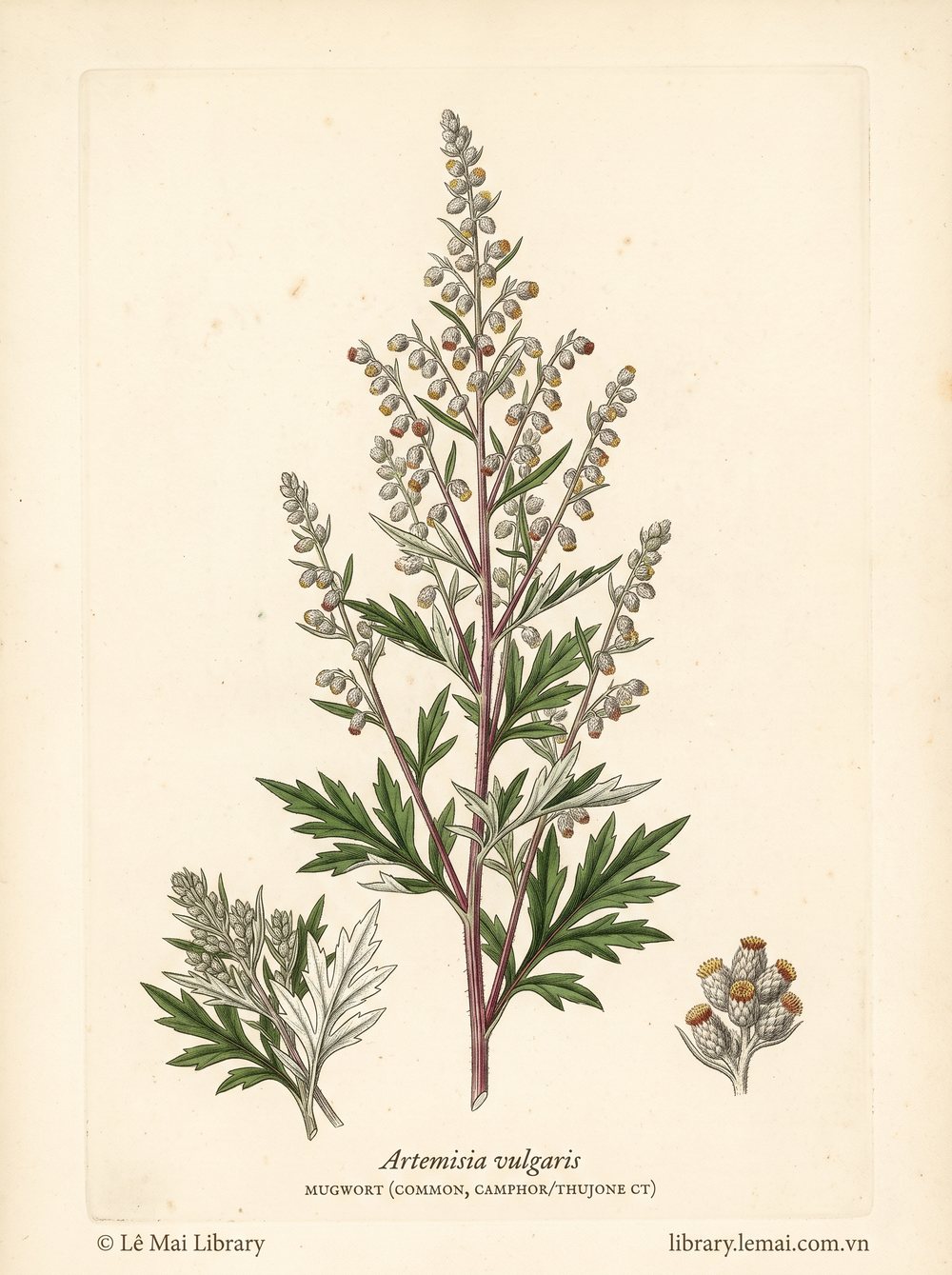
マグワート カンファー
Ngải cứu (CT camphor-thujone)
Artemisia vulgaris
Common mugwort, Indian wormwood
α-Thujone và β-thujone đều có mặt. Tổng thujone có thể tới 30 phần trăm. Neurotoxic, có thể gây co giật ở liều cao.
Camphor 10-25 phần trăm, cũng tăng thêm rủi ro neurotoxic.
Chống chỉ định nghiêm ngặt trong thai kỳ, cho con bú, trẻ em dưới 6 tuổi, người có tiền sử động kinh hoặc bệnh thận.
Liều oral và dermal đều phải rất hạn chế.
α-Thujone and β-thujone are both present. Total thujone may reach 30 percent. Neurotoxic, can cause convulsions at high doses.
Camphor 10-25 percent, adds further neurotoxic risk.
Strictly contraindicated in pregnancy, breastfeeding, children under 6, and individuals with a history of epilepsy or kidney disease.
Both oral and dermal doses must be very limited.
| Camphor | 10.0 – 25.0 % |
| α-Thujone | 5.0 – 18.0 % |
| β-Thujone | 5.0 – 15.0 % |
| 1,8-Cineole | 5.0 – 12.0 % |
| Camphene | 3.0 – 8.0 % |
| α-Pinene | 2.0 – 6.0 % |
Artemisia vulgaris mọc khắp châu Âu, châu Á, Bắc Mỹ. Cây thân thảo lâu năm, cao tới 1.5m, lá xanh sẫm phía trên, xám trắng phía dưới.
Tên 'Indian wormwood' đề cập đến chemotype mọc tại Ấn Độ, đôi khi rich về thujone hơn các vùng khác.
Họ Asteraceae (Compositae), chi Artemisia (cùng chi với wormwood, tarragon, sagebrush).
Artemisia vulgaris grows across Europe, Asia, and North America. A perennial herb up to 1.5m tall with dark green upper leaves and grey-white undersides.
The name 'Indian wormwood' refers to the chemotype grown in India, sometimes richer in thujone than other regions.
Family Asteraceae (Compositae), genus Artemisia (same genus as wormwood, tarragon, and sagebrush).
Trong y học cổ truyền Đông Á, ngải cứu (Artemisia vulgaris) được dùng làm thuốc châm cứu (moxibustion) và trị phụ khoa. Tuy nhiên, tinh dầu chưng cất có rủi ro neurotoxic hoàn toàn khác với việc dùng lá khô.
Tại Việt Nam, ngải cứu là loại rau gia vị quen thuộc, dùng nấu cháo và canh. Liều ăn thấp, qua nhiệt, không nguy hiểm như tinh dầu.
In East Asian traditional medicine, mugwort (Artemisia vulgaris) is used for moxibustion and gynecological remedies. However, the distilled essential oil carries neurotoxic risks completely different from the use of dried leaves.
In Vietnam, ngải cứu is a familiar culinary herb used in porridge and soups. Low intake, cooked, not hazardous like the essential oil.