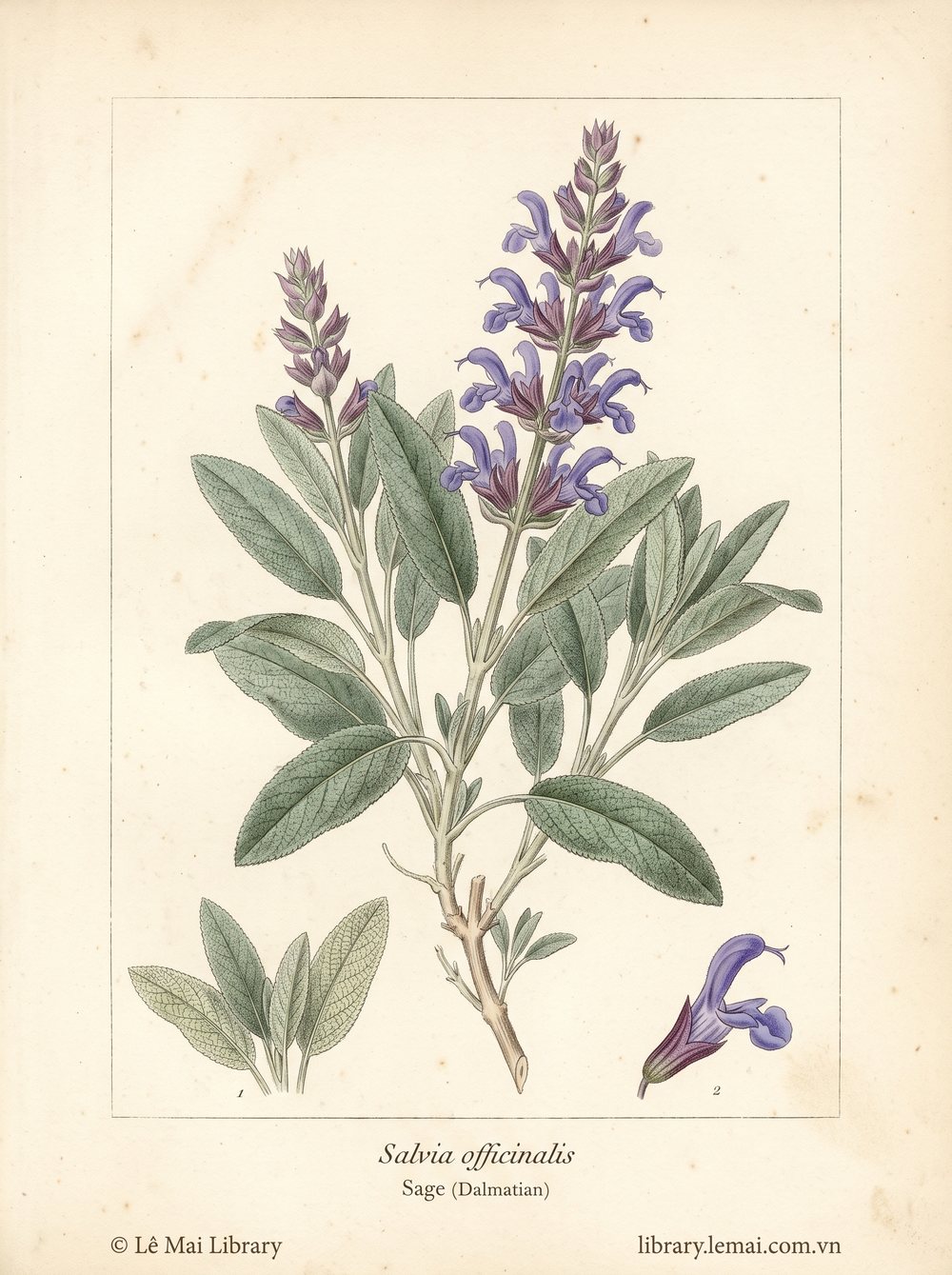
ダルマチアンセージ
Xô thơm Dalmatia
Salvia officinalis
Common sage, Garden sage
α-Thujone và β-thujone tổng cộng có thể tới 60 phần trăm. Cả hai đều neurotoxic, gây co giật ở liều cao.
Camphor 6-25 phần trăm cũng góp phần neurotoxic.
CHỐNG CHỈ ĐỊNH trong thai kỳ và cho con bú.
Chống chỉ định cho trẻ em dưới 6 tuổi và người có tiền sử động kinh.
Khả năng kích ứng da thấp ở người lớn. Trong nghiên cứu trên 25 người tình nguyện ở nồng độ 6 phần trăm: không kích ứng hoặc nhạy ứng.
Tránh dùng oral lượng lớn, có lịch sử ngộ độc và co giật do liều cao.
Verbenone CT (đôi khi gọi 'Spanish sage') có thujone thấp hơn, an toàn hơn nhưng vẫn cần thận trọng.
Sage Dalmatian khác với Sage Spanish (Salvia lavandulifolia), Spanish có thujone thấp hơn nhiều, an toàn hơn cho cosmetic.
α-Thujone and β-thujone together can reach 60 percent. Both are neurotoxic, can cause seizures at high doses.
Camphor 6-25 percent also contributes to neurotoxicity.
CONTRAINDICATED in pregnancy and breastfeeding.
Contraindicated for children under 6 and individuals with a history of epilepsy.
Low skin irritation risk in adults. In 25 volunteers at 6 percent: not irritating or sensitizing.
Avoid large oral doses, historically poisoning and convulsion cases at high doses.
Verbenone CT (sometimes called 'Spanish sage') has lower thujone, safer but caution still required.
Dalmatian sage differs from Spanish sage (Salvia lavandulifolia), Spanish has much lower thujone and is safer for cosmetics.
| α-Thujone | 18.0 – 43.0 % |
| β-Thujone | 3.0 – 36.0 % |
| Camphor | 6.0 – 25.0 % |
| 1,8-Cineole | 5.5 – 13.0 % |
| Camphene | 1.5 – 7.0 % |
| α-Pinene | 1.0 – 6.5 % |
| Borneol | 1.0 – 6.0 % |
| β-Pinene | 1.0 – 5.0 % |
| α-Humulene | 0 – 4.4 % |
Salvia officinalis là cây thân thảo Địa Trung Hải, có lịch sử dùng làm thuốc và gia vị từ thời cổ đại. Tên 'salvia' từ tiếng Latin 'salvare', 'cứu chữa', 'làm khỏe'.
Vùng Dalmatia (Croatia) sản xuất oil chất lượng nhất, gọi là 'Dalmatian sage'. Cũng trồng tại Albania, Bosnia, Hy Lạp, Tây Ban Nha.
Tinh dầu chưng cất từ lá tươi hoặc khô. Hàm lượng thujone biến thiên rất lớn tùy vùng, mùa thu hái, cách chế biến.
Trong ẩm thực, sage Dalmatian được dùng phổ biến, thịt nướng, gà tây Lễ Tạ Ơn, pasta sốt bơ. Lá khô được sử dụng nhiều hơn lá tươi.
Họ Lamiaceae (Labiatae), cùng họ với rosemary, lavender, thyme.
Salvia officinalis is a Mediterranean herb with a long history of medicinal and culinary use since antiquity. The name 'salvia' comes from Latin 'salvare', 'to heal', 'to save'.
The Dalmatia region (Croatia) produces the highest-quality oil, called 'Dalmatian sage'. Also cultivated in Albania, Bosnia, Greece, and Spain.
The essential oil is distilled from fresh or dried leaves. Thujone content varies markedly by region, harvest season, and processing.
In cuisine, Dalmatian sage is widely used, grilled meats, Thanksgiving turkey, butter-sauce pasta. Dried leaves are more common than fresh.
Family Lamiaceae (Labiatae), same family as rosemary, lavender, and thyme.
Sage Dalmatian không thường bị làm giả do giá vừa phải, nhưng có thể bị trộn với clary sage (Salvia sclarea) hoặc Spanish sage (Salvia lavandulifolia).
Verify chemotype bằng GC-MS bắt buộc. Tỷ lệ α-thujone/β-thujone là chỉ dấu chính của Salvia officinalis.
Tránh nhầm với clary sage, clary sage không có thujone đáng kể và an toàn hơn nhiều trong cosmetic.
Sage tươi chứa nhiều glandular trichome chứa tinh dầu, chưng cất ngay sau hái cho năng suất tốt nhất.
Dalmatian sage is not heavily adulterated due to moderate price, but may be mixed with clary sage (Salvia sclarea) or Spanish sage (Salvia lavandulifolia).
Chemotype verification by GC-MS is essential. The α-thujone/β-thujone ratio is the primary marker of Salvia officinalis.
Do not confuse with clary sage, clary sage contains no significant thujone and is much safer in cosmetics.
Fresh sage contains many glandular trichomes with essential oil, distillation immediately after harvest gives the best yield.
| De Los Santos | Byredo · nốt đầu top |
| 7 Cobalt | Loewe · nốt chính main note |
| Viking Cologne | Creed · nốt đáy base |
| Eternal Karst | Aesop · nốt chính main note |
Theo danh sách nốt hương do nhà sản xuất công bố. Tên nước hoa và thương hiệu thuộc chủ sở hữu tương ứng.Based on note lists published by each house. Fragrance names and marks belong to their owners.
Sage Dalmatian là một trong những tinh dầu thuốc cổ điển nhất, nhưng cũng nguy hiểm nhất nếu dùng sai. Lịch sử ngộ độc do tự dùng làm thuốc khá phổ biến.
Hoạt tính kháng khuẩn, kháng nấm rõ rệt. Trong y học cổ truyền châu Âu, sage được dùng cho viêm họng, mồ hôi đêm, vấn đề tiêu hóa.
Trong cosmetic, sage Dalmatian dùng giới hạn cho sản phẩm wash-off (deodorant, soap). Không khuyến cáo leave-on do thujone.
Cẩn thận với sản phẩm bán dưới tên 'sage essential oil' chung chung, có thể là Dalmatian (nguy hiểm), Spanish (an toàn hơn), Greek, hoặc clary sage. Verify trước khi dùng.
Trong perfumery, sage Dalmatian thường được dùng dưới dạng absolute hoặc fractionated để loại bớt thujone.
Dalmatian sage is among the most classical medicinal oils, but also one of the most dangerous if misused. A poisoning history from self-treatment is common.
Notable antibacterial and antifungal activity. In European traditional medicine, sage is used for sore throat, night sweats, and digestive issues.
In cosmetics, Dalmatian sage is used sparingly in wash-off products (deodorant, soap). Not recommended in leave-on products due to thujone.
Caution with products labeled simply 'sage essential oil', they may be Dalmatian (dangerous), Spanish (safer), Greek, or clary sage. Verify before use.
In perfumery, Dalmatian sage is often used as absolute or fractionated to remove some thujone.