Camphene
2,2-Dimethyl-3-methylenebicyclo[2.2.1]heptane
3,3-Dimethyl-2-methylenenorcamphane · 3,3-Dimethyl-2-methylenenorbornane
化学組成 · Constituent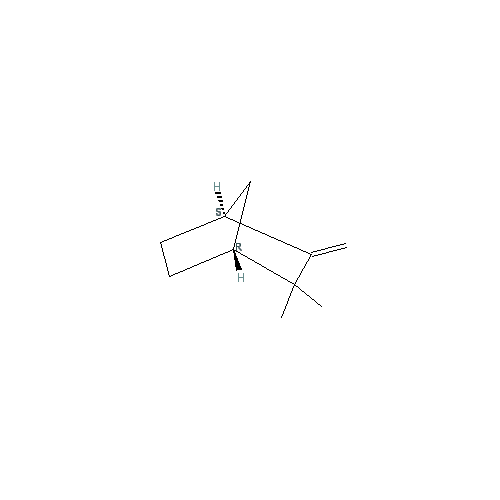
2,2-Dimethyl-3-methylenebicyclo[2.2.1]heptane
3,3-Dimethyl-2-methylenenorcamphane · 3,3-Dimethyl-2-methylenenorbornane
化学組成 · Constituent
Camphene là một monoterpene đơn giản phổ biến trong tinh dầu thông và bạc hà. Hợp chất ít rủi ro độc tính.
Trên da. Patch test ở 4 phần trăm trên 25 tình nguyện không gây mẫn cảm.
Đường uống. LD50 cấp tính chuột vượt 5 g/kg; LD50 da thỏ vượt 2.5 g/kg.
Sinh sản. NOAEL phát triển ở chuột là 1.000 mg/kg/ngày trong ngày thai 6–15. NOAEL của mẹ là 250 mg/kg/ngày do giảm vận động tạm thời ở liều cao.
Đột biến gen. Không gây đột biến trong Ames test. (±)-Camphene không gây độc gen ở tế bào buồng trứng hamster Trung Quốc.
Camphene is a simple monoterpene common in pine and mint oils. The compound presents low toxicity risk.
Skin. A 4 percent patch test on 25 volunteers caused no sensitization.
Oral. Acute oral LD50 in rats exceeds 5 g/kg; rabbit dermal LD50 exceeds 2.5 g/kg.
Reproductive. Rat developmental NOAEL is 1,000 mg/kg/day on gestation days 6–15. Maternal NOAEL is 250 mg/kg/day due to temporary reduced motor activity at the high dose.
Mutagenicity. Non-mutagenic in the Ames test. (±)-Camphene is non-genotoxic in Chinese hamster ovary cells.
| Vân sam Na Uy · Spruce (Norway) | 7.0 – 26.5 % |
| Linh sam Siberia (kim) · Fir needle (Siberian) | 24.2 % |
| Linh sam Nhật (kim) · Fir needle (Japanese) | 18.5 % |
| Linh sam Douglas · Fir (Douglas) | 16.7 % |
| Linh sam bạc (kim) · Fir needle (silver) | 14.8 % |
| Cam tùng châu Âu · Valerian (European) | 0.1 – 14.4 % |
| Vân sam đỏ · Spruce (red) | 12.9 % |
| Thông xám · Pine (grey) | 2.8 – 12.1 % |
| Xô thơm Tây Ban Nha · Sage (Spanish) | 4.6 – 10.6 % |
| Cistus | 1.1 – 10.3 % |
| Hương thảo · Rosemary | 2.8 – 10.0 % |
| Vân sam trắng · Spruce (white) | 9.9 % |
| Linh sam Canada (kim) · Fir needle (Canadian) | 3.5 – 9.7 % |
| Thông Scotland · Pine (Scots) | 1.6 – 9.4 % |
| Xô thơm Dalmatia · Sage (Dalmatian) | 0 – 8.6 % |
| Vân sam đen · Spruce (black) | 8.1 % |
| Cúc đại bi · Feverfew | 5.4 – 7.7 % |
| Oải hương Tây Ban Nha · Lavender (Spanish) | 2.8 – 5.5 % |
| Cỏ xanh Phi · African bluegrass | 3.6 – 5.4 % |
| Thông trắng · Pine (white) | 5.2 % |
| Cỏ xạ hương · Thyme (borneol CT) | 5.0 % |
Camphene chuyển hoá chính qua epoxide hoá và hydrat hoá. Ở thỏ bài tiết qua liên hợp glucuronide của dẫn xuất hydroxyl (camphenol) và monoglucuronide của camphene glycol. Tiêm tĩnh mạch 0.6 mg/kg trên người, 3.6 phần trăm bài tiết qua khí thở trong ba giờ, đa phần trong năm phút đầu.
Camphene is primarily metabolized through epoxidation and hydration. In rabbits, glucuronide conjugates of a hydroxyl derivative (camphenol) and the monoglucuronide of camphene glycol are excreted. After intravenous 0.6 mg/kg in a human subject, 3.6 percent was eliminated through expired air within three hours, mostly within five minutes.
Camphene góp phần vào note thông tươi trong tinh dầu rừng kim. Hợp chất cũng có hoạt tính làm giảm cholesterol trong các nghiên cứu sơ bộ trên chuột.
Camphene contributes the fresh pine note to coniferous oils. The compound also shows cholesterol-lowering activity in preliminary rodent studies.