マグワート カンファー
Ngải cứu (CT camphor-thujone)
Artemisia vulgaris
Common mugwort, Indian wormwood
α-Thujone and β-thujone are both present. Total thujone may reach 30 percent. Neurotoxic, can cause convulsions at high doses.
Camphor 10-25 percent, adds further neurotoxic risk.
Strictly contraindicated in pregnancy, breastfeeding, children under 6, and individuals with a history of epilepsy or kidney disease.
Both oral and dermal doses must be very limited.
| Camphor | 10.0 – 25.0 % |
| α-Thujone | 5.0 – 18.0 % |
| β-Thujone | 5.0 – 15.0 % |
| 1,8-Cineole | 5.0 – 12.0 % |
| Camphene | 3.0 – 8.0 % |
| α-Pinene | 2.0 – 6.0 % |
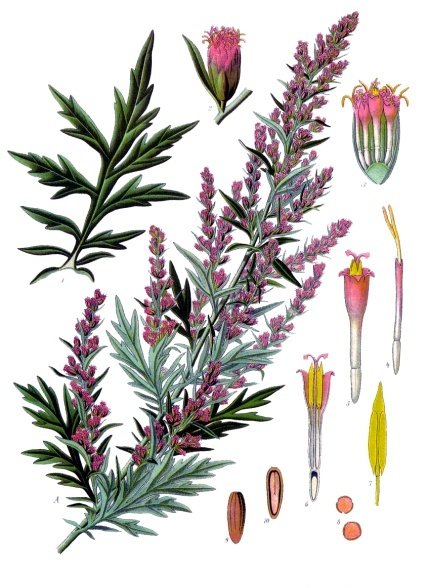
Artemisia vulgaris grows across Europe, Asia, and North America. A perennial herb up to 1.5m tall with dark green upper leaves and grey-white undersides.
The name 'Indian wormwood' refers to the chemotype grown in India, sometimes richer in thujone than other regions.
Family Asteraceae (Compositae), genus Artemisia (same genus as wormwood, tarragon, and sagebrush).
In East Asian traditional medicine, mugwort (Artemisia vulgaris) is used for moxibustion and gynecological remedies. However, the distilled essential oil carries neurotoxic risks completely different from the use of dried leaves.
In Vietnam, ngai cuu is a familiar culinary herb used in porridge and soups. Eaten cooked and in small amounts, it is not hazardous like the essential oil.