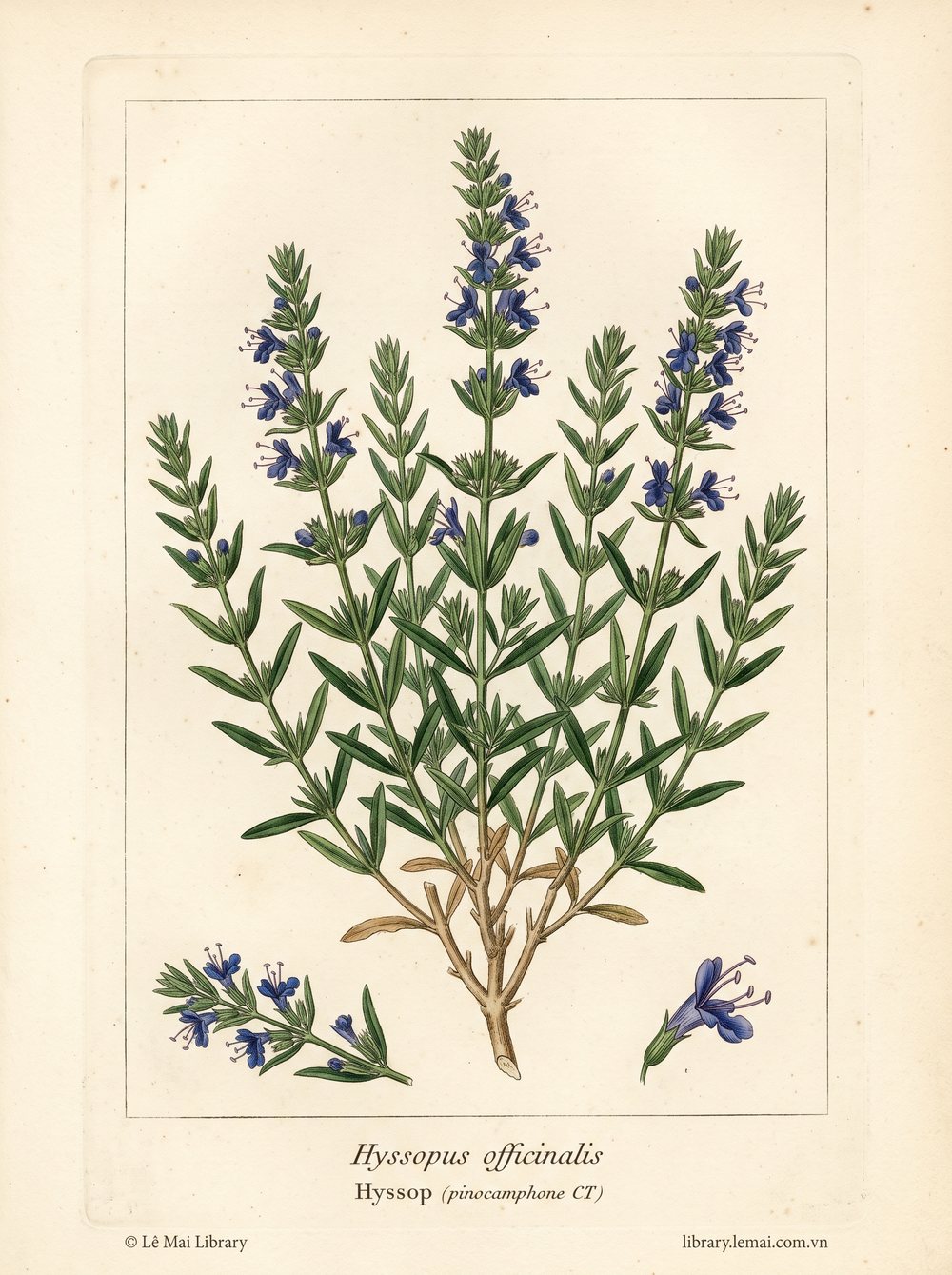
ヒソップ ピノカンフォン CT
Bài hương (CT pinocamphone)
Hyssopus officinalis
Common hyssop
Độc thần kinh. Có thể chứa carcinogen methyleugenol.
Chống chỉ định toàn diện: mang thai, cho con bú, trẻ dưới 2 tuổi.
Không nên dùng đường uống.
Nồng độ tối đa trên da 0.3 phần trăm.
Cơ sở: 82.3 phần trăm tổng pinocamphone + isopinocamphone + thujone, với ngưỡng dermal 0.25 phần trăm.
Đã có ba ca co giật ở người do uống hyssop oil ở liều thấp (15 đến 30 giọt). Trẻ 6 tuổi co giật sau khi uống cho asthma. Phụ nữ 18 tuổi mất ý thức và co giật sau khi uống 30 giọt cho cảm lạnh.
Hyssop oil chemotype thường (pinocamphone CT) phải được xem là tinh dầu nguy hiểm vì khả năng gây co giật, đặc biệt khi uống.
Neurotoxic. May contain the carcinogen methyleugenol.
Broad contraindications: pregnancy, breastfeeding, children under 2 years.
Should not be taken orally.
Maximum dermal use level 0.3 percent.
Basis: 82.3 percent total pinocamphone + isopinocamphone + thujone, with dermal limit 0.25 percent.
Three documented human cases of convulsions from hyssop oil at low oral doses (15 to 30 drops). A 6-year-old had a seizure after ingestion for asthma. An 18-year-old woman lost consciousness and convulsed after taking 30 drops for a cold.
The common hyssop oil chemotype (pinocamphone CT) must be regarded as a hazardous oil due to its convulsant potential, particularly orally.
| Pinocamphone | 31.2 – 42.7 % |
| Isopinocamphone | 30.9 – 39.2 % |
| β-Pinene | 4.0 – 8.8 % |
| Myrtenyl methyl ether | 0 – 3.9 % |
| Myrtenol | 0.4 – 2.1 % |
| Sabinene | 1.3 – 1.7 % |
| β-Myrcene | 0.7 – 1.2 % |
| α-Terpineol | 0 – 1.0 % |
| Methyleugenol | 0 – 0.5 % |
| β-Thujone | 0 – 0.3 % |
| α-Thujone | 0 – 0.1 % |
Hyssopus officinalis là cây thảo nhiều năm vùng Địa Trung Hải. Lá nhỏ thuôn, hoa xanh tím xếp thành chuỗi nhỏ. Có chemotype pinocamphone (thường) và linalool CT (var. decumbens).
Sản xuất chủ yếu tại Pháp, Tây Ban Nha, Bulgaria. Họ Lamiaceae.
Trong y học truyền thống Hy Lạp cổ và Trung cổ, hyssop được dùng cho hô hấp, Hippocrates ghi nhận. Tinh dầu tập trung là vật khác, concentrated form của pinocamphone.
Hyssopus officinalis is a Mediterranean perennial herb. Small narrow leaves, blue-purple flowers in small spikes. Pinocamphone chemotype (common) and linalool CT (var. decumbens) exist.
Mainly produced in France, Spain, Bulgaria. Family Lamiaceae.
In ancient Greek and medieval medicine, hyssop was used for respiratory complaints, recorded by Hippocrates. The concentrated essential oil is a different object, a concentrated form of pinocamphone.