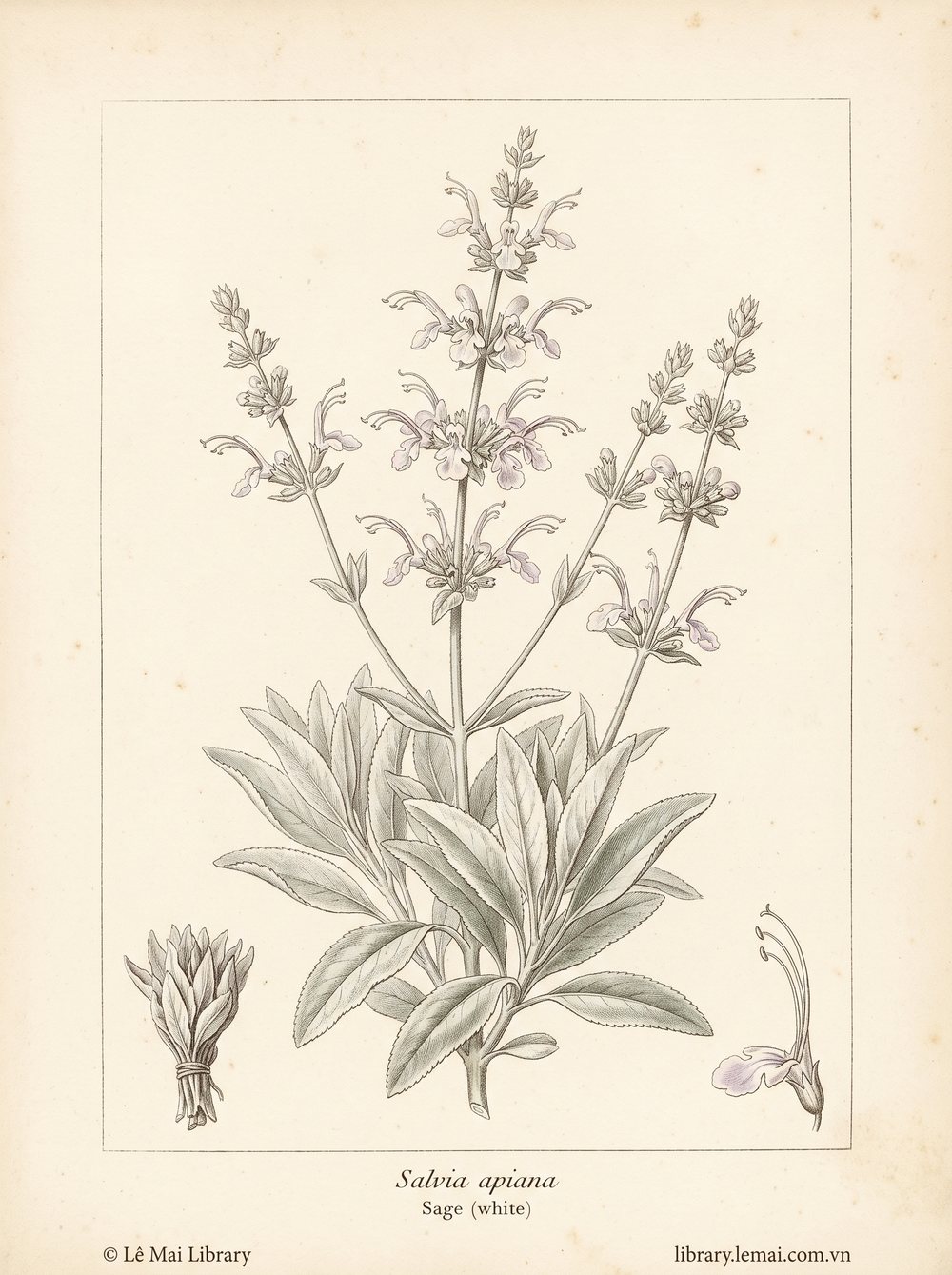
ホワイトセージ
Xô thơm trắng
Salvia apiana
California sage, Bee sage
Camphor và 1,8-cineole là thành phần chính.
Tránh bôi gần mặt trẻ em dưới 6.
Sustainability concern: white sage bị khai thác quá mức bởi nhu cầu smudging, chỉ dùng nguồn certified ethical.
Camphor and 1,8-cineole are main constituents.
Avoid near face of children under 6.
Sustainability concern: white sage is overharvested due to smudging demand, source only from certified ethical suppliers.
| 1,8-Cineole | 30.0 – 50.0 % |
| Camphor | 10.0 – 20.0 % |
| α-Pinene | 5.0 – 12.0 % |
| β-Pinene | 3.0 – 10.0 % |
Salvia apiana là cây bụi đặc hữu vùng California và Baja California.
Trong văn hóa bản địa Mỹ, white sage là 'sacred herb' dùng cho smudging, nghi lễ làm sạch tâm linh. Đã trở thành phổ biến toàn cầu, gây áp lực khai thác lên cây hoang.
Họ Lamiaceae.
Salvia apiana is a shrub endemic to California and Baja California.
In Native American cultures, white sage is a sacred herb used for smudging, spiritual cleansing rituals. Has become globally popular, putting harvesting pressure on wild plants.
Family Lamiaceae.
Tinh dầu hạn chế. Lá khô được dùng truyền thống hơn tinh dầu chưng cất.
Limited essential oil production. Dried leaves are used more traditionally than the distilled oil.