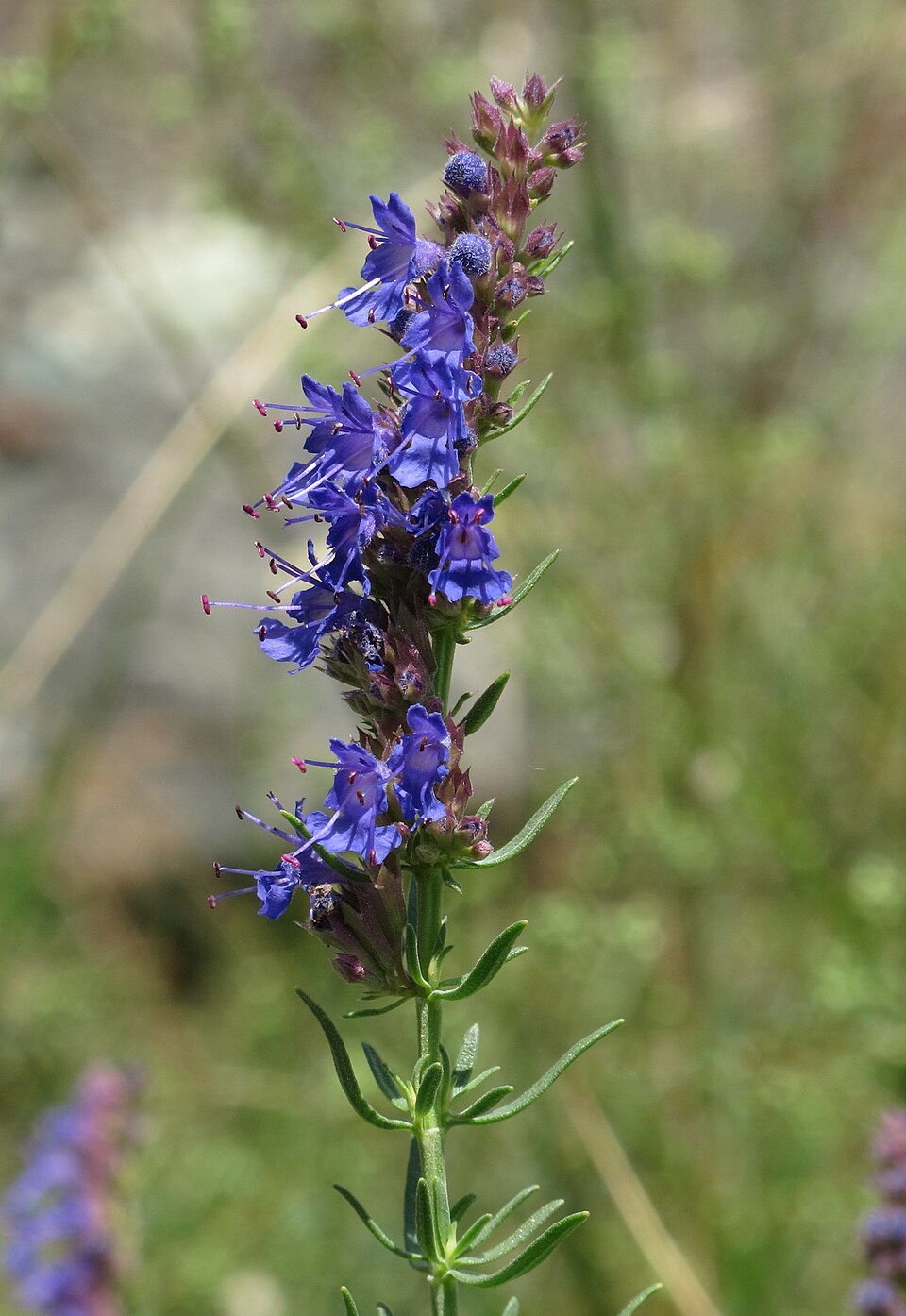
ヒソップ ピノカンフォン CT
Bài hương (CT pinocamphone)
Hyssopus officinalis
Common hyssop
Neurotoxic. May contain the carcinogen methyleugenol.
Broad contraindications: pregnancy, breastfeeding, children under 2 years.
Should not be taken orally.
Maximum dermal use level 0.3 percent.
Basis: 82.3 percent total pinocamphone + isopinocamphone + thujone, with dermal limit 0.25 percent.
Three documented human cases of convulsions from hyssop oil at low oral doses (15 to 30 drops). A 6-year-old had a seizure after ingestion for asthma. An 18-year-old woman lost consciousness and convulsed after taking 30 drops for a cold.
The common hyssop oil chemotype (pinocamphone CT) must be regarded as a hazardous oil due to its convulsant potential, particularly orally.
| Pinocamphone | 31.2 – 42.7 % |
| Isopinocamphone | 30.9 – 39.2 % |
| β-Pinene | 4.0 – 8.8 % |
| Myrtenyl methyl ether | 0 – 3.9 % |
| Myrtenol | 0.4 – 2.1 % |
| Sabinene | 1.3 – 1.7 % |
| β-Myrcene | 0.7 – 1.2 % |
| α-Terpineol | 0 – 1.0 % |
| Methyleugenol | 0 – 0.5 % |
| β-Thujone | 0 – 0.3 % |
| α-Thujone | 0 – 0.1 % |
Hyssopus officinalis is a Mediterranean perennial herb. Small narrow leaves, blue-purple flowers in small spikes. Pinocamphone chemotype (common) and linalool CT (var. decumbens) exist.
Mainly produced in France, Spain, Bulgaria. Family Lamiaceae.
In ancient Greek and medieval medicine, hyssop was used for respiratory complaints, recorded by Hippocrates. The concentrated essential oil is a different object, a concentrated form of pinocamphone.