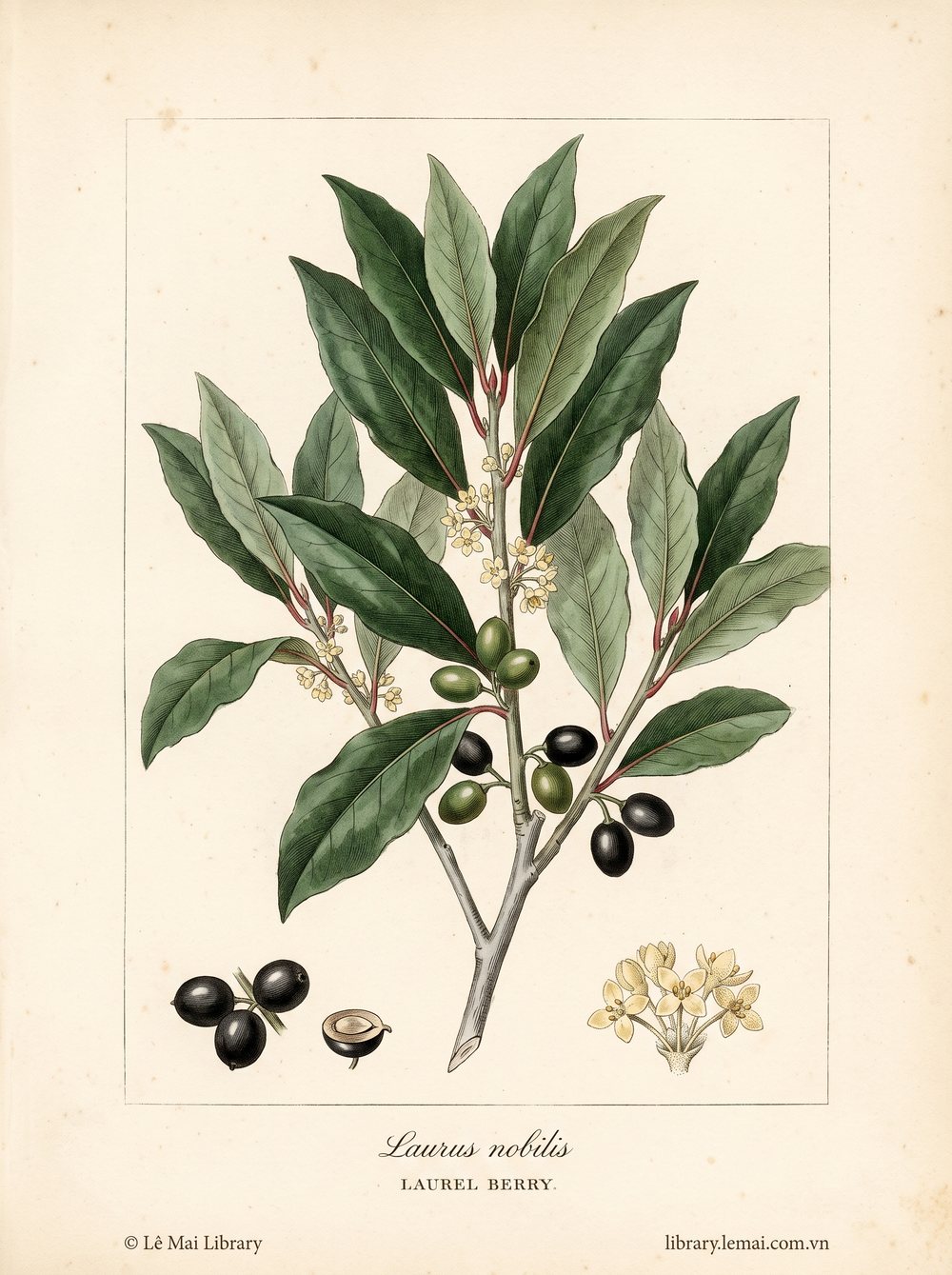
ローレルベリー
Nguyệt quế (quả)
Laurus nobilis
Bay laurel berry, Laurus novocanariensis
Khả năng nhạy ứng da do hợp chất methyl eugenol và lactones sesquiterpene.
Tương tác thuốc tiềm năng do ức chế enzyme cytochrome P450. Thận trọng nếu dùng oral.
Không khuyến cáo trong thai kỳ và cho con bú.
Skin sensitization risk from methyl eugenol and sesquiterpene lactones.
Potential drug interactions through cytochrome P450 inhibition. Use orally with caution.
Not recommended in pregnancy and breastfeeding.
| 1,8-Cineole | 30.0 – 50.0 % |
| α-Pinene | 8.0 – 15.0 % |
| β-Pinene | 5.0 – 12.0 % |
| Sabinene | 5.0 – 12.0 % |
| α-Terpinyl acetate | 5.0 – 10.0 % |
| Methyl eugenol | 1.0 – 3.5 % |
Quả Laurus nobilis thu hoạch khi chín vào mùa thu. Mỗi quả chứa cả tinh dầu và dầu béo.
Tinh dầu chưng cất từ quả khô. Sản xuất chủ yếu Thổ Nhĩ Kỳ, Maroc.
Khác với laurel leaf oil (chưng cất từ lá), chemistry và profile an toàn khác hẳn.
Laurus nobilis berries are harvested when ripe in autumn. Each berry contains both essential and fatty oils.
The essential oil is distilled from dried berries. Produced mainly in Turkey and Morocco.
Distinct from laurel leaf oil (distilled from leaves), which has different chemistry and safety profile.
Berry oil thường ít sản xuất hơn leaf oil. Sản lượng thấp.
Cũng được dùng làm dầu béo (laurel berry fat) trong xà phòng truyền thống Aleppo.
Berry oil is produced in smaller quantities than leaf oil. Low yield.
Also used as a fatty oil (laurel berry fat) in traditional Aleppo soap.