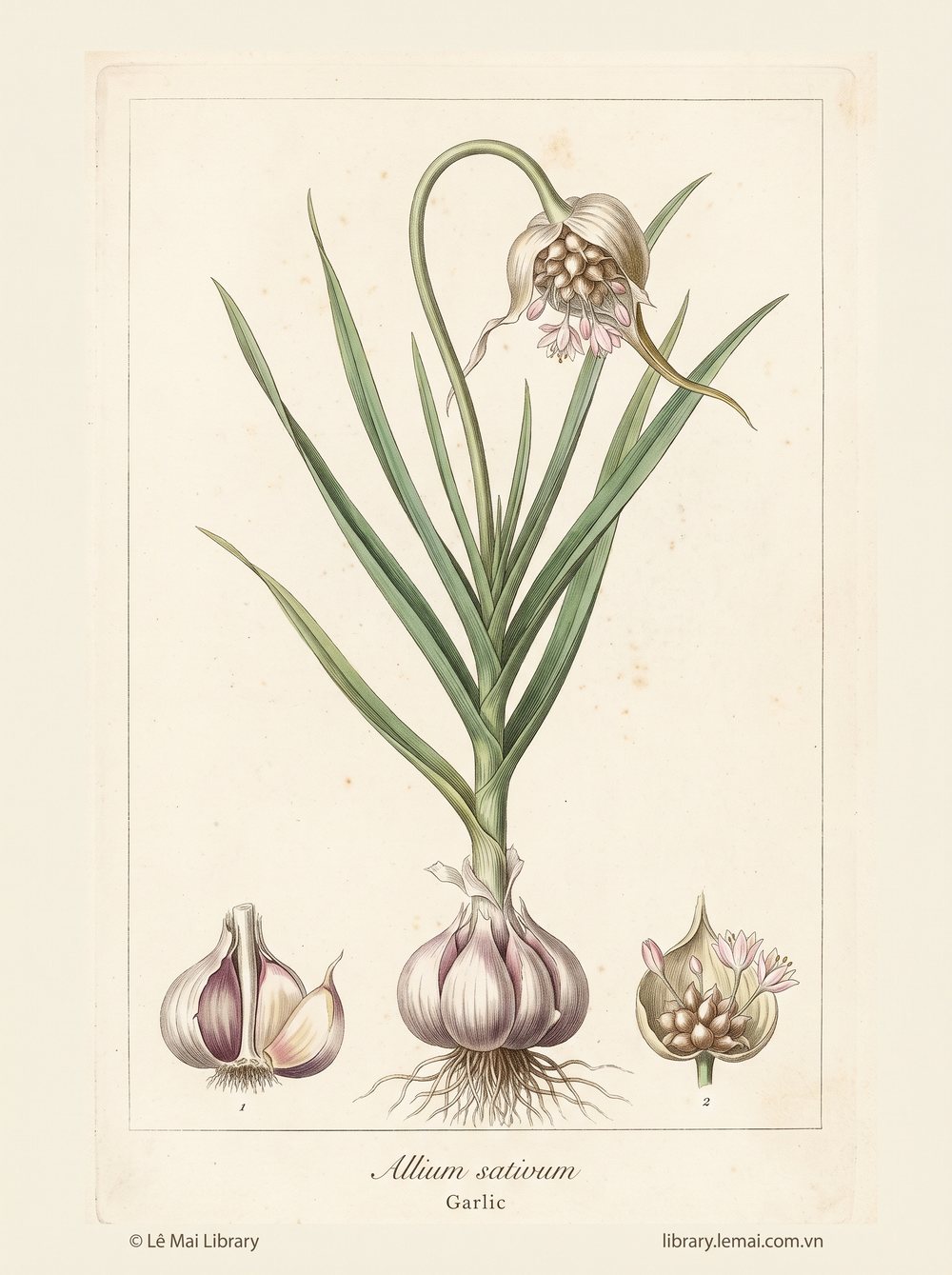
ガーリック
Tỏi
Allium sativum
Độc tính trung bình. Ức chế đông máu. Kích ứng da rủi ro trung bình. Nhạy ứng da rủi ro trung bình.
Đường uống: thận trọng với thuốc chống đông, trước phẫu thuật lớn, loét dạ dày tá tràng, máu khó đông.
Dermal: tránh trên da nhạy cảm, da tổn thương, trẻ dưới 2 tuổi.
Nồng độ khuyến nghị thoa da không quá 0.1 phần trăm cho lần đầu, có rủi ro phản ứng dị ứng.
Diallyl disulfide là chất gây nhạy ứng da chính. Đã có báo cáo ACD từ tỏi tươi, dầu tỏi (đặc biệt trẻ em).
Garlic oil ức chế kết tập tiểu cầu mạnh. Liều 18 mg mỗi ngày uống 4 tuần giảm aggregation tiểu cầu đáng kể ở 20 người khỏe mạnh.
Moderately toxic. Inhibits blood clotting. Moderate risk of skin irritation. Moderate risk of skin sensitization.
Oral: caution with anticoagulant medication, before major surgery, peptic ulcer, hemophilia.
Dermal: avoid on hypersensitive, diseased or damaged skin, and on children under 2 years.
Recommended initial dermal concentration is no more than 0.1 percent, allergic reaction risk.
Diallyl disulfide is the main skin sensitizer. ACD reports exist from fresh garlic and garlic oil, especially in children.
Garlic oil strongly inhibits platelet aggregation. Doses of 18 mg daily over 4 weeks significantly reduce platelet aggregation in healthy adults.
| Diallyl trisulfide | 18.0 – 48.8 % |
| Diallyl disulfide | 25.2 – 46.8 % |
| Methyl allyl trisulfide | 8.3 – 18.2 % |
| Methyl allyl disulfide | 3.9 – 12.2 % |
| Propyl allyl disulfide | 0.26 – 7.2 % |
| Methyl allyl tetrasulfide | 0.04 – 5.9 % |
| Dimethyl trisulfide | 0.5 – 3.3 % |
| Diallyl sulfide | 1.1 – 2.4 % |
| Diallyl pentasulfide | 2.1 % |
| Methyl allyl pentasulfide | 1.6 % |
| Dimethyl tetrasulfide | 1.3 % |
Allium sativum là cây hành tỏi, biến thể đã được trồng từ ít nhất 5000 năm trước tại Trung Á. Nay phổ biến toàn cầu trong ẩm thực và y học.
Tinh dầu cất hơi từ củ. Sản lượng tinh dầu thực sự (chứ không phải dầu đại trà từ pha trộn với dầu thực vật) khá hạn chế.
Họ Liliaceae. Cùng họ với hành tây (onion), hành lá (chive), hẹ (leek), tất cả đều sulfur-rich.
Allium sativum is garlic, cultivated for at least 5000 years from Central Asia. Now ubiquitous in global cuisine and medicine.
The oil is steam-distilled from the bulbs. True essential oil production (as distinct from mass-market 'garlic oil' diluted with vegetable oil) is limited.
Family Liliaceae. Same family as onion, chive, leek, all sulfur-rich.
Có thể bị làm giả bằng hợp chất sulfur tổng hợp như propenyl disulfide.
May be adulterated with synthetic sulfur compounds such as propenyl disulfides.
Garlic oil không dùng trong perfumery vì mùi quá nồng. Chủ yếu được dùng đường uống trong aromatherapy, không thoa ngoài. Hoạt tính bảo vệ chống ung thư của tỏi đến từ kích ứng enzyme phase II (glutathione S-transferase).
Tinh dầu giàu sulfur khác (leek oil) có thể có rủi ro tương tự.
Garlic oil is not used in perfumery due to its overpowering odor. Mainly used internally in aromatherapy, not topically. Garlic's anticarcinogenic action comes partly from induction of phase II detoxifying enzymes (glutathione S-transferase).
Other sulfur-rich Allium oils (leek oil) may present similar risks.