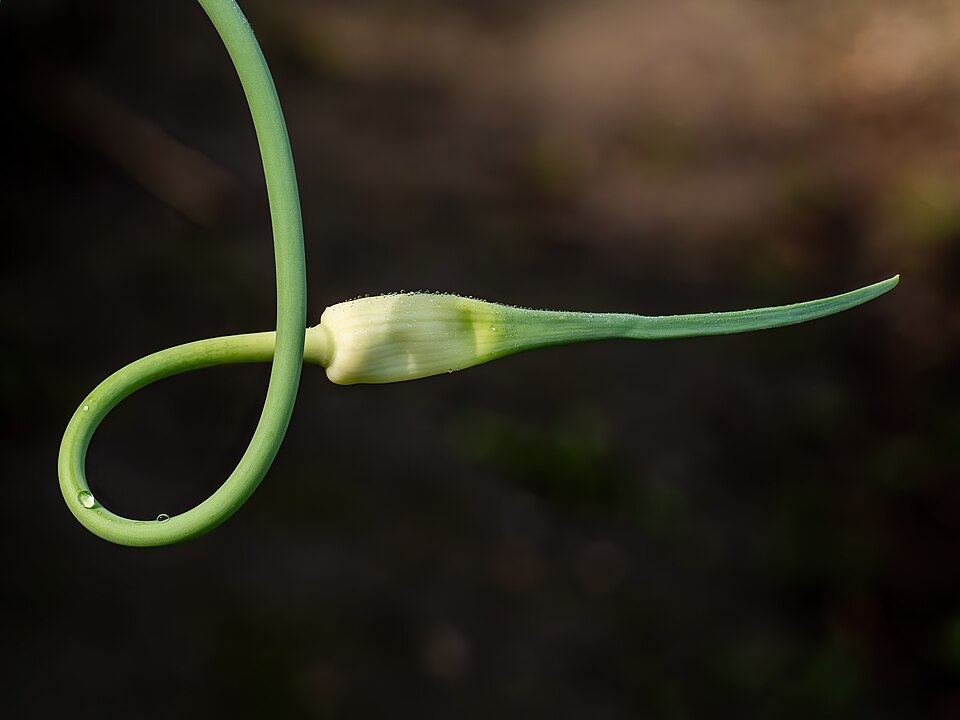
ガーリック
Tỏi
Allium sativum
Moderately toxic. Inhibits blood clotting. Moderate risk of skin irritation. Moderate risk of skin sensitization.
Oral: caution with anticoagulant medication, before major surgery, peptic ulcer, hemophilia.
Dermal: avoid on hypersensitive, diseased or damaged skin, and on children under 2 years.
Recommended initial dermal concentration is no more than 0.1 percent, allergic reaction risk.
Diallyl disulfide is the main skin sensitizer. ACD reports exist from fresh garlic and garlic oil, especially in children.
Garlic oil strongly inhibits platelet aggregation. Doses of 18 mg daily over 4 weeks significantly reduced platelet aggregation in 20 healthy adults.
| Diallyl trisulfide | 18.0 – 48.8 % |
| Diallyl disulfide | 25.2 – 46.8 % |
| Methyl allyl trisulfide | 8.3 – 18.2 % |
| Methyl allyl disulfide | 3.9 – 12.2 % |
| Propyl allyl disulfide | 0.26 – 7.2 % |
| Methyl allyl tetrasulfide | 0.04 – 5.9 % |
| Dimethyl trisulfide | 0.5 – 3.3 % |
| Diallyl sulfide | 1.1 – 2.4 % |
| Diallyl pentasulfide | 2.1 % |
| Methyl allyl pentasulfide | 1.6 % |
| Dimethyl tetrasulfide | 1.3 % |
Allium sativum is garlic, cultivated for at least 5000 years from Central Asia. Now ubiquitous in global cuisine and medicine.
The oil is steam-distilled from the bulbs. True essential oil production (as distinct from mass-market 'garlic oil' diluted with vegetable oil) is limited.
Family Liliaceae. Same family as onion, chive, leek, all sulfur-rich.
May be adulterated with synthetic sulfur compounds such as propenyl disulfides.
Garlic oil is not used in perfumery due to its overpowering odor. Mainly used internally in aromatherapy, not topically. Garlic's anticarcinogenic action comes partly from induction of phase II detoxifying enzymes (glutathione S-transferase).
Other sulfur-rich Allium oils (leek oil) may present similar risks.