Diallyl trisulfide
Di-(2-propenyl) trisulfide
Allitridin · 4,5,6-Trithia-1,8-nonadiene
化学組成 · Constituent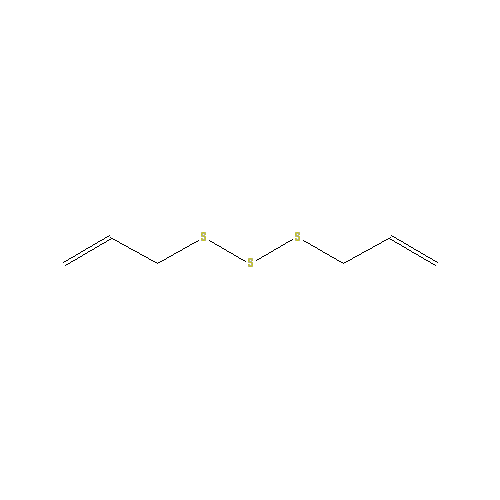
Di-(2-propenyl) trisulfide
Allitridin · 4,5,6-Trithia-1,8-nonadiene
化学組成 · Constituent
Diallyl trisulfide là cấu tử lớn thứ hai trong tinh dầu tỏi. Hợp chất có hoạt tính sinh học rất mạnh, là chất cảm ứng enzyme chống oxi hoá mạnh mẽ.
Mạch máu. Ức chế kết tập tiểu cầu mạnh in vitro.
Gan. Ở liều thấp 1.78 mg/kg đường uống bảo vệ gan chuột khỏi tổn thương do carbon tetrachloride. Ở 30 mg/kg giảm tổn thương gan do stress oxi hoá ở chuột nhắt. Tuy nhiên ở nồng độ 0.05 mM trở lên gây độc tế bào gan, tăng rò rỉ LDH.
Ung thư. Diallyl trisulfide gây độc tế bào đáng kể với nhiều dòng tế bào ung thư người, bao gồm bàng quang, xương, vú, phổi và dạ dày, đều thông qua apoptosis. Có tác dụng chống khối u trên chuột bị cấy ghép tế bào ung thư gan và tiền liệt tuyến, không gây giảm cân, gợi ý ít độc tính phụ.
Diallyl trisulfide is the second major constituent of garlic oil. The compound has very strong biological activity, being a potent inducer of antioxidant enzymes.
Cardiovascular. Strong antiplatelet aggregation activity in vitro.
Liver. At a low oral dose of 1.78 mg/kg it protected rat liver from carbon tetrachloride damage. At 30 mg/kg it reduced liver injury from oxidative stress in mice. However, at concentrations of 0.05 mM or above it became cytotoxic to hepatocytes, increasing LDH leakage.
Cancer. Diallyl trisulfide is significantly cytotoxic to multiple human cancer cell lines including bladder, bone, breast, lung and stomach, all through apoptosis. It has antitumor effects on xenografted liver and prostate cancer cells in mice without weight loss, suggesting minimal collateral toxicity.
| Tỏi · Garlic | 18.0 – 48.8 % |
| Mù tạt · Mustard | 0 – 9.7 % |
Diallyl trisulfide đường uống ở 1.78 mg/kg trong 14 ngày liên tục làm tăng đáng kể hoạt tính các enzyme chống oxi hoá quinone reductase, glutathione peroxidase và glutathione S-transferase. Đây là cơ chế giải thích đồng thời tác dụng bảo vệ gan và chống ung thư của hợp chất.
Diallyl trisulfide given orally at 1.78 mg/kg for 14 consecutive days significantly increased the activities of antioxidant enzymes quinone reductase, glutathione peroxidase and glutathione S-transferase. This mechanism explains both its hepatoprotective and anticancer activities.
Diallyl trisulfide là một trong những hợp chất sulfide có hoạt tính sinh học mạnh nhất từ tỏi, được nghiên cứu rộng rãi cho tiềm năng dược lý.
Diallyl trisulfide is among the most biologically active sulfide compounds from garlic, extensively studied for its pharmacological potential.