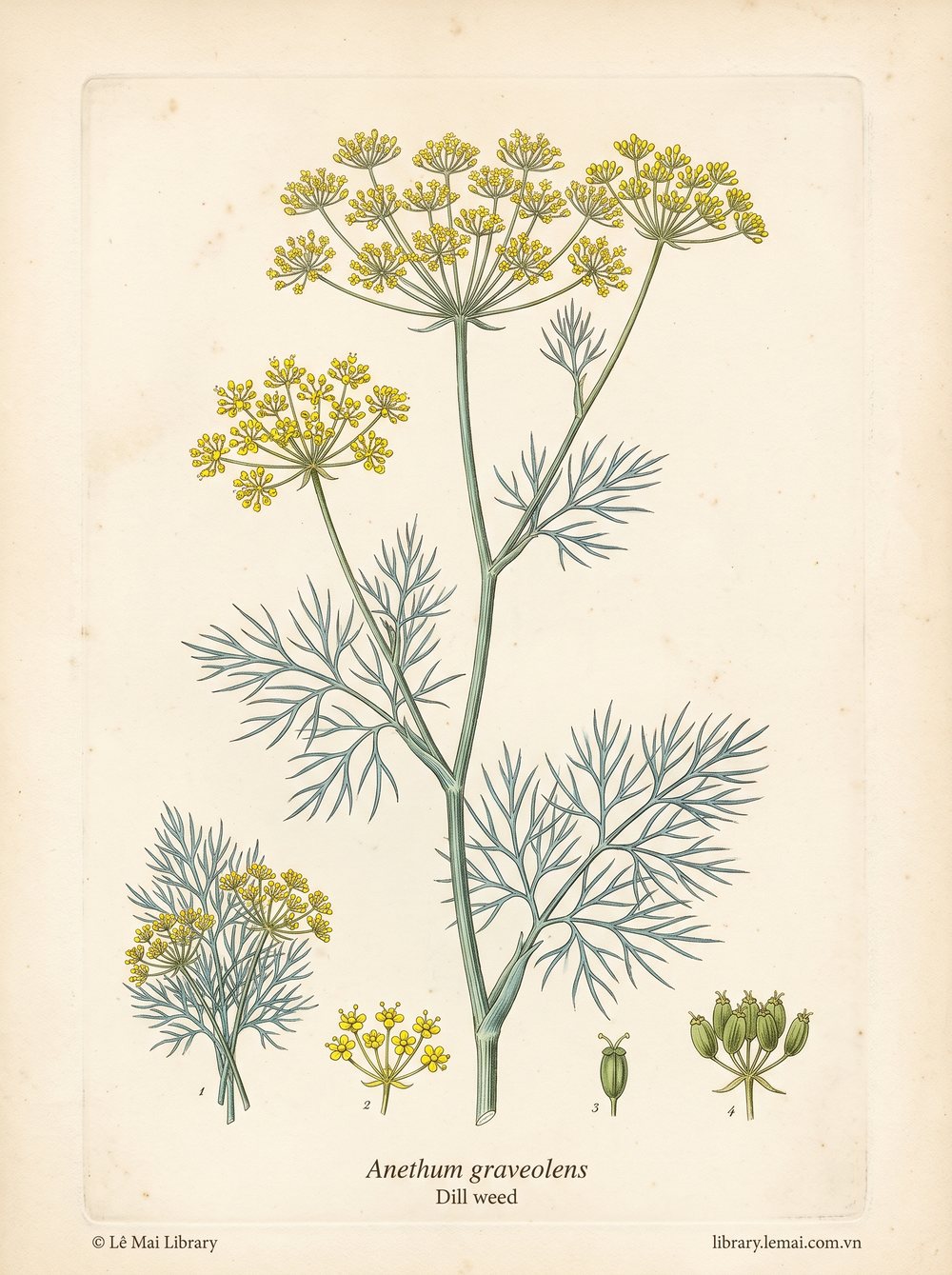
ディルウィード
Thì là (lá)
Anethum graveolens
Dill herb
Tương tác thuốc lý thuyết.
Đường uống: thận trọng với thuốc điều trị tiểu đường, dill oil giảm đường huyết ở chuột thí nghiệm.
Không kích ứng hay nhạy ứng ở liều thử nghiệm 4 phần trăm. Không phototoxic.
Dill weed oil không yêu cầu giới hạn, ngưỡng dermal cho (+)-carvone là 23 phần trăm, hàm lượng oil khoảng 31 đến 42 phần trăm.
Theoretical drug interaction.
Oral: caution with diabetes medication, dill oil lowers blood glucose in rat studies.
No irritation or sensitization at 4 percent test level. Non-phototoxic.
Dill weed oil requires no restriction, the dermal threshold for (+)-carvone is 23 percent, oil content around 31 to 42 percent.
| (+)-Carvone | 31.6 – 42.4 % |
| α-Phellandrene | 18.2 – 30.2 % |
| (+)-Limonene | 22.5 – 24.9 % |
| Anethofuran (dill ether) | 5.6 – 6.6 % |
| β-Phellandrene | 2.3 – 3.3 % |
| (E)-Dihydrocarvone | 0.5 – 1.9 % |
| (Z)-Dihydrocarvone | 0.8 – 1.4 % |
| p-Cymene | 1.0 – 1.1 % |
Cùng cây Anethum graveolens như European dill seed, nhưng tinh dầu cất từ bộ phận trên mặt đất (lá, cành, hoa) thay vì hạt.
Chemistry khác hẳn dill seed, dill weed có α-phellandrene cao và anethofuran đặc trưng.
Họ Apiaceae. Dill weed oil được dùng phổ biến trong dưa chua và ẩm thực châu Âu.
Same Anethum graveolens plant as European dill seed, but the oil is distilled from aerial parts (leaves, stems, flowers) rather than seeds.
Chemistry differs markedly from seed oil, dill weed has high α-phellandrene and a distinctive anethofuran (dill ether).
Family Apiaceae. Dill weed oil is widely used in pickles and European cuisine.