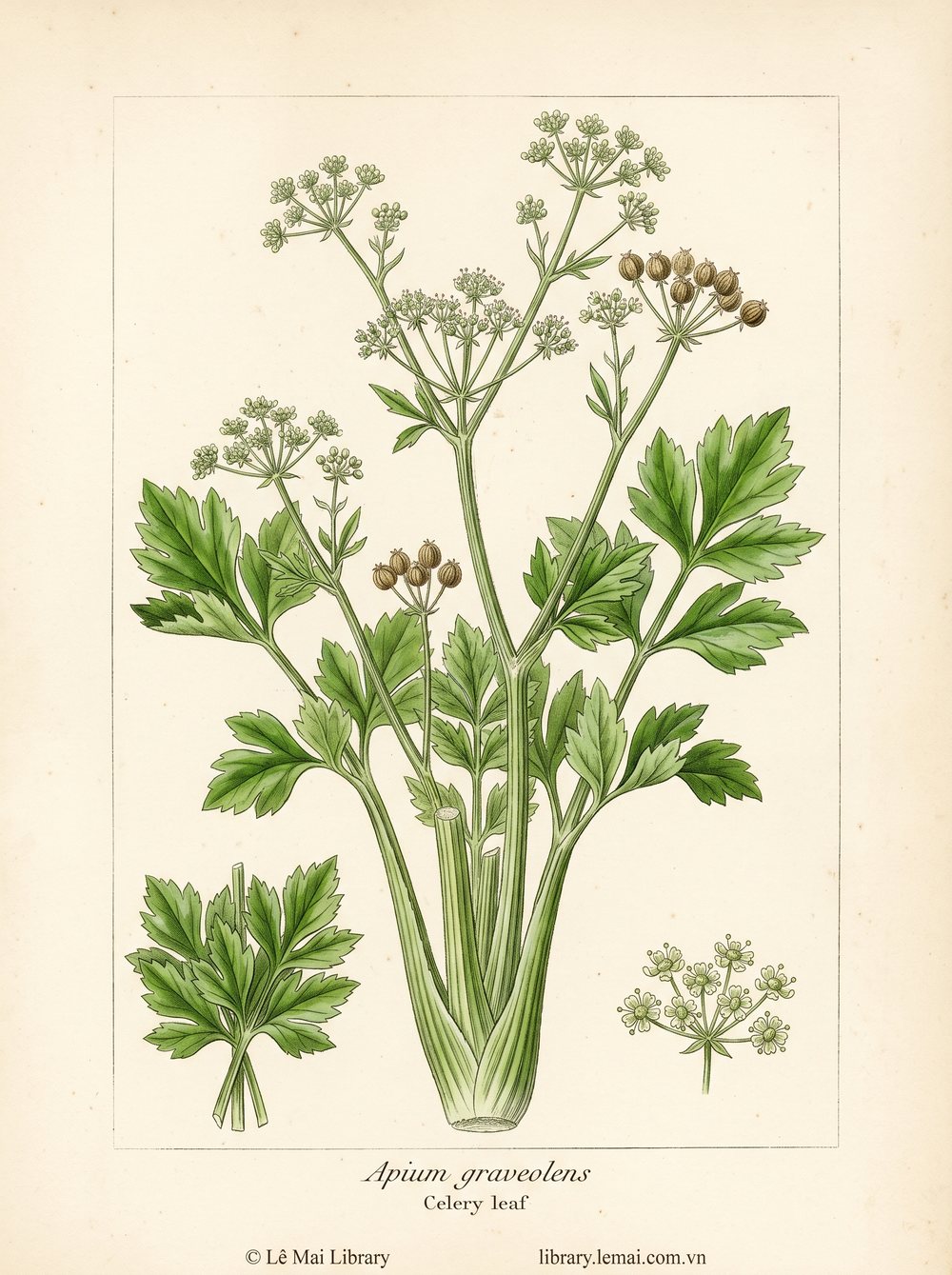
セロリリーフ
Cần tây (lá)
Apium graveolens
Sản phẩm oxy hóa của (+)-limonene có thể gây nhạy ứng da.
Bảo quản chai tối, kín, lạnh. Thêm chất chống oxy hóa cho công thức.
β-Myrcene độc tính sinh sản ở chuột mang thai liều 500 mg trên kg, không độc ở 250 mg trên kg. Không đưa ra giới hạn liều cụ thể cho celery leaf.
Oxidation products of (+)-limonene may sensitize skin.
Store in dark, sealed, refrigerated container. Add an antioxidant to formulations.
β-Myrcene reproductively toxic in pregnant rats at 500 mg per kg, not at 250 mg per kg. No specific dose limit imposed on celery leaf.
| β-Myrcene | 33.6 % |
| (+)-Limonene | 26.3 % |
| (Z)-β-Ocimene | 14.1 % |
| 3-Butyl phthalide | 6.2 % |
| β-Selinene | 3.7 % |
| 3,4-Dehydroisobutylidene phthalide | 3.2 % |
| n-Pentylcyclohexadiene | 1.0 % |
Apium graveolens là cây cần tây nhà, biến thể đã thuần hóa của cần tây dại Địa Trung Hải.
Tinh dầu lá cất hơi từ lá và thân. Có thể được dùng làm adulterant cho tinh dầu hạt cần tây, đắt hơn.
Họ Apiaceae.
Apium graveolens is cultivated celery, the domesticated form of wild Mediterranean celery.
The leaf oil is steam-distilled from leaves and stems. May be used as an adulterant for the more expensive celery seed oil.
Family Apiaceae.