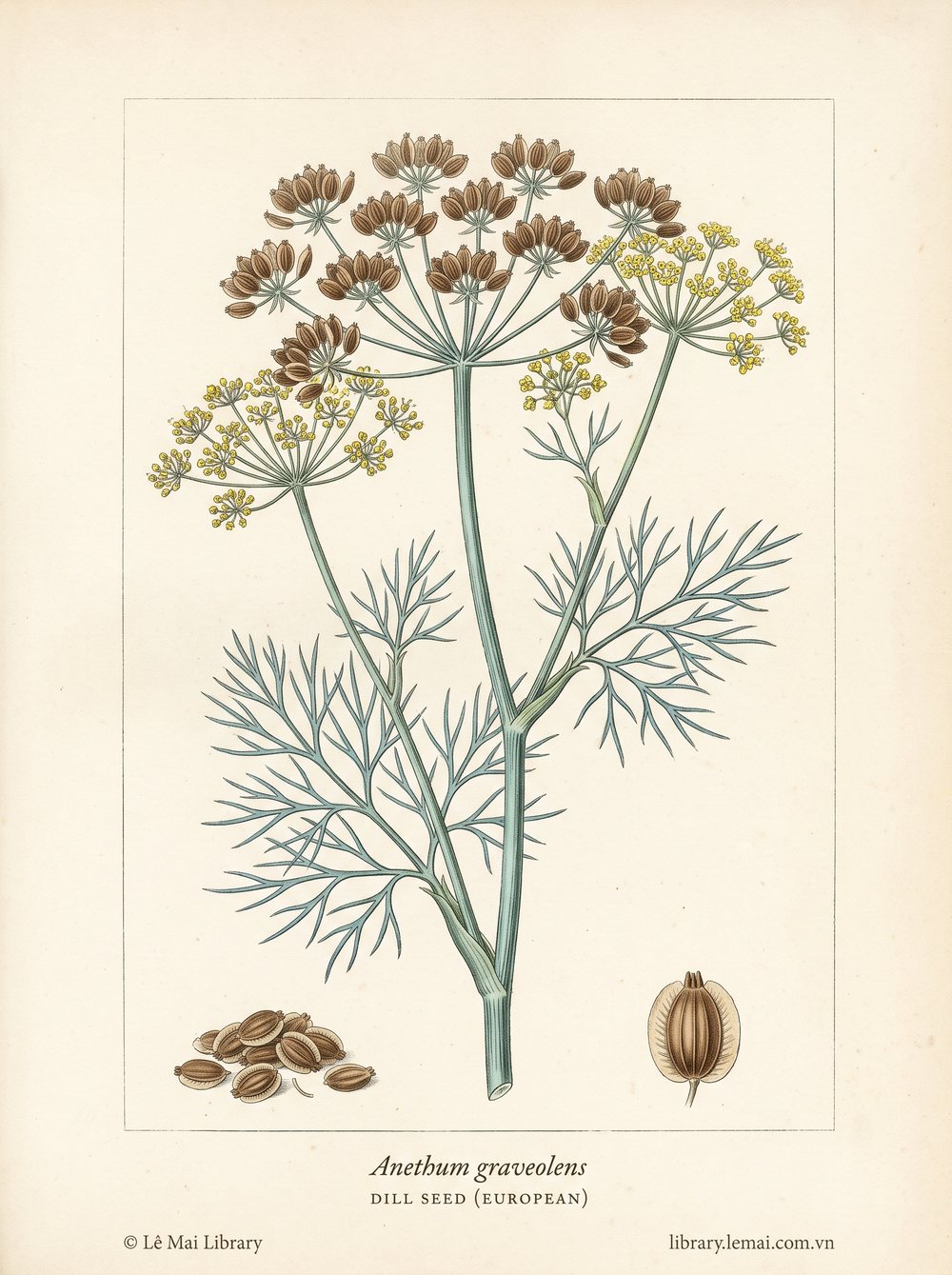
ヨーロピアンディルシード
Thì là (hạt) châu Âu
Anethum graveolens
Tương tác thuốc lý thuyết. Sản phẩm oxy hóa của (+)-limonene có thể gây nhạy ứng da.
Đường uống: thận trọng với thuốc điều trị tiểu đường, dill oil giảm đường huyết ở chuột thí nghiệm.
Bảo quản chai tối, kín, lạnh. Thêm chất chống oxy hóa cho công thức.
Không yêu cầu giới hạn nồng độ trên da về độc tính của carvone, ngưỡng dermal của (+)-carvone là 23 phần trăm.
Khác với Indian dill seed oil giàu dill apiole độc, European dill không chứa dill apiole và an toàn tương tự caraway oil.
Theoretical drug interaction. Oxidation products of (+)-limonene may sensitize skin.
Oral: caution with diabetes medication, dill oil lowers blood glucose in rat studies.
Store in dark, sealed, refrigerated container. Add an antioxidant to formulations.
No dermal concentration limit needed for carvone toxicity, the dermal threshold for (+)-carvone is 23 percent.
Unlike toxic apiole-rich Indian dill seed oil, European dill contains no dill apiole and is safe in a similar way to caraway oil.
| (+)-Limonene | 35.9 – 68.4 % |
| (+)-Carvone | 27.3 – 53.3 % |
| (Z)-Dihydrocarvone | 2.9 – 3.7 % |
| α-Phellandrene | 1.0 – 2.3 % |
| (E)-Dihydrocarvone | 1.7 – 1.8 % |
Anethum graveolens là cây thảo một năm vùng Nam và Đông Âu. Hạt và lá đều được dùng làm gia vị, đặc biệt trong ẩm thực Bắc Âu (cá hồi marinated, dưa muối) và Trung Đông.
Tinh dầu cất hơi từ hạt. Sản xuất chủ yếu tại Hungary, Đức và Hà Lan.
Họ Apiaceae. Cùng họ với caraway, anise, coriander.
Anethum graveolens is an annual herb of southern and eastern Europe. Both seeds and leaves are used as spice, particularly in northern European (cured salmon, pickles) and Middle Eastern cuisines.
The oil is steam-distilled from the seeds. Produced mainly in Hungary, Germany and the Netherlands.
Family Apiaceae. Same family as caraway, anise, coriander.
Có thể bị làm giả bằng terpene từ orange oil chưng cất.
May be adulterated with terpenes from distilled orange oil.