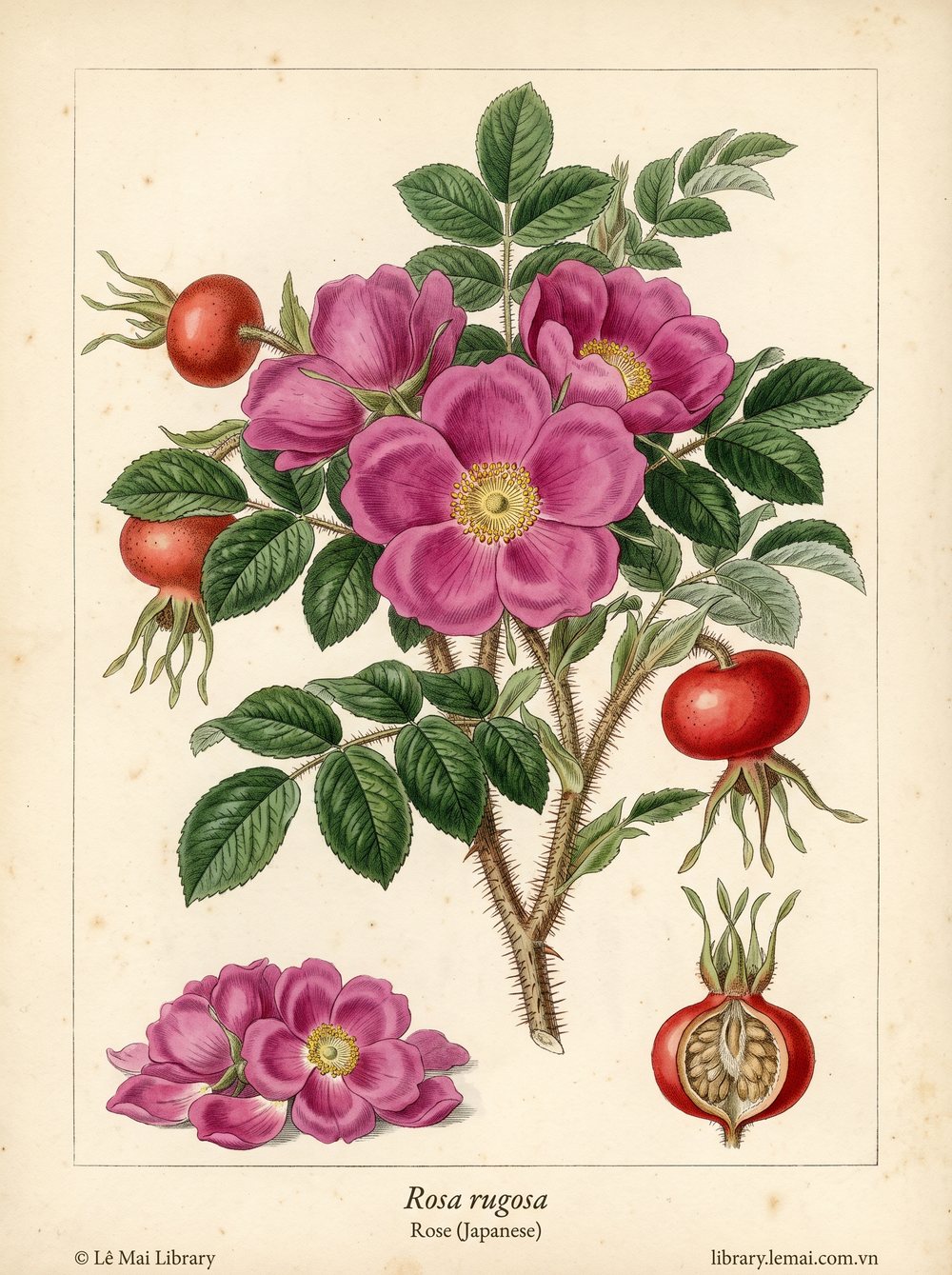
ハマナス
Hoa hồng Nhật
Rosa rugosa
Ramanas rose, Rugosa rose, Hamanasu
Methyl eugenol thấp (0.1 phần trăm), an toàn hơn rose damask và centifolia về methyleugenol.
Khả năng nhạy ứng da thấp.
Không có dữ liệu cho thấy nguy hiểm trong thai kỳ.
Low methyleugenol (0.1 percent), safer than damask and centifolia in terms of methyleugenol.
Low skin sensitization risk.
No data indicates hazard in pregnancy.
| Citronellol | 44.5 % |
| Geraniol | 12.8 % |
| Farnesol | 3.8 % |
| 2-Tridecanone | 3.3 % |
| (+)-Aromadendrene | 2.5 % |
| 2-Dodecanone | 2.5 % |
| 2-Pentadecanone | 1.2 % |
| Linalool | 1.1 % |
| Eugenol | 1.0 % |
| Methyleugenol | 0.1 % |
Rosa rugosa là loài hoa hồng bản địa Đông Á, Nhật Bản, Hàn Quốc, Trung Quốc, miền Đông Nga. Hoa lớn, màu hồng đậm hoặc trắng, có gai dày trên thân.
Tại Nhật, được gọi là 'hamanasu' (浜茄子), biểu tượng của vùng biển và Hokkaido.
Sản xuất tinh dầu hạn chế, chủ yếu Trung Quốc và Nhật.
Họ Rosaceae.
Rosa rugosa is a rose native to East Asia, Japan, Korea, China, eastern Russia. Large flowers, deep pink or white, with thickly thorny stems.
In Japan, called 'hamanasu' (浜茄子), a symbol of coastal regions and Hokkaido.
Limited oil production, mainly China and Japan.
Family Rosaceae.
Citronellol rất cao (44.5%), mùi gần geranium hơn rose damask. Note 'lemony-rose'.
Trong perfumery, Japanese rose dùng cho fragrance Á Đông và Asian-inspired.
Very high citronellol (44.5%), aroma closer to geranium than damask rose. A 'lemony-rose' note.
In perfumery, Japanese rose is used in East Asian and Asian-inspired fragrances.