β-Citronellol
3,7-Dimethyl-6-octen-1-ol
Citronellol · Cephrol · 2,3-Dihydrogeraniol
化学組成 · Constituent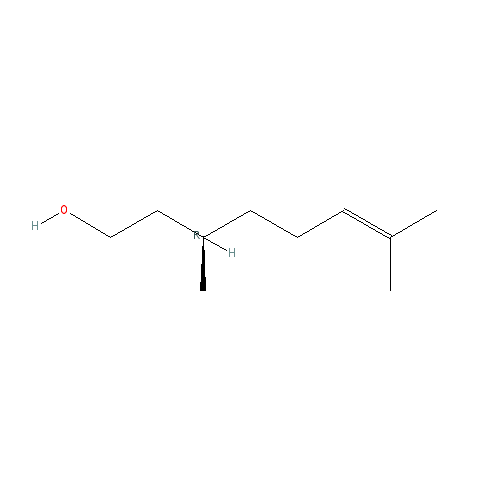
3,7-Dimethyl-6-octen-1-ol
Citronellol · Cephrol · 2,3-Dihydrogeraniol
化学組成 · Constituent
β-Citronellol là cấu tử quan trọng của hoa hồng và geranium. Dữ liệu lớn từ thử nghiệm trên hàng nghìn bệnh nhân cho thấy mức rủi ro mẫn cảm rất thấp.
Trên da. Bôi nguyên chất trên 20 tình nguyện 5 ngày không kích ứng. Patch test 48 giờ ở 20 phần trăm trên 35 tình nguyện không kích ứng. Ở 6 phần trăm trên 25 tình nguyện không mẫn cảm.
Mẫn cảm. Tổng hợp dữ liệu lớn cho thấy tỷ lệ phản ứng dương với citronellol ở 1 phần trăm là 0.07–0.5 phần trăm; ở 5 phần trăm 0–0.3 phần trăm. Trong các nhóm bệnh nhân Nhật Bản và Hàn Quốc, không có phản ứng nào ở 5 phần trăm.
Đường uống. Dữ liệu LD50 không có sẵn nhưng theo IFRA hợp chất có độc tính cấp thấp.
Sinh sản. Hợp chất không có hoạt tính estrogen đáng kể.
Đột biến gen. Không gây đột biến trong Ames test.
β-Citronellol is a key constituent of rose and geranium. Large-scale data from thousands of patients indicate a very low sensitization risk.
Skin. Undiluted on 20 volunteers for five days caused no irritation. A 48-hour patch test at 20 percent on 35 volunteers gave no irritation. At 6 percent on 25 volunteers, no sensitization.
Sensitization. Pooled large studies show citronellol positive rates of 0.07–0.5 percent at 1 percent; 0–0.3 percent at 5 percent. In Japanese and Korean patient groups, no reactions at 5 percent.
Oral. LD50 data are unavailable, but per IFRA the compound has low acute toxicity.
Reproductive. No significant estrogenic activity.
Mutagenicity. Non-mutagenic in the Ames test.
| Phong lữ · Geranium | 18.6 – 47.7 % |
| Hoa hồng Nhật · Rose (Japanese) | 44.5 % |
| Hoa hồng Damask · Rose (Damask) | 16.0 – 43.5 % |
| Sả Java · Citronella | 3.0 – 21.8 % |
| Hoa hồng Provence · Rose (Provence) | 8.8 – 12.0 % |
| Bạch đàn chanh · Lemon-scented gum | 0 – 5.4 % |
| Grindelia | 1.0 – 5.0 % |
| Đương quy Himalaya (rễ) · Angelica root (Himalayan) | 1.5 – 3.0 % |
| Chanh Thái (quả) · Combava fruit | 2.9 % |
| Tuyết tùng Port Orford · Cedarwood (Port Orford) | 2.3 % |
| Linh sam Douglas · Fir (Douglas) | 2.1 % |
| White cloud | 1.6 % |
Citronellol được chuyển hoá chủ yếu qua oxi hoá.
Citronellol is primarily metabolized through oxidation.
β-Citronellol là cấu tử nền cho hương hồng tự nhiên trong nước hoa cao cấp. Hợp chất thường được tổng hợp công nghiệp từ citronellal hoặc geraniol.
Mặc dù nằm trong 26 chất gây dị ứng EU, dữ liệu lâm sàng rộng rãi xác nhận mức rủi ro mẫn cảm rất thấp.
β-Citronellol is the foundation of natural rose notes in fine perfumery. The compound is often synthesized industrially from citronellal or geraniol.
Although listed among the 26 EU fragrance allergens, extensive clinical data confirm a very low sensitization risk.