β-Pinene
6,6-Dimethyl-2-methylenebicyclo[3.1.1]heptane
Nopinene · Pseudopinene · Terebenthene
化学組成 · Constituent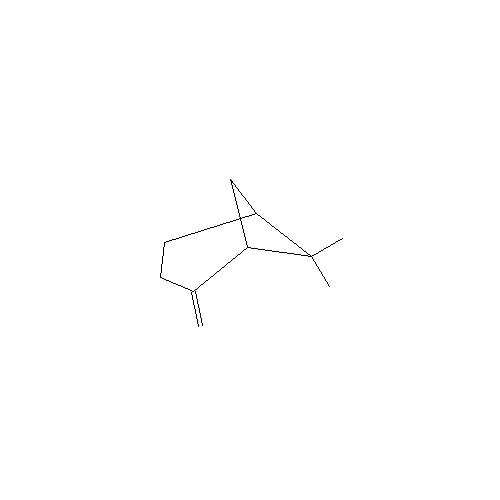
6,6-Dimethyl-2-methylenebicyclo[3.1.1]heptane
Nopinene · Pseudopinene · Terebenthene
化学組成 · Constituent
β-Pinene usually occurs alongside α-pinene in the same oils but at lower levels. It is less prone to form allergenic peroxides than α-pinene.
Skin. Patch testing with 70 to 80 percent fresh unoxidized β-pinene irritated most patients. At 12 percent on 25 volunteers it was neither irritating nor sensitizing. Among 1,200 dermatitis patients patch-tested with 1 percent β-pinene, two allergic reactions occurred at a rate of 0.17 percent.
Oral and respiratory. Acute oral LD50 in rats exceeded 5 g/kg. Acute dermal LD50 in rabbits exceeded 5 g/kg. β-Pinene vapor irritates eyes, nose and lungs, and affects the central nervous system.
Reproductive. Pregnant rats, mice and hamsters given β-pinene at up to 43 to 99 mg/kg/day showed no adverse effects on offspring or maternal survival.
Mutagenicity and cancer. Not mutagenic in the Ames test, not genotoxic in Chinese hamster ovary cells. (-)-β-Pinene shows moderate in vitro antiproliferative activity against breast, melanoma and liver cancer cell lines.
| Galbanum | 45.1 – 58.8 % |
| Fir needle (Canadian) | 28.1 – 56.1 % |
| Longoza | 30.0 – 52.0 % |
| Pine (white) | 31.1 – 33.3 % |
| Pine (Scots) | 1.9 – 33.3 % |
| Pteronia | 32.5 % |
| Spruce (Norway) | 4.8 – 31.9 % |
| Combava fruit | 25.9 – 31.5 % |
| Pine (red) | 29.4 – 29.9 % |
| Turpentine | 0.9 – 29.5 % |
| Pine (ponderosa) | 28.9 % |
| Blackcurrant bud | 0.2 – 24.0 % |
| Spruce (white) | 23.0 % |
| Spruce (hemlock) | 20.8 % |
| Pine (dwarf) | 1.3 – 20.7 % |
| Mace | 10.6 – 20.0 % |
| Nutmeg (East Indian) | 8.7 – 17.7 % |
| Cumin | 4.4 – 17.7 % |
| Lemon (expressed) | 6.0 – 17.0 % |
| Rhododendron | 16.0 % |
| Pine (grey) | 11.1 – 15.4 % |
| Fenugreek | 15.1 % |
| Pepper (black) | 4.9 – 14.3 % |
| Spruce (black) | 14.2 % |
| Lemon (distilled) | 8.2 – 14.0 % |
| Lemon leaf | 3.5 – 13.6 % |
| Neroli | 3.5 – 13.0 % |
| Galangal (greater) | 12.9 % |
| Nutmeg (West Indian) | 7.8 – 12.1 % |
| Spruce (red) | 11.9 % |
| Fir (Douglas) | 11.6 % |
| Sumach (Venetian) | 11.4 % |
| Bergamot (FCF) | 4.0 – 11.0 % |
| Larch needle | 10.2 % |
| Peta | 10.2 % |
After intravenous administration to humans, about 43 percent of β-pinene was excreted in expired air. In rabbits, the compound undergoes hydroxylation to several alcohols and acids including (E)-pinocarveol and myrtenic acid. (-)-β-Pinene is metabolized in rabbits to (-)-10-pinanol and (-)-1-p-menthene-7,8-diol.
The principal degradation products of β-pinene reacting with hydroxyl radicals are nopinone and formaldehyde, with smaller amounts of acetone and acetaldehyde. Compared to α-pinene, β-pinene is less sensitizing when aged and oxidized.