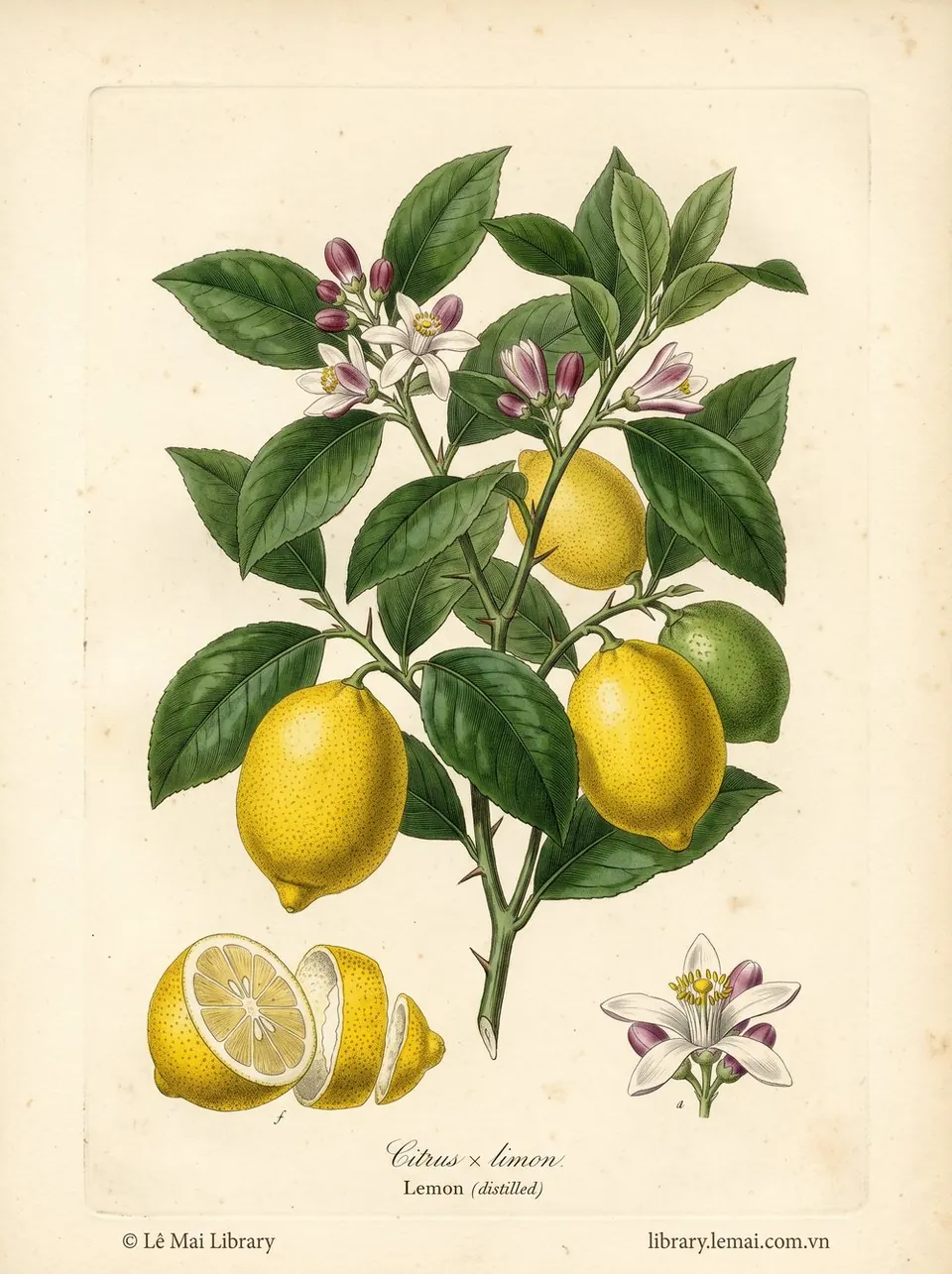
レモン蒸留
Chanh vàng, chưng cất
Citrus x limon
Citrus limonum
Distilled lemon oil is steam-distilled from the fruit peel of Citrus x limon, a member of the citrus family, and differs from the usual expressed lemon oil. It smells lighter and less complex than the expressed oil; its main components are limonene (about 57 to 70%) and β-pinene. Distillation removes the furocoumarins, so it is not phototoxic; it is used mostly as a food flavoring.
Updated 6 Nov 2026 · Lê Mai Team
Oxidation products of (+)-limonene can sensitize skin. Store properly.
Not phototoxic, unlike expressed lemon. No specific dermal concentration limit.
No data indicates hazard in pregnancy.
| (+)-Limonene | 57.0 – 70.0 % |
| β-Pinene | 8.0 – 12.0 % |
| γ-Terpinene | 8.0 – 10.5 % |
| α-Pinene | 2.0 – 3.0 % |
| Sabinene | 1.5 – 2.5 % |
| α-Terpineol | 0.5 – 2.5 % |
| Geranial | 0.5 – 2.0 % |
Distilled lemon oil is a distilled version of lemon peel oil, distinct from the standard expressed lemon (cold-pressed).
The distillation process removes furocoumarins, so the oil is not phototoxic.
Lighter, less complex aroma than expressed. Primarily used as a food flavoring.
In cosmetics, distilled lemon is chosen when lemon aroma is desired without phototoxic risk.
Does not carry the berloque dermatitis risk of expressed lemon.