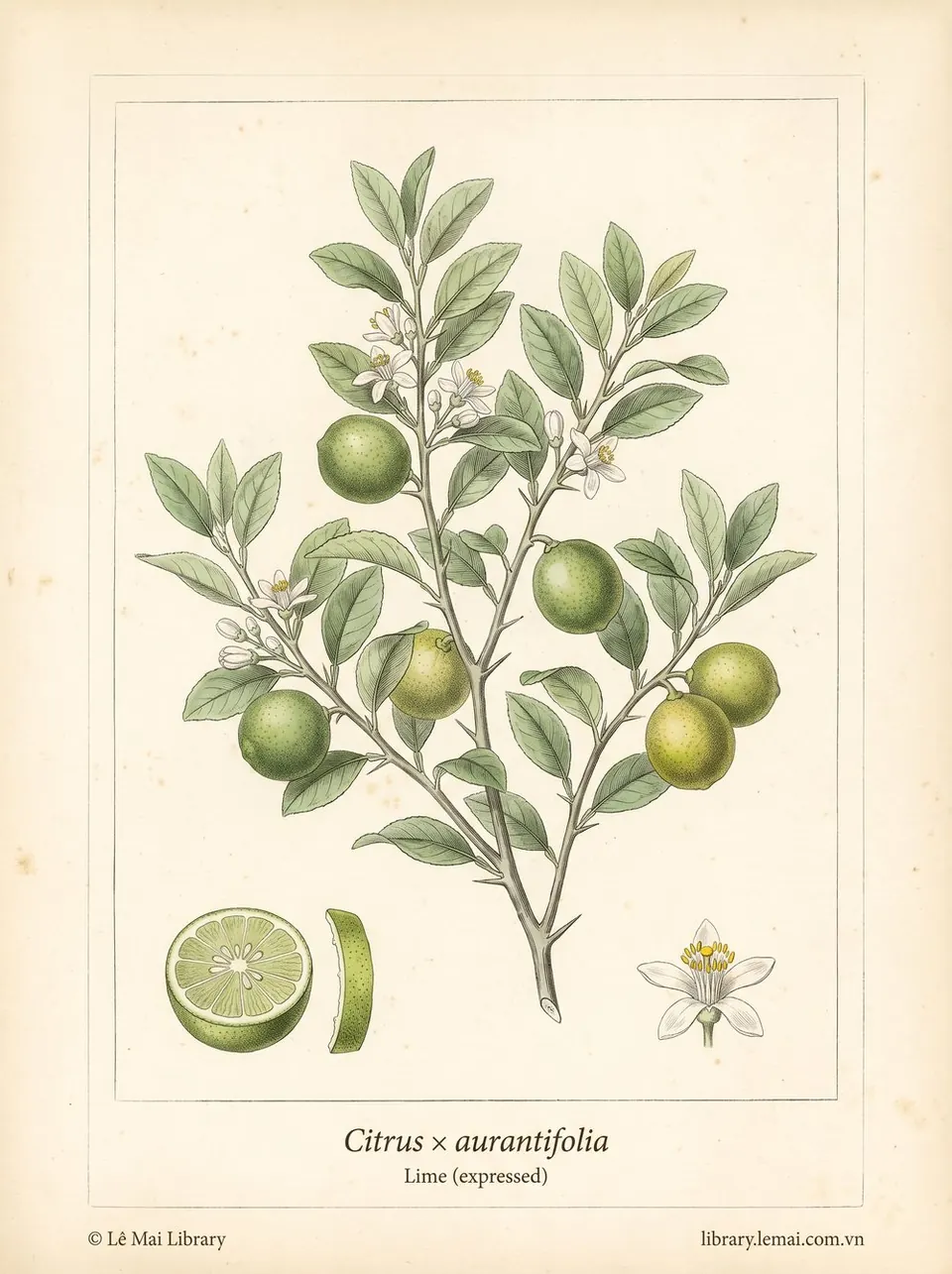
ライム圧搾
Chanh ta, ép
Citrus x aurantifolia
West Indian lime, Key lime, Mexican lime
Expressed lime oil is pressed from the unripe green peel of Citrus x aurantifolia, a member of the citrus family, without heat, so its furocoumarins stay intact. It smells green lime; its main components are limonene (about 48.2%) and β-pinene (about 21.1%). It is strongly phototoxic: keep within dermal limits and avoid sun exposure after applying it.
Updated 6 Nov 2026 · Lê Mai Team
Phototoxic. Phototoxicity is due to bergapten and other furocoumarins. Bergapten is also photocarcinogenic.
Eleven clinical cases of photodermatitis have been reported from expressed lime oil. Photodynamic reactions have been experimentally produced on skin with expressed lime oil and solar irradiation.
Self-application of undiluted cold-pressed lime followed by sun exposure can produce burns, blistering, and prolonged pigmentation (berloque dermatitis), similar to bergamot.
(+)-Limonene oxidation products may also sensitize skin.
No data indicates hazard in pregnancy when used within dermal limits.
| (+)-Limonene | 48.2 % |
| β-Pinene | 21.1 % |
| γ-Terpinene | 8.1 % |
| Sabinene | 3.1 % |
| α-Pinene | 2.5 % |
Expressed lime is cold-pressed from young (green) peel. No heat, preserving furocoumarins.
Production is much smaller than distilled lime. Primarily used in fine perfumery.
Family Rutaceae.
| Virgin Island Water | Creed · 2007 · top |
| Aqua Allegoria Limon Verde | Guerlain · 2014 · top |
| Lime Basil & Mandarin | main note |
| Azure Lime | main note |
Based on note lists published by each house. Fragrance names and marks belong to their owners.
Same phototoxic pattern as bergamot and expressed lemon. Use accordingly, strict dermal limits, avoid sun exposure after application.
An FCF (furocoumarin-free) version exists, similar to bergamot FCF, not phototoxic.