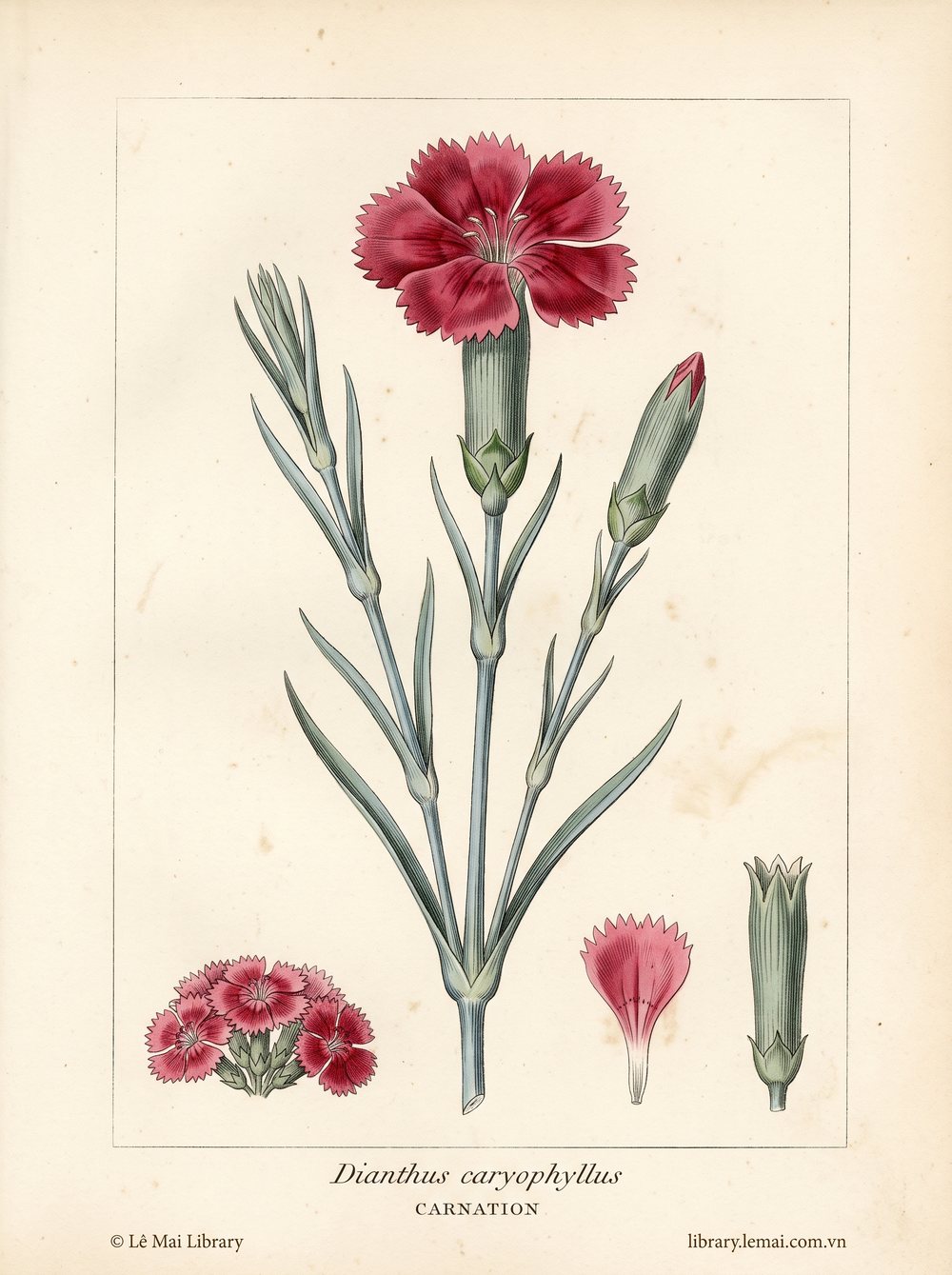
カーネーション
Cẩm chướng
Dianthus caryophyllus
Clove pink
Không có chống chỉ định cụ thể trong dữ liệu hiện có.
Nồng độ tối đa trên da 13.9 phần trăm, dựa trên 3.6 phần trăm eugenol và ngưỡng dermal 0.5 phần trăm cho eugenol.
Benzyl benzoate và benzyl salicylate được EU liệt vào allergen, nhưng rủi ro thực tế không đáng kể.
No specific contraindications in available data.
Maximum dermal use level 13.9 percent, based on 3.6 percent eugenol and a dermal limit of 0.5 percent for eugenol.
Benzyl benzoate and benzyl salicylate are listed as allergens by the EU, but the practical risk is negligible.
| Benzyl benzoate | 5.0 – 14.6 % |
| Pentacosene | 8.1 % |
| Benzyl salicylate | 3.9 % |
| Eugenol | 1.7 – 3.6 % |
| Heptacosene | 2.7 % |
| Methyl linoleate | 2.3 % |
| Tricosene | 1.4 % |
Dianthus caryophyllus là loài hoa cẩm chướng truyền thống, gốc Địa Trung Hải. Tên dân gian 'clove pink' phản ánh ghi chú clove-like của hoa.
Absolute tách bằng dung môi từ hoa. Dữ liệu thành tố trên là absolute Ai Cập.
Họ Caryophyllaceae. Sản lượng giới hạn, giá thành cao.
Dianthus caryophyllus is the traditional carnation, native to the Mediterranean. The folk name 'clove pink' reflects the clove-like note of the flowers.
The absolute is solvent-extracted from the flowers. The constituent data above is for the Egyptian absolute.
Family Caryophyllaceae. Limited availability, high cost.
| Après l'Ondée | Guerlain · 1906 · nốt chính main note |
| L'Heure Bleue | Guerlain · 1912 · nốt giữa heart |
| Bellodgia | Caron · 1927 · nốt chính main note |
| L'Air du Temps | Nina Ricci · 1948 · nốt giữa heart |
| Opium | Yves Saint Laurent · 1977 · nốt giữa heart |
Theo danh sách nốt hương do nhà sản xuất công bố. Tên nước hoa và thương hiệu thuộc chủ sở hữu tương ứng.Based on note lists published by each house. Fragrance names and marks belong to their owners.
Vì giá thành cao, carnation absolute hiếm khi được dùng ở nồng độ đủ cao để gây phản ứng da.
Due to its high cost, carnation absolute is unlikely to be used at a concentration sufficient to cause adverse skin reactions.