Benzyl salicylate
Phenylmethyl 2-hydroxybenzoate
Salicylic acid benzyl ester · o-Hydroxybenzoic acid benzyl ester
化学組成 · Constituent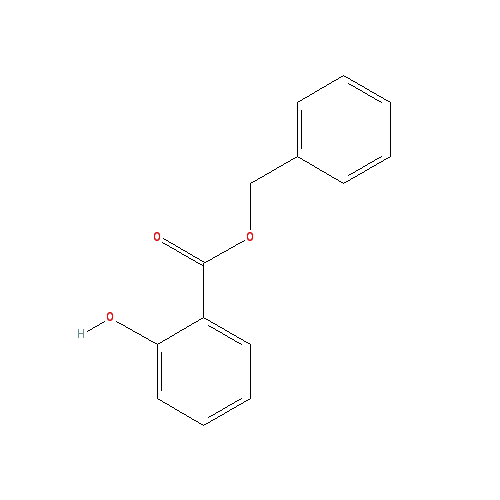
Phenylmethyl 2-hydroxybenzoate
Salicylic acid benzyl ester · o-Hydroxybenzoic acid benzyl ester
化学組成 · Constituent
Benzyl salicylate là một phenol thế nhẹ, axit yếu, có thể ăn mòn mô ở nồng độ cao. Hợp chất nằm trong danh sách 26 chất gây dị ứng EU, nhưng dữ liệu thực tế cho thấy mức rủi ro rất thấp ở người không phải gốc Nhật Bản.
Trên da. Patch test ở 30 phần trăm trên 25 tình nguyện không gây mẫn cảm. Trong 10.503 patch test với sản phẩm chứa dưới 2 phần trăm benzyl salicylate, không có phản ứng nào quy về hợp chất. Trong 100 bệnh nhân viêm da liên tiếp, không phản ứng kích ứng hay dị ứng với 1 phần trăm.
Có khác biệt rõ giữa dân số. Ở Nhật Bản, 3.4 phần trăm trong 5.087 bệnh nhân viêm da phản ứng với 2 phần trăm. Ở châu Âu và Bắc Mỹ, tỷ lệ là 0.76 phần trăm trong 2.640 bệnh nhân.
Đường uống. LD50 cấp tính chuột 2.23 g/kg; LD50 da thỏ 14.15 g/kg, mức rất thấp về độc tính.
Sinh sản. Salicylate nói chung gây ức chế tăng trưởng và dị tật bẩm sinh trong động vật. Benzyl salicylate có hoạt tính estrogen yếu in vitro ở 10⁻⁵ M, ngược lại ở 10⁻⁴ M. Hợp chất ít có khả năng đạt liều gây độc qua nguồn tinh dầu thực tế.
Đột biến gen. Không gây đột biến Ames.
Benzyl salicylate is a mildly substituted phenol, a weak acid that can be corrosive to tissues at high concentrations. Listed among the 26 EU fragrance allergens, practical data show very low risk in non-Japanese populations.
Skin. A 30 percent patch test on 25 volunteers caused no sensitization. In 10,503 patch tests of consumer products containing under 2 percent benzyl salicylate, no reactions were attributable to the compound. In 100 consecutive dermatitis patients, no irritant or allergic reactions to 1 percent.
Clear population differences exist. In Japan, 3.4 percent of 5,087 dermatitis patients reacted to 2 percent. In Europe and North America, the rate is 0.76 percent in 2,640 patients.
Oral. Acute oral LD50 in rats is 2.23 g/kg; rabbit dermal LD50 is 14.15 g/kg, indicating very low toxicity.
Reproductive. Salicylates generally inhibit growth and cause congenital abnormalities in animals. Benzyl salicylate has weak in vitro estrogenic activity at 10⁻⁵ M, with an opposite effect at 10⁻⁴ M. It is unlikely to reach toxic doses through practical essential oil exposure.
Mutagenicity. Non-mutagenic in the Ames test.
| Ngọc lan tây · Ylang-ylang | 0.3 – 3.9 % |
| Cẩm chướng · Carnation | 3.9 % |
| Hoa huệ Mexico · Tuberose | 2.6 % |
Benzyl salicylate có khả năng hấp thụ UV. Hợp chất từng được dùng làm thành phần chống nắng nhẹ. Hiện nay vai trò chính là chất giữ mùi cho note hoa trong nước hoa cao cấp.
Benzyl salicylate absorbs UV light. The compound was historically used as a mild sunscreen ingredient. Today its main role is as a fixative for floral notes in fine perfumery.