Terpinen-4-ol
4-Methyl-1-(1-methylethyl)-3-cyclohexen-1-ol
Terpin-4-ol · Terpinenol-4 · 4-Terpineol · 4-Carvomenthol · p-Menth-1-en-4-ol
化学組成 · Constituent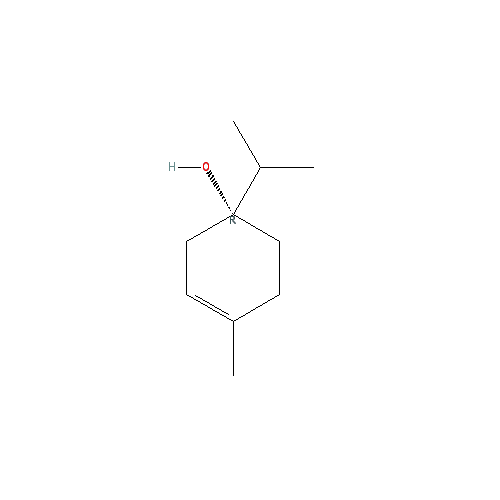
4-Methyl-1-(1-methylethyl)-3-cyclohexen-1-ol
Terpin-4-ol · Terpinenol-4 · 4-Terpineol · 4-Carvomenthol · p-Menth-1-en-4-ol
化学組成 · Constituent
Terpinen-4-ol is the principal constituent of tea tree oil and the main antibacterial component. Available data indicates it is safe at standard concentrations.
Skin. At 5 percent on 25 volunteers it was neither irritating nor sensitizing. Among 7 tea tree-sensitized dermatitis patients, only 1 reacted to 1 percent terpinen-4-ol. At 10 percent it was not sensitizing in 11 tea tree-sensitized patients. The compound also reduces edema associated with contact hypersensitivity.
Oral. Acute oral LD50 in rats was 1.3 g/kg. Acute dermal LD50 in rabbits exceeded 2.5 g/kg.
Kidney. Oral dosing at 400 mg/kg/day for 28 days produced no changes in kidney function or morphology.
Chronic. After chronic administration to mice, no discernible pathological changes occurred.
Mutagenicity and cancer. Not mutagenic in the Ames test. Shows in vitro anticancer activity against several human cancer cell lines including leukemia, cervical cancer, liver cancer and melanoma.
| Tea tree | 30.0 – 48.0 % |
| Plai | 41.7 % |
| Marjoram (sweet) | 16.4 – 31.6 % |
| Basil (hairy) | 7.5 – 26.8 % |
| Kewda | 0 – 21.0 % |
| Ghandi root | 17.2 % |
| Juniperberry | 1.5 – 17.0 % |
| Mace | 4.4 – 14.0 % |
| Nutmeg (East Indian) | 1.0 – 10.9 % |
| Labrador tea | 7.6 % |
| Calamint (lesser) | 0 – 6.8 % |
| Nutmeg (West Indian) | 3.0 – 6.4 % |
| Curry leaf | 6.1 % |
| Lavender | 0 – 6.0 % |
| Pteronia | 5.3 % |
| Saro | 3.0 – 5.0 % |
| Peppermint | 0 – 5.0 % |
Terpinen-4-ol differs from α-terpinene and γ-terpinene in stability and sensitization risk. The compound rarely causes allergy and is the constituent that tea tree quality analyses use to verify antibacterial potency.