オポポナックス
Opopanax, Mộc dược ngọt
Commiphora guidottii
Sweet myrrh, Bisabol myrrh
Khả năng nhạy ứng da thấp.
Có một số báo cáo về tính phototoxic ở nồng độ cao, dù dữ liệu chưa xác định rõ. Khuyến cáo giới hạn dermal khi tiếp xúc ánh nắng.
Không khuyến cáo trong thai kỳ, opopanax cùng họ với myrrh, có khả năng tác dụng tương tự.
Low skin sensitization risk.
Some reports of phototoxicity at high concentrations, though data is inconclusive. Dermal limit recommended for sun-exposed applications.
Not recommended in pregnancy, opopanax is in the same family as myrrh, with potentially similar effects.
| α-Bisabolene | 10.0 – 25.0 % |
| β-Bisabolene | 8.0 – 15.0 % |
| γ-Bisabolene | 5.0 – 12.0 % |
| α-Santalene | 5.0 – 10.0 % |
| β-Caryophyllene | 3.0 – 8.0 % |
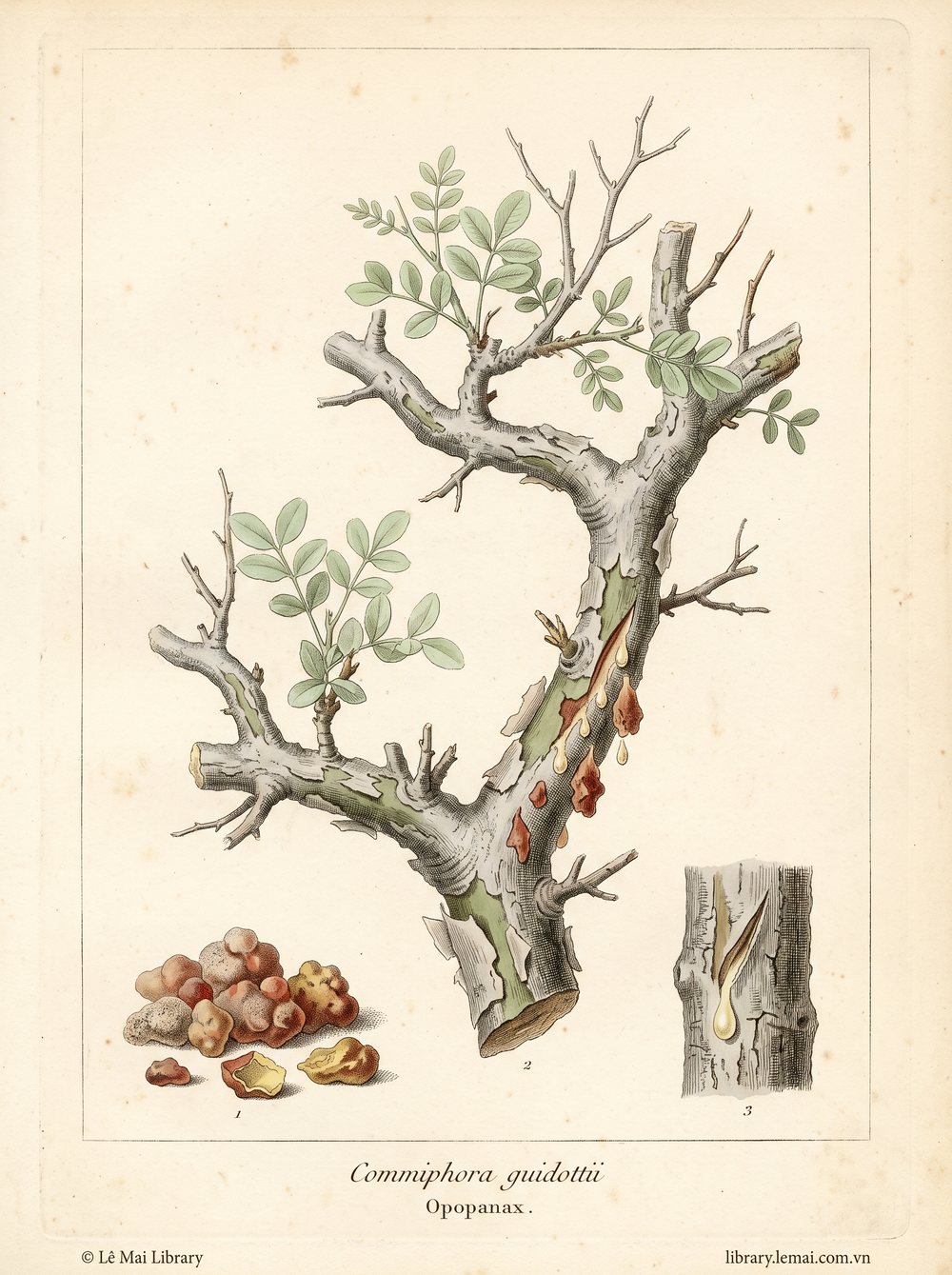
Commiphora guidottii là cây gỗ vùng bán hoang mạc Đông Phi, đặc biệt Somalia, Ethiopia.
Khi vỏ thân bị tổn thương, nhựa vàng cam chảy ra. Đặc lại thành resin gọi là opopanax hoặc sweet myrrh.
Tinh dầu chưng cất từ resin. Sản lượng nhỏ.
Họ Burseraceae, cùng họ với myrrh (Commiphora myrrha) và frankincense (Boswellia).
Commiphora guidottii is a tree from the semi-arid regions of East Africa, particularly Somalia and Ethiopia.
When the trunk bark is damaged, yellow-orange sap flows out. It hardens into resin called opopanax or sweet myrrh.
The essential oil is distilled from the resin. Small-scale production.
Family Burseraceae, same family as myrrh (Commiphora myrrha) and frankincense (Boswellia).
| Opium | Yves Saint Laurent · 1977 · nốt đáy base |
| Le Must de Cartier | Cartier · 1981 · nốt đáy base |
| Coco | Chanel · 1984 · nốt đáy base |
| Poison | Dior · 1985 · nốt đáy base |
| L'Eau Ambrée | Prada · 2004 · nốt đáy base |
Theo danh sách nốt hương do nhà sản xuất công bố. Tên nước hoa và thương hiệu thuộc chủ sở hữu tương ứng.Based on note lists published by each house. Fragrance names and marks belong to their owners.
Mùi gần myrrh nhưng ngọt hơn và có chiều balsamic rõ, do đó tên 'sweet myrrh'.
Trong perfumery, opopanax là note nền oriental quan trọng. Trong incense, opopanax và myrrh thường dùng kết hợp.
Aroma close to myrrh but sweeter and more balsamic, hence the name 'sweet myrrh'.
In perfumery, opopanax is an important oriental base note. In incense, opopanax and myrrh are often used together.