マスティック
Nhựa thông Mastic
Pistacia lentiscus
Mastic gum, Chios mastic
Khả năng nhạy ứng da thấp. α-Pinene dominant.
Sản phẩm oxy hóa của monoterpene có thể gây nhạy ứng. Bảo quản đúng cách.
Không có dữ liệu cho thấy nguy hiểm trong thai kỳ.
Low risk of skin sensitization. α-Pinene dominant.
Monoterpene oxidation products may sensitize skin. Store properly.
No data indicates hazard in pregnancy.
| α-Pinene | 50.0 – 70.0 % |
| β-Myrcene | 10.0 – 15.0 % |
| β-Pinene | 2.0 – 5.0 % |
| (+)-Limonene | 2.0 – 4.0 % |
| α-Terpinolene | 1.0 – 3.0 % |
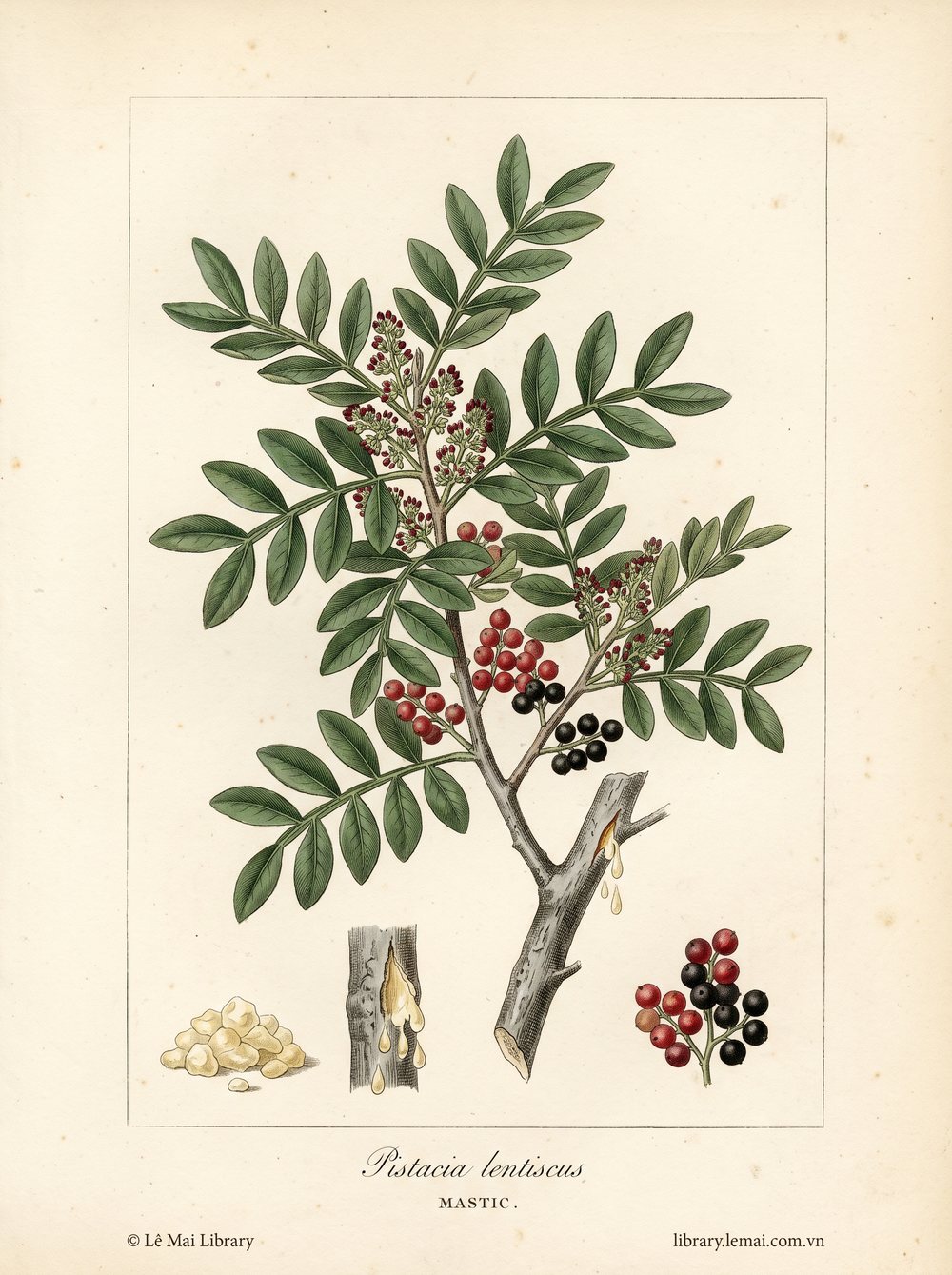
Pistacia lentiscus là cây bụi Địa Trung Hải. Khi vỏ thân được chích, nhựa trắng đặc chảy ra, gọi là mastic gum.
Chios (Hy Lạp) là nguồn sản xuất chính truyền thống. Mastic Chios có chứng nhận PDO (Protected Designation of Origin) của EU.
Tinh dầu chưng cất từ resin. Sản lượng nhỏ.
Họ Anacardiaceae, cùng họ với pistachio và mango.
Pistacia lentiscus is a Mediterranean shrub. When the trunk bark is tapped, a thick white resin flows out, called mastic gum.
Chios (Greece) is the main traditional source. Chios mastic carries EU PDO (Protected Designation of Origin) certification.
The essential oil is distilled from the resin. Small-scale production.
Family Anacardiaceae, same family as pistachio and mango.
Resin gốc được dùng từ thời cổ đại làm kẹo cao su, chất thơm, và trong y học truyền thống Hy Lạp.
Tinh dầu mastic dùng trong perfumery cho note resin tươi, slightly piney.
The raw resin has been used since antiquity as chewing gum, an aromatic ingredient, and in Greek traditional medicine.
Mastic essential oil is used in perfumery for a fresh resin note, slightly piney.