イヌラ
Mộc lan đại
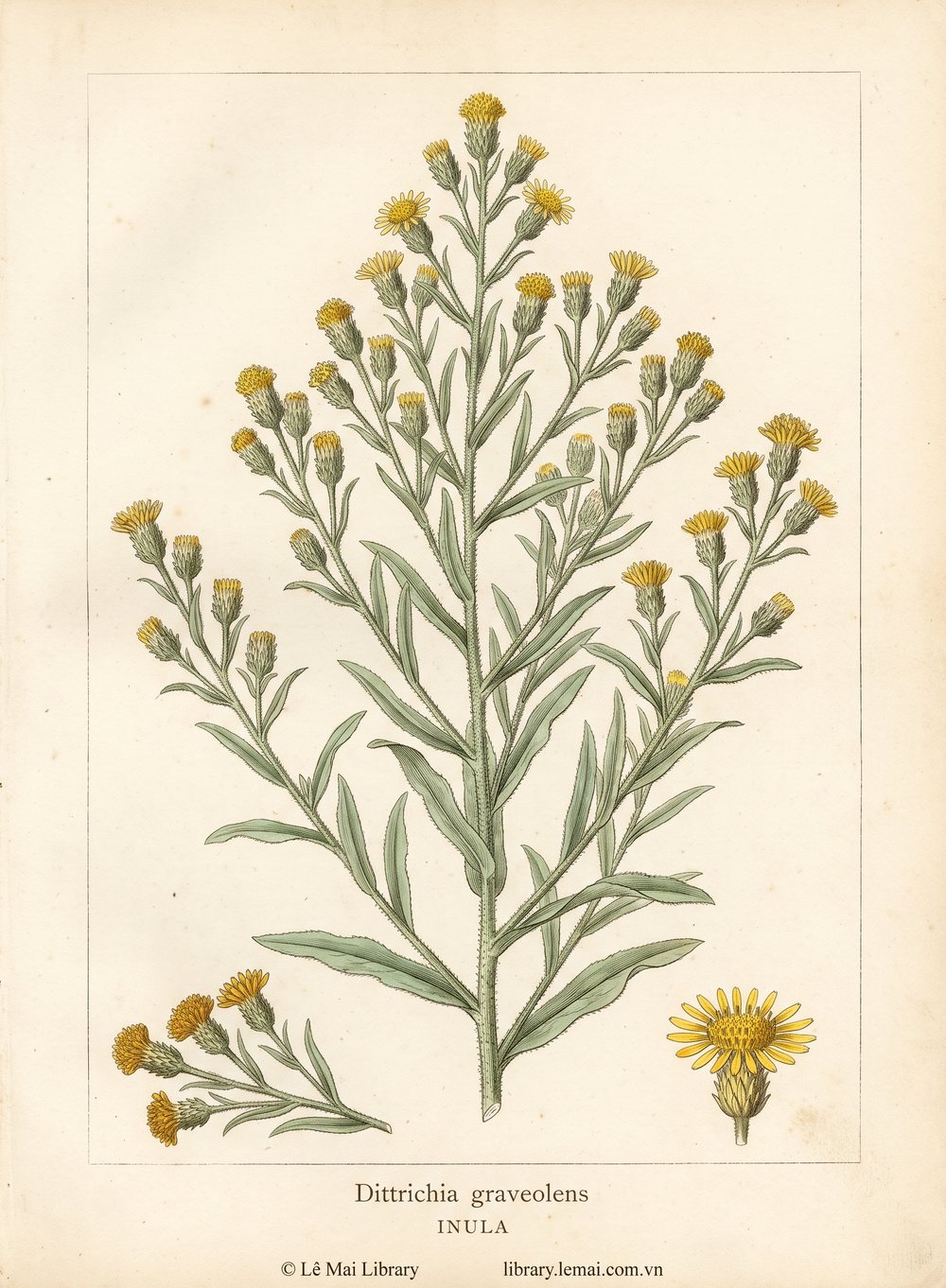
Dittrichia graveolens
Sweet inula, Camphor inula, Inula graveolens
Không có chống chỉ định cụ thể trong dữ liệu hiện có.
Không nhầm với Inula helenium (Elecampane), Inula graveolens là cây khác, có chemistry hoàn toàn khác và không có rủi ro nhạy ứng cao của elecampane.
Bornyl acetate (thành tố chính 46 phần trăm) và borneol (15 phần trăm), không gây độc đáng kể.
No specific contraindications in available data.
Not to be confused with Inula helenium (Elecampane), Inula graveolens is a different plant, with completely different chemistry and without elecampane's high sensitization risk.
Bornyl acetate (the major constituent at 46 percent) and borneol (15 percent), no significant toxicity.
| Bornyl acetate | 46.1 % |
| Borneol | 15.3 % |
| T-Cadinol | 7.5 % |
| Camphene | 4.5 % |
| 2,3-Dehydro-1,8-cineole | 2.5 % |
| β-Caryophyllene | 2.4 % |
| Caryophyllene oxide | 2.2 % |
| γ-Cadinene | 1.5 % |
| α-Terpineol | 1.4 % |
Dittrichia graveolens (tên cũ Inula graveolens) là cây thảo nhỏ vùng Địa Trung Hải. Đã được phân loại lại từ chi Inula sang chi Dittrichia trong botanical taxonomy hiện đại.
Tinh dầu cất hơi từ đầu hoa.
Họ Asteraceae. Cùng họ với elecampane (Inula helenium) nhưng đây là cây hoàn toàn khác, chỉ chung tên 'inula' commercial.
Dittrichia graveolens (formerly Inula graveolens) is a small Mediterranean herb. Reclassified from Inula to Dittrichia in modern botanical taxonomy.
The oil is steam-distilled from flowering tops.
Family Asteraceae. Same family as elecampane (Inula helenium) but a completely different plant, sharing only the 'inula' commercial name.
Hai tinh dầu 'inula' thương mại, Inula helenium (Elecampane, rất nhạy ứng, IFRA cấm) và Inula graveolens (an toàn). Đọc kỹ tên loài trước khi mua.
Two commercial 'inula' oils, Inula helenium (Elecampane, highly sensitizing, IFRA prohibited) and Inula graveolens (safe). Verify species before purchase.