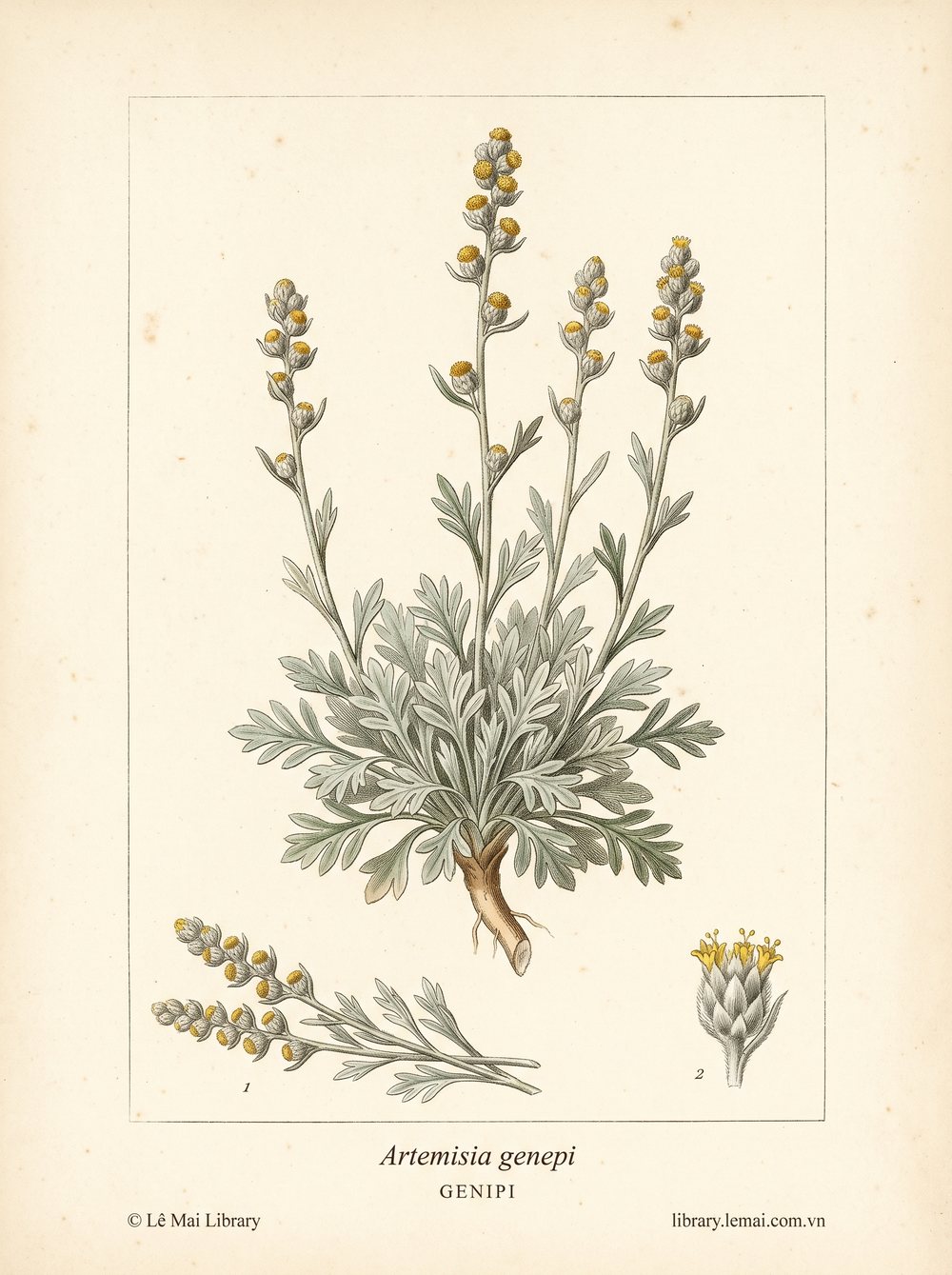
ジェニピ
Cỏ Genipi
Artemisia genepi
Genepi, Artemisia spicata, Artemisia mutellina
Có khả năng độc thần kinh dựa trên hàm lượng thujone cao (90.2 phần trăm tổng α + β-thujone).
Chống chỉ định toàn diện: mang thai, cho con bú.
Không nên dùng đường uống.
Nồng độ tối đa trên da 0.3 phần trăm.
Cơ sở: 90.2 phần trăm tổng thujone, với ngưỡng dermal 0.25 phần trăm.
Thujone có rủi ro co giật ở liều cao. NOAEL co giật 10 mg trên kg ở chuột đực, 5 mg trên kg ở chuột cái.
Expected to be neurotoxic based on high thujone content (90.2 percent total α + β-thujone).
Broad contraindications: pregnancy, breastfeeding.
Should not be taken orally.
Maximum dermal use level 0.3 percent.
Basis: 90.2 percent total thujone, with dermal limit of 0.25 percent.
Thujone carries seizure risk at high doses. NOAEL for convulsions: 10 mg per kg in male rats, 5 mg per kg in females.
| α-Thujone | 79.8 % |
| β-Thujone | 10.4 % |
| β-Pinene | 1.3 % |
| Terpinen-4-ol | 1.0 % |
Artemisia genepi là cây thảo Alpine, phân bố cao trên 2000 mét ở dãy Alps. Lá nhỏ, có lông xám bạc.
Tinh dầu cất hơi từ bộ phận trên mặt đất. Sản lượng hạn chế.
Họ Asteraceae. Cùng chi Artemisia với wormwood, mugwort, tarragon, nhóm các loài có thujone cao và rủi ro độc thần kinh.
Artemisia genepi is an alpine herb, found above 2000 meters in the Alps. Small leaves with silvery-grey hairs.
The oil is steam-distilled from the aerial parts. Limited availability.
Family Asteraceae. Same genus Artemisia as wormwood, mugwort, tarragon, a group of high-thujone species with neurotoxicity risk.
Genepi được dùng truyền thống làm rượu mùi Alpine (genepy/genepi liqueur), thường ở nồng độ rất thấp trong cồn vì lý do an toàn. Tinh dầu tập trung thì nguy hiểm hơn nhiều.
EU SCF report về thujone đã kết luận dữ liệu hiện có không đủ để xác lập TDI/ADI.
Genepi is traditionally used in Alpine liqueur production (genepy/genepi liqueur), at very low concentrations in alcohol for safety reasons. The concentrated essential oil is markedly more hazardous.
The EU SCF report on thujone concluded that available data were inadequate to establish a TDI/ADI.