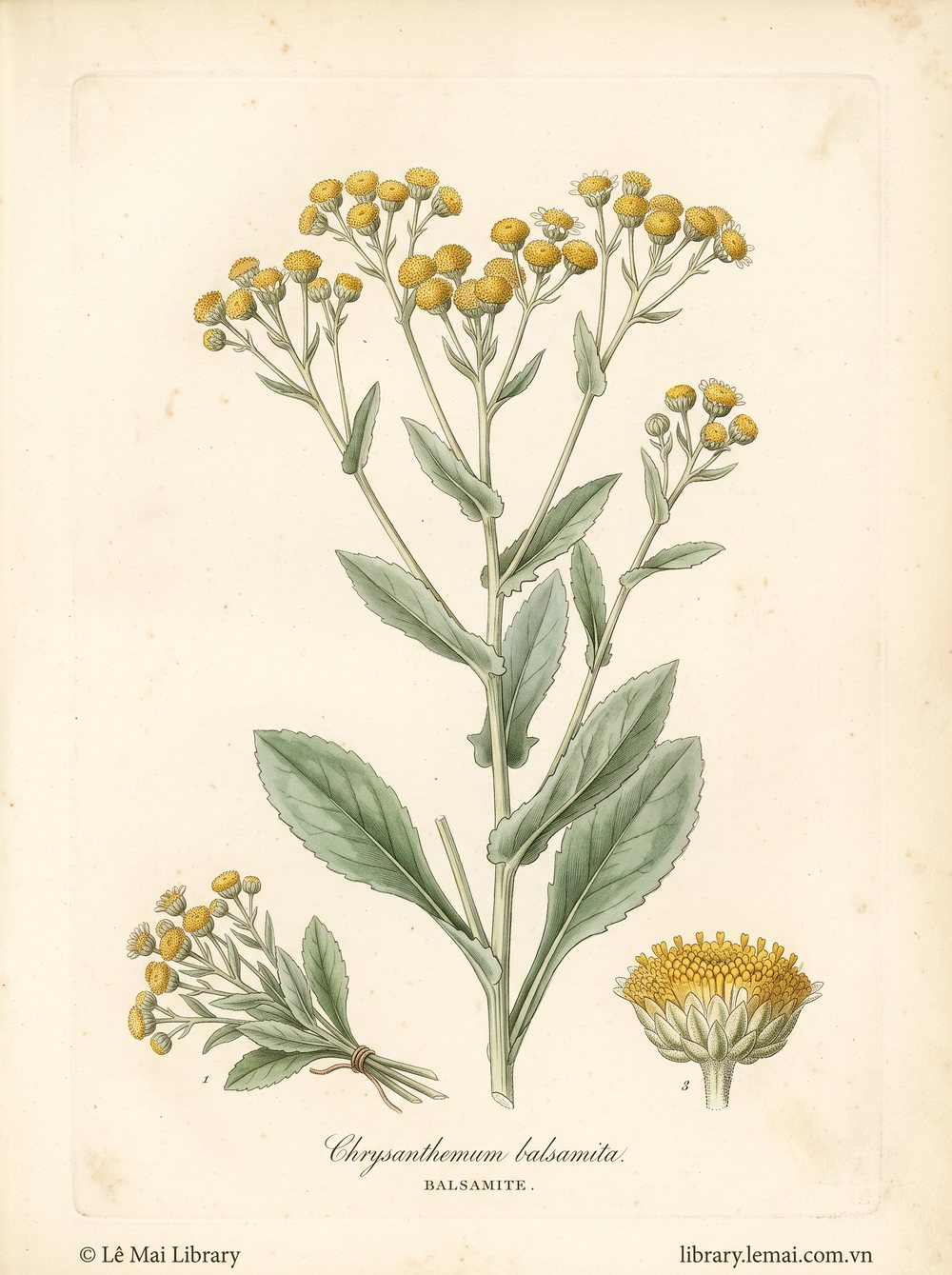
バルサマイト
Cúc thơm Balsamite
Chrysanthemum balsamita
Costmary, Alecost, Balsamita major
Có khả năng gây độc thần kinh nhẹ do hàm lượng thujone.
Liều dùng dạng uống tối đa người lớn 700 mg mỗi ngày, dựa trên 1 phần trăm thujone với ngưỡng 0.1 mg trên kg.
Không có chống chỉ định cụ thể.
Nồng độ tối đa trên da 2.3 phần trăm, dựa trên 51.5 phần trăm carvone với ngưỡng 1.2 phần trăm để tránh nhạy ứng da.
Potentially mildly neurotoxic due to thujone content.
Maximum adult daily oral dose 700 mg, based on 1 percent thujone and a limit of 0.1 mg per kg.
No specific contraindications.
Maximum dermal use level 2.3 percent, based on 51.5 percent carvone content and a limit of 1.2 percent to avoid skin sensitization.
| (−)-Carvone | 51.5 % |
| β-Cubebene | 4.7 % |
| (+)-Limonene | 2.6 % |
| α-Thujone | 0.8 % |
| β-Thujone | 0.2 % |
Chrysanthemum balsamita là cây thảo nhiều năm, lá dài và xám bạc, thuộc họ Cúc. Vùng phân bố Tây Á và Trung Á.
Bộ phận trên mặt đất được chưng cất hơi. Có một chemotype camphor nhưng hiện không sản xuất thương mại.
Tên cũ trong nghiên cứu thực vật là Balsamita major và Pyrethrum majus.
Chrysanthemum balsamita is a hardy perennial herb with long, silver-grey leaves, in the daisy family. Native to western and central Asia.
The aerial parts are steam-distilled. A camphor chemotype exists but is not currently commercially produced.
Botanical synonyms include Balsamita major and Pyrethrum majus.
Sản lượng nhỏ. Tên dân gian alecost xuất phát từ tập tục dùng lá thơm cho bia thời trung cổ.
Limited availability. The folk name alecost recalls a medieval practice of flavoring ale with the aromatic leaves.