ミルトル
Cây sim
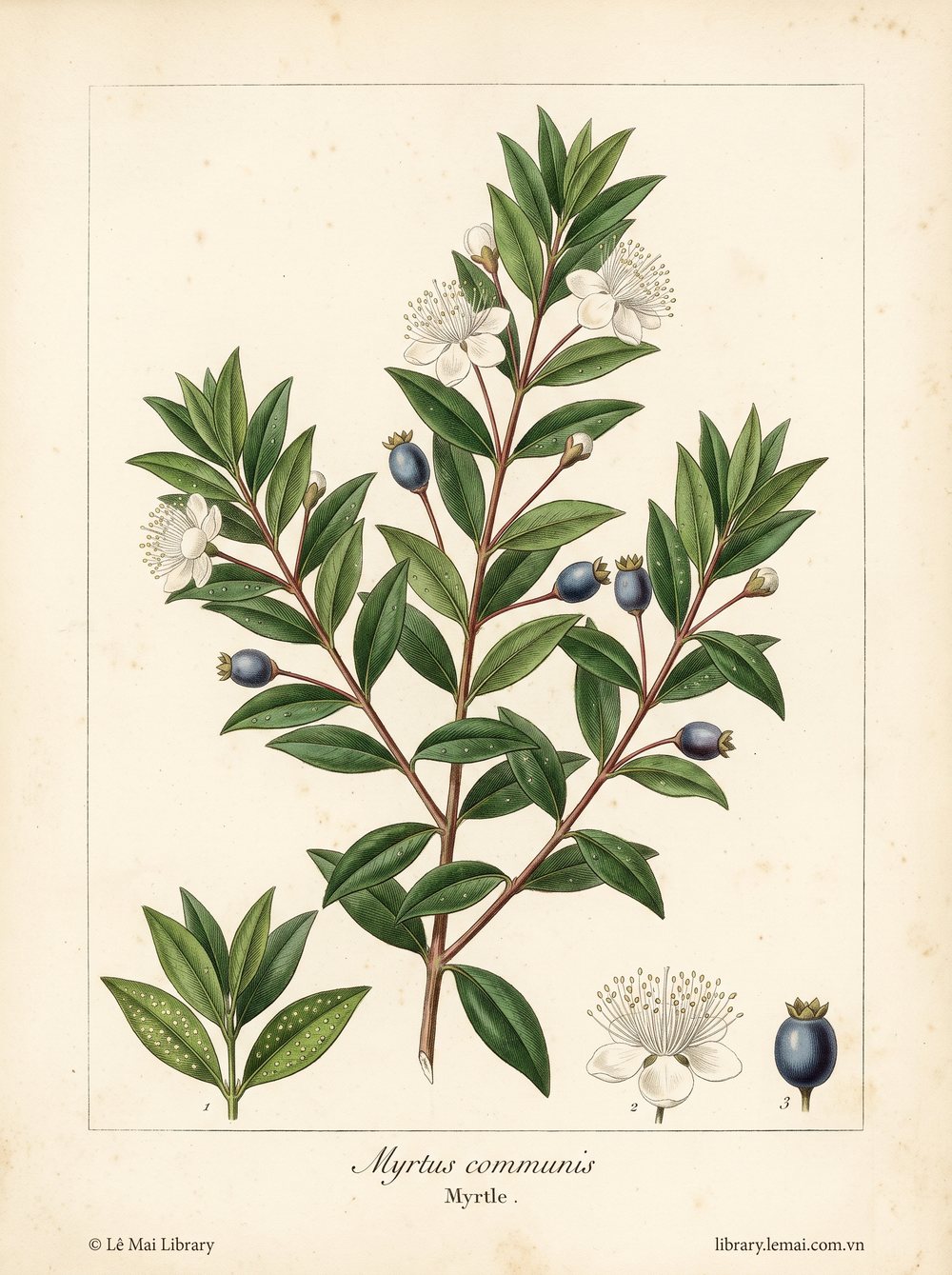
Myrtus communis
Common myrtle
1,8-Cineole hàm lượng cao (đặc biệt CT cineole). Tránh bôi gần mặt trẻ em dưới 6 do nguy cơ co thắt thanh quản.
Hai chemotype chính: CT cineole (1,8-cineole 30-50%) và CT myrtenyl acetate (myrtenyl acetate 30-50%, ít cineole hơn).
Không có dữ liệu cho thấy nguy hiểm trong thai kỳ.
Khả năng kích ứng da thấp.
1,8-Cineole content high (particularly in the cineole CT). Avoid application near the face of children under 6 due to laryngospasm risk.
Two main chemotypes: cineole CT (1,8-cineole 30-50%) and myrtenyl acetate CT (myrtenyl acetate 30-50%, less cineole).
No data indicates hazard in pregnancy.
Low skin irritation risk.
| 1,8-Cineole | 15.0 – 50.0 % |
| α-Pinene | 20.0 – 38.0 % |
| Myrtenyl acetate | 0 – 50.0 % |
| (+)-Limonene | 5.0 – 13.0 % |
| Linalool | 1.0 – 5.0 % |
| α-Terpinolene | 1.0 – 3.0 % |
Myrtus communis là cây bụi thường xanh vùng Địa Trung Hải. Lá nhỏ, xanh đậm, mùi thơm.
Trong văn hóa cổ đại Hy Lạp và La Mã, myrtle là biểu tượng của tình yêu, dành riêng cho Aphrodite/Venus. Vòng myrtle truyền thống đeo trong đám cưới.
Sản xuất chính Corsica (Pháp), Tunisia, Maroc, Albania. Cây mọc tới 5m.
Họ Myrtaceae, cùng họ với eucalyptus, manuka, tea tree.
Myrtus communis is a Mediterranean evergreen shrub. Small dark green aromatic leaves.
In ancient Greek and Roman culture, myrtle was a symbol of love, sacred to Aphrodite/Venus. Traditional myrtle wreaths were worn at weddings.
Main production: Corsica (France), Tunisia, Morocco, Albania. The plant grows up to 5m.
Family Myrtaceae, same family as eucalyptus, manuka, and tea tree.
Myrtle truyền thống dùng cho hô hấp do 1,8-cineole.
Quả myrtle (myrtle berries) được dùng làm rượu mùi 'Myrtle' tại Sardinia và Corsica.
Myrtle is traditionally used for respiratory support due to 1,8-cineole.
Myrtle berries are used to make 'Myrtle' liqueur in Sardinia and Corsica.