ミルトル
Cây sim
Myrtus communis
Common myrtle
1,8-Cineole content high (particularly in the cineole CT). Avoid application near the face of children under 6 due to laryngospasm risk.
Two main chemotypes: cineole CT (1,8-cineole 30-50%) and myrtenyl acetate CT (myrtenyl acetate 30-50%, less cineole).
No data indicates hazard in pregnancy.
Low skin irritation risk.
| 1,8-Cineole | 15.0 – 50.0 % |
| α-Pinene | 20.0 – 38.0 % |
| Myrtenyl acetate | 0 – 50.0 % |
| (+)-Limonene | 5.0 – 13.0 % |
| Linalool | 1.0 – 5.0 % |
| α-Terpinolene | 1.0 – 3.0 % |
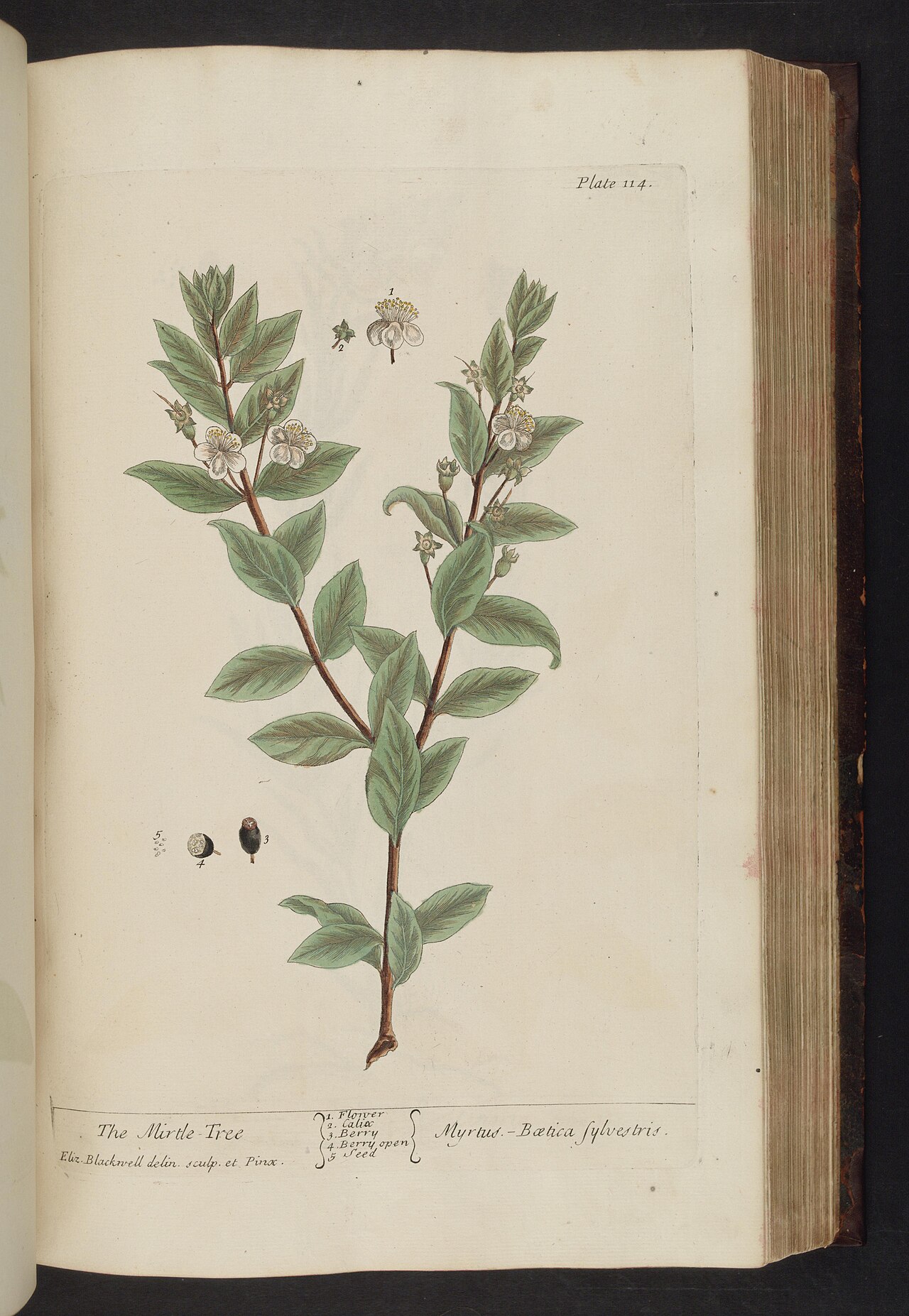
Myrtus communis is a Mediterranean evergreen shrub. Small dark green aromatic leaves.
In ancient Greek and Roman culture, myrtle was a symbol of love, sacred to Aphrodite/Venus. Traditional myrtle wreaths were worn at weddings.
Main production: Corsica (France), Tunisia, Morocco, Albania. The plant grows up to 5m.
Family Myrtaceae, same family as eucalyptus, manuka, and tea tree.
Myrtle is traditionally used for respiratory support due to 1,8-cineole.
Myrtle berries are used to make 'Myrtle' liqueur in Sardinia and Corsica.