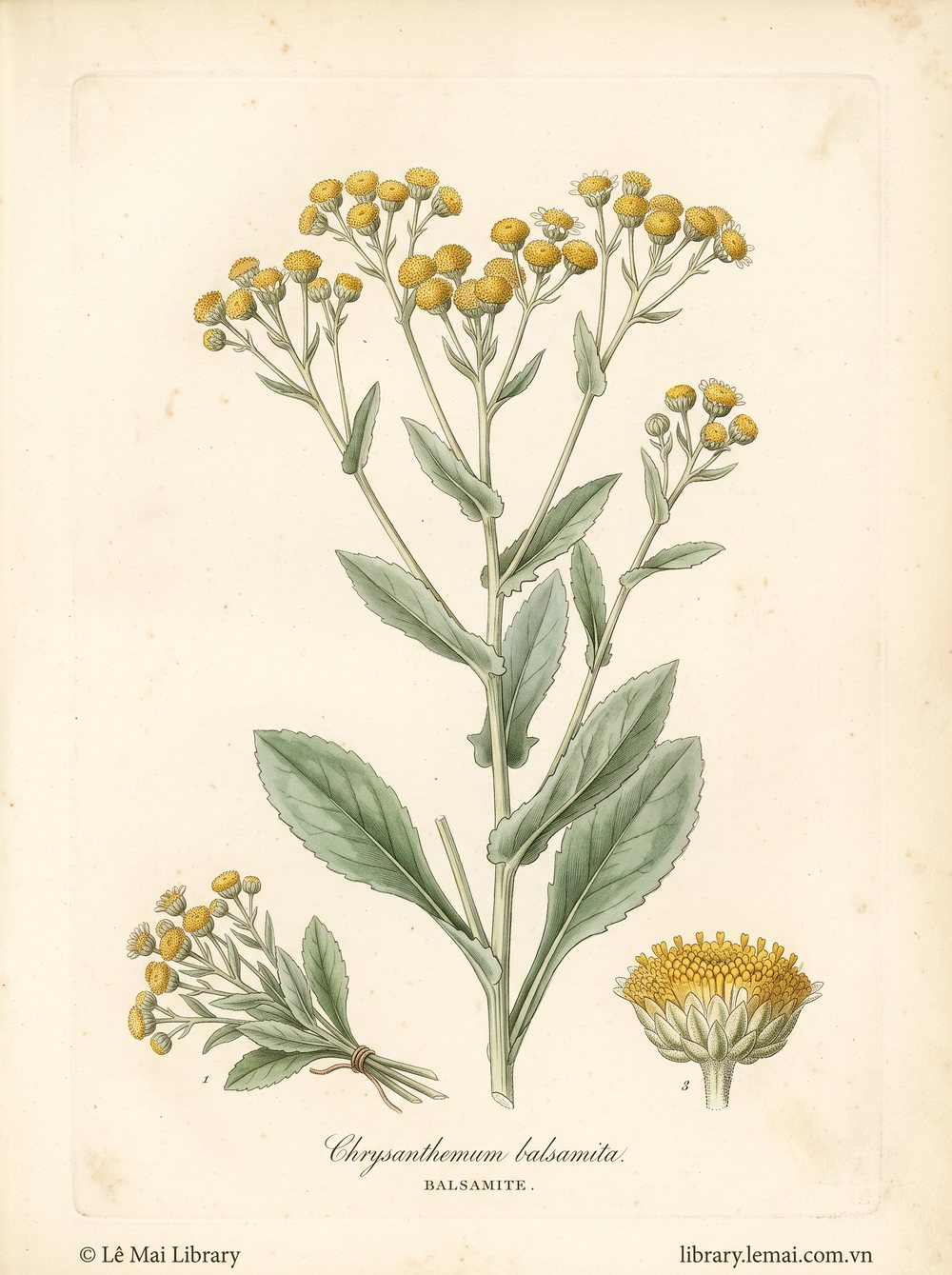
バルサマイト
Cúc thơm Balsamite
Chrysanthemum balsamita
Costmary, Alecost, Balsamita major
Potentially mildly neurotoxic due to thujone content.
Maximum adult daily oral dose 700 mg, based on 1 percent thujone and a limit of 0.1 mg per kg.
No specific contraindications.
Maximum dermal use level 2.3 percent, based on 51.5 percent carvone content and a limit of 1.2 percent to avoid skin sensitization.
| (−)-Carvone | 51.5 % |
| β-Cubebene | 4.7 % |
| (+)-Limonene | 2.6 % |
| α-Thujone | 0.8 % |
| β-Thujone | 0.2 % |
Chrysanthemum balsamita is a hardy perennial herb with long, silver-grey leaves, in the daisy family. Native to western and central Asia.
The aerial parts are steam-distilled. A camphor chemotype exists but is not currently commercially produced.
Botanical synonyms include Balsamita major and Pyrethrum majus.
Limited availability. The folk name alecost recalls a medieval practice of flavoring ale with the aromatic leaves.