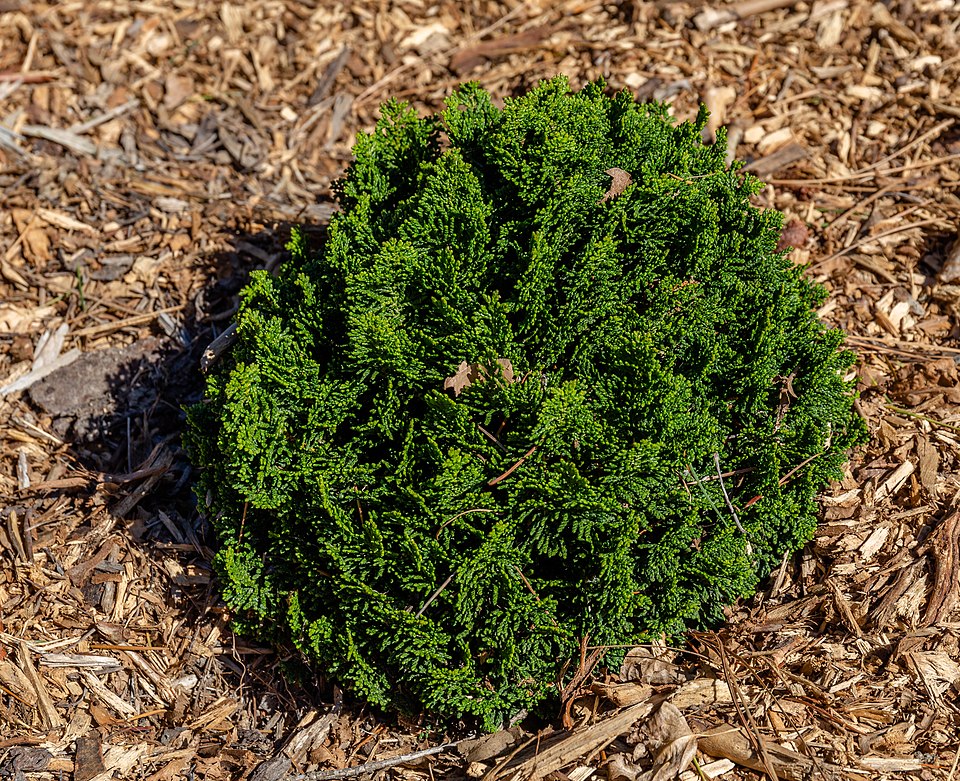
ヒノキ リーフ
Hinoki (lá)
Chamaecyparis obtusa
Hinoki false cypress (var. obtusa), Formosan hinoki (var. formosana)
No specific contraindications in available data.
No information on dermal reactions or acute toxicity for hinoki leaf oil.
Contains no known carcinogens. (+)-Limonene and γ-eudesmol display anticarcinogenic activity.
Hinoki leaf oil induced CYP2B1 in rat studies, not at a level suggesting significant drug interaction.
Var. formosana (Formosan hinoki) has been proposed by UNEP-WCMC for CITES addition to the threatened plant list.
| α-Pinene | Major |
| Longifolene | Major |
| Sabinene | Variable |
| Thujopsene | Variable |
| Elemol | Variable |
Chamaecyparis obtusa is a tree endemic to Japan and Taiwan. Hinoki wood is one of the most prized building materials in Japan, used for temples, shrines, traditional wooden architecture.
Two varieties: var. obtusa (Hinoki false cypress, Japan) and var. formosana (Formosan hinoki, Taiwan).
Family Cupressaceae. Same family as cypress and Chinese/Port Orford cedars.