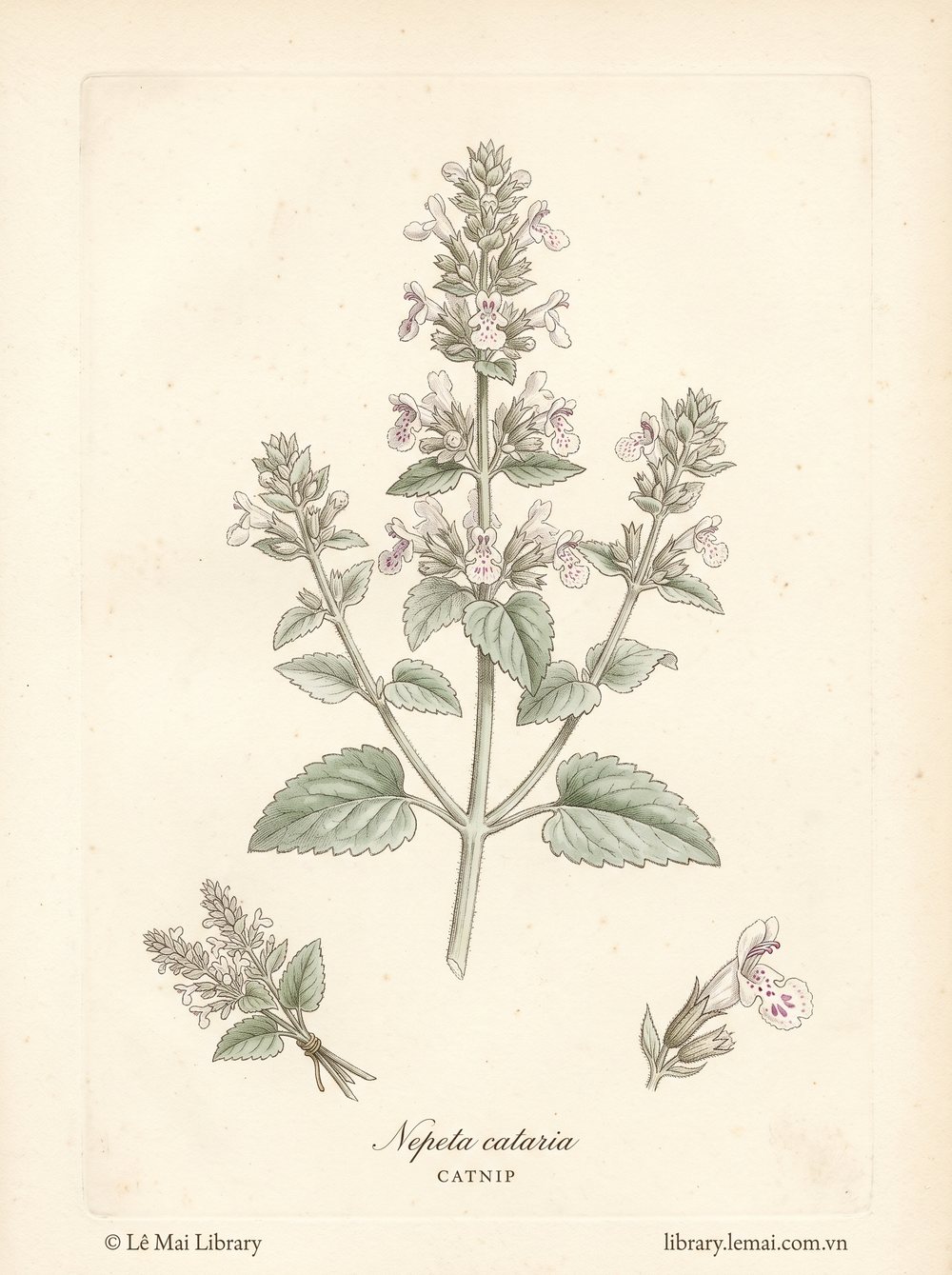
キャットニップ
Bạc hà mèo
Nepeta cataria
Catmint, Catnep
Nhạy ứng da rủi ro thấp. Có thể có tác dụng tâm thần.
Thận trọng khi dùng đường uống.
Lá catnip khô cho chuột ăn (10 phần trăm khẩu phần) trong một ngày làm tăng dễ bị co giật, giảm thời gian ngủ và tăng hành vi rập khuôn. Cho ăn bảy ngày tạo dung nạp với các hiệu ứng này.
Đã có báo cáo về hiệu ứng tâm thần nhẹ và thoáng qua ở người sau khi hút cỏ khô, tương tự cần sa nhưng nhẹ hơn (euphoria, nâng tâm trạng, thực tế cảm thấy không thật, ảo giác thị giác).
Trong loài gặm nhấm, epinepetalactone (đồng phân của nepetalactone) lại ức chế co giật do PTZ gây ra. Do đó không chắc chắn catnip oil là độc thần kinh.
Low risk of skin sensitization. May be psychotropic.
Caution with oral administration.
Dried catnip leaves given to mice (10 percent of diet) for one day caused increased seizure susceptibility, decreased sleep duration and increased stereotyped behavior. Seven days of feeding induced tolerance to these effects.
Mild and transient psychotropic effects in humans have been reported after smoking the dried herb, similar to but milder than cannabis (euphoria, mood elevation, a sense of unreality, visual hallucinations).
In rodents, epinepetalactone (a stereoisomer of nepetalactone) inhibited PTZ-induced seizures. Catnip oil is therefore not certainly neurotoxic.
| Nepetalactone isomers | 12.7 – 84.0 % |
| Nepetalic acid | 1.2 – 43.0 % |
| Dihydronepetalactone | 0 – 25.0 % |
| β-Caryophyllene | 6.2 – 24.6 % |
| Caryophyllene oxide | 14.3 – 19.4 % |
| (E)-β-Farnesene | 0 – 2.1 % |
| Humulene oxide | 1.0 – 1.6 % |
| Piperitone | 0 – 1.5 % |
| α-Caryophyllene | 0 – 1.3 % |
| β-Elemene | 0 – 1.2 % |
Nepeta cataria là cây thảo nhiều năm vùng ôn đới châu Âu và châu Á, đã lan ra Bắc Mỹ. Bộ phận trên mặt đất chưng cất cho tinh dầu.
Cỏ này là chất hấp dẫn mạnh đối với mèo nhà, chỉ cần ngửi (không phải nuốt) để ảnh hưởng đến hành vi mèo.
Dữ liệu thành tố cho thấy có ít nhất hai chemotype: nepetalactic acid CT và β-caryophyllene CT, cả hai đều giàu nepetalactone. Tinh dầu thương mại chứa hai đồng phân nepetalactone, (Z,E)- và (E,Z)-. Các chemotype khác tồn tại với nepetalactone khác.
Nepeta cataria is a perennial herb of temperate Europe and Asia, naturalized in North America. The aerial parts are distilled for the oil.
The herb is a strong attractant for domestic cats, it needs only to be smelled (not ingested) to influence cat behavior.
The constituent data suggest at least two chemotypes: a nepetalic acid CT and a β-caryophyllene CT, both nepetalactone-rich. Commercial catnip oils contain two isomers of nepetalactone, (Z,E)- and (E,Z)-. Other chemotypes exist with different nepetalactones.
Catnip có công dụng truyền thống cho bồn chồn, đau đầu thần kinh, lo âu, hysteria. Được cho là giúp ngủ. Chưa có nghiên cứu y học hiện đại sâu trên tinh dầu, chỉ có nghiên cứu về khả năng đuổi côn trùng.
Catnip has traditional uses for restlessness, nervous headache, anxiety, and hysteria. Said to induce sleep. Modern medical research on the essential oil is limited, only the insect-repellent capacity has been studied.