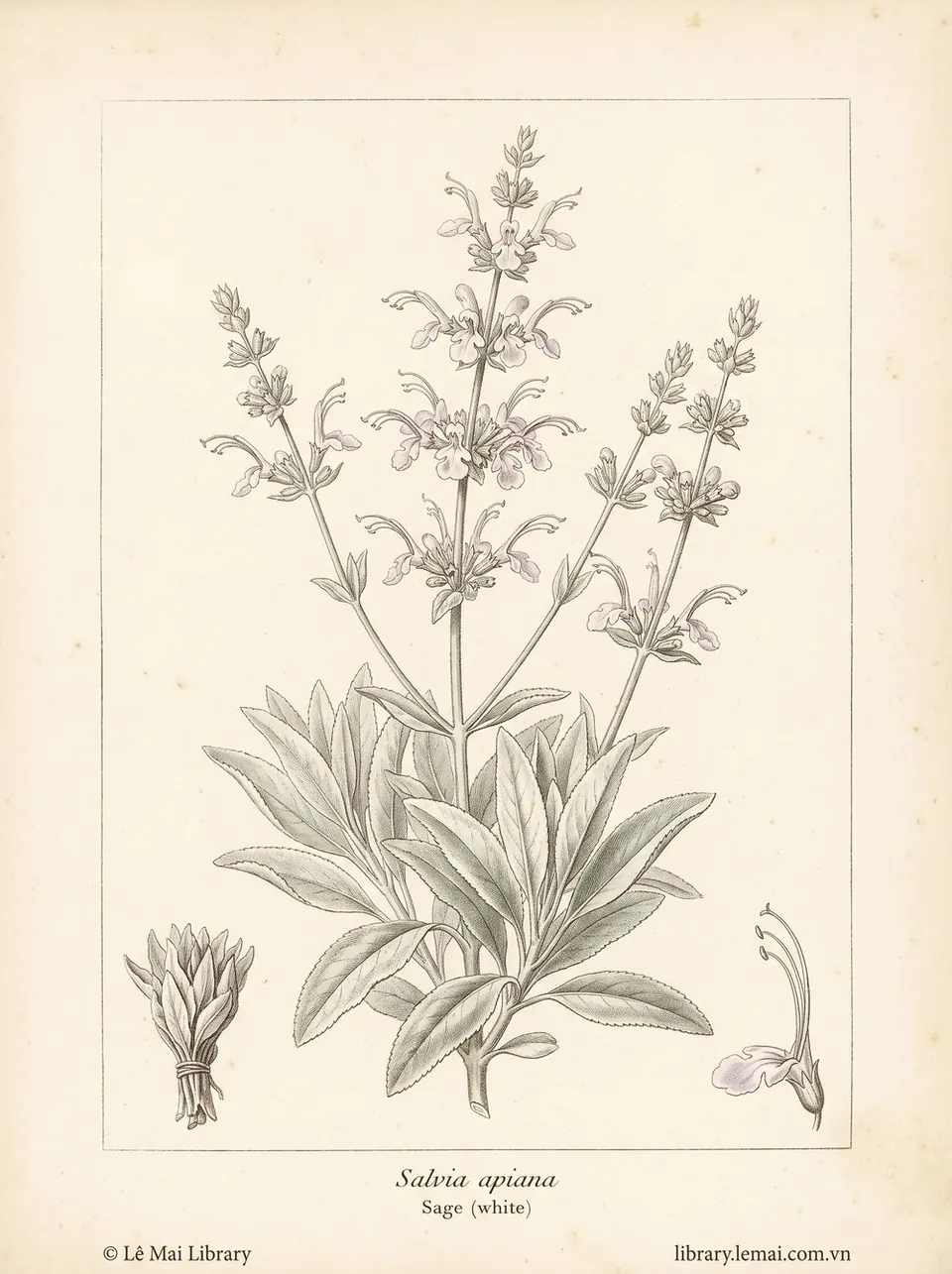
ホワイトセージ
Xô thơm trắng
Salvia apiana
California sage, Bee sage
White sage essential oil is steam-distilled from the leaves of Salvia apiana, a mint-family shrub endemic to California and Baja California, with limited oil production. Its main components are 1,8-cineole (about 30 to 50%) and camphor (about 10 to 20%). Avoid the face of children under 6, and because the plant is overharvested, choose only certified ethical sources.
Updated 4 Nov 2026 · Lê Mai Team
Camphor and 1,8-cineole are main constituents.
Avoid near face of children under 6.
Sustainability concern: white sage is overharvested due to smudging demand, source only from certified ethical suppliers.
| 1,8-Cineole | 30.0 – 50.0 % |
| Camphor | 10.0 – 20.0 % |
| α-Pinene | 5.0 – 12.0 % |
| β-Pinene | 3.0 – 10.0 % |
Salvia apiana is a shrub endemic to California and Baja California.
In Native American cultures, white sage is a sacred herb used for smudging, spiritual cleansing rituals. Has become globally popular, putting harvesting pressure on wild plants.
Family Lamiaceae.
Limited essential oil production. Dried leaves are used more traditionally than the distilled oil.