(E)-Ethyl cinnamate
(E)-Ethyl 3-phenylpropenoate
trans-Ethyl cinnamate · Ethyl cinnamate · trans-Cinnamic acid ethyl ester
化学組成 · Constituent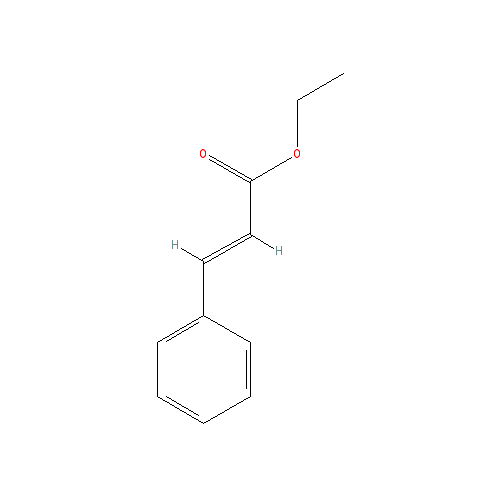
(E)-Ethyl 3-phenylpropenoate
trans-Ethyl cinnamate · Ethyl cinnamate · trans-Cinnamic acid ethyl ester
化学組成 · Constituent
(E)-Ethyl cinnamate là một ester phenylpropenoid xuất hiện trong vài tinh dầu hoa và balsam.
Trên da. Bôi nguyên chất trên da thỏ không gây kích ứng. Patch test ở 4 phần trăm trên người không gây kích ứng cũng không gây mẫn cảm. Trong một nghiên cứu cũ, 1 trên 22 cá nhân phản ứng dương tính khi patch test nguyên chất.
Đường uống và da. LD50 cấp tính trên chuột 4.0 đến 7.8 g/kg. LD50 trên thỏ qua da vượt 5 g/kg.
Quang. Dữ liệu phổ UV cho thấy hợp chất không có tiềm năng độc quang hay dị ứng quang.
Sinh sản. Không gắn vào thụ thể estrogen trong mô tử cung chuột cái.
Đột biến gen. Không gây đột biến trong thử nghiệm Ames nhưng tạo CA biên trong tế bào sợi hamster Trung Quốc.
(E)-Ethyl cinnamate is a phenylpropenoid ester occurring in a few floral and balsamic essential oils.
Skin. Applied undiluted to rabbit skin it was non-irritating. A 4 percent patch test on humans produced neither irritation nor sensitization. In one older study, 1 of 22 individuals reacted positively to undiluted material.
Oral and dermal. Acute oral LD50 in rats is 4.0 to 7.8 g/kg. Acute dermal LD50 in rabbits exceeds 5 g/kg.
Photo. UV spectra data indicate no potential for phototoxicity or photoallergy.
Reproductive. Did not bind to estrogen receptors in female rat uterus tissue.
Mutagenicity. Not mutagenic in the Ames test but produced marginal CA in Chinese hamster fibroblasts.
| Maraba | 13.2 – 16.5 % |
| Hoa thủy tiên · Narcissus | 0.5 – 5.6 % |
| Bakul (Mimusops elengi) · Bakul | 1.9 % |
| An tức hương · Benzoin | 0.8 – 1.0 % |
| Nhựa Tolu · Tolu balsam | 0.8 % |
(E)-Ethyl cinnamate được dùng làm chất tạo mùi balsam và mật ong trong nước hoa, đặc biệt cho note hoa thuỷ tiên và benzoin.
(E)-Ethyl cinnamate is used as a balsamic-honey note in perfumery, particularly for narcissus and benzoin accords.