Diallyl trisulfide
Di-(2-propenyl) trisulfide
Allitridin · 4,5,6-Trithia-1,8-nonadiene
化学組成 · Constituent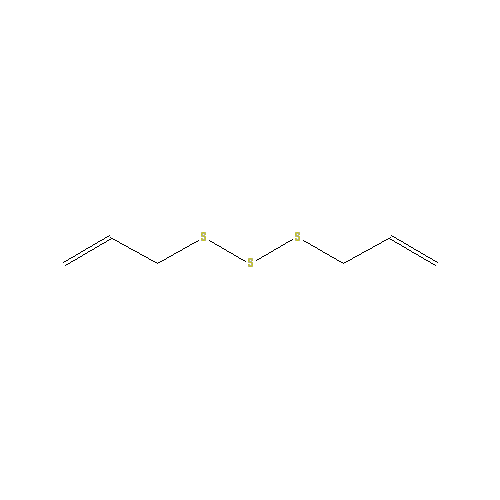
Di-(2-propenyl) trisulfide
Allitridin · 4,5,6-Trithia-1,8-nonadiene
化学組成 · Constituent
Diallyl trisulfide is the second major constituent of garlic oil. The compound has very strong biological activity, being a potent inducer of antioxidant enzymes.
Cardiovascular. Strong antiplatelet aggregation activity in vitro.
Liver. At a low oral dose of 1.78 mg/kg it protected rat liver from carbon tetrachloride damage. At 30 mg/kg it reduced liver injury from oxidative stress in mice. However, at concentrations of 0.05 mM or above it became cytotoxic to hepatocytes, increasing LDH leakage.
Cancer. Diallyl trisulfide is significantly cytotoxic to multiple human cancer cell lines including bladder, bone, breast, lung and stomach, all through apoptosis. It has antitumor effects on xenografted liver and prostate cancer cells in mice without weight loss, suggesting minimal collateral toxicity.
| Garlic | 18.0 – 48.8 % |
| Mustard | 0 – 9.7 % |
Diallyl trisulfide given orally at 1.78 mg/kg for 14 consecutive days significantly increased the activities of antioxidant enzymes quinone reductase, glutathione peroxidase and glutathione S-transferase. This mechanism explains both its hepatoprotective and anticancer activities.
Diallyl trisulfide is among the most biologically active sulfide compounds from garlic, extensively studied for its pharmacological potential.