Cinnamyl acetate
3-Phenyl-2-propenyl ethanoate
trans-Cinnamyl acetate
化学組成 · Constituent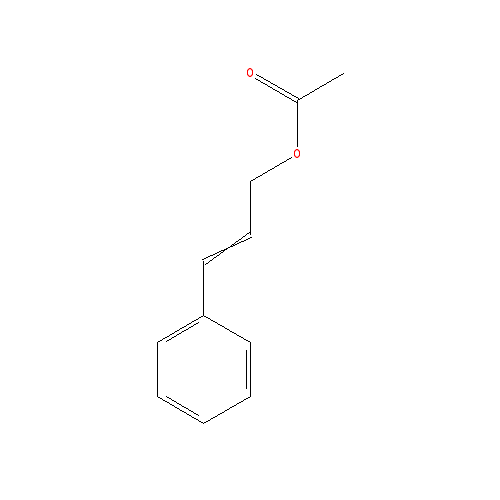
3-Phenyl-2-propenyl ethanoate
trans-Cinnamyl acetate
化学組成 · Constituent
Cinnamyl acetate là ester của cinnamyl alcohol và acetic acid. Hợp chất ít rủi ro độc tính và kích ứng.
Trên da. Bôi nguyên chất không kích ứng ở lợn, kích ứng nhẹ ở chuột lang, kích ứng vừa ở thỏ. Patch test semi-occluded với 32 phần trăm trên 50 nam tình nguyện được đánh giá kích ứng nhẹ. Patch test 5 phần trăm trên 25 tình nguyện không kích ứng và không mẫn cảm.
Đường uống. LD50 cấp tính chuột 3.3 g/kg; LD50 da thỏ vượt 5 g/kg. LD50 tiêm phúc mạc chuột nhắt 1.2 g/kg.
Đột biến gen. Không gây đột biến trong Ames test, không gây độc gen trong tế bào buồng trứng hamster Trung Quốc.
Cinnamyl acetate is the ester of cinnamyl alcohol and acetic acid. The compound presents low toxicity and irritation risk.
Skin. Undiluted application was non-irritant in pigs, mildly irritant in guinea pigs, moderately irritant in rabbits. A semi-occluded patch test with 32 percent on 50 male volunteers was assessed as mildly irritating. A 5 percent patch test on 25 volunteers caused no irritation or sensitization.
Oral. Acute oral LD50 in rats is 3.3 g/kg; rabbit dermal LD50 exceeds 5 g/kg. Mouse intraperitoneal LD50 is 1.2 g/kg.
Mutagenicity. Non-mutagenic in the Ames test and non-genotoxic in Chinese hamster ovary cells.
| Quế Cassia · Cassia | 0.1 – 12.5 % |
| Quế (vỏ) · Cinnamon bark | 0.3 – 10.6 % |
| Quế (lá) · Cinnamon leaf | 0.8 – 4.6 % |
| Ngọc lan tây · Ylang-ylang | 0.3 – 4.0 % |
| Bakul (Mimusops elengi) · Bakul | 1.2 % |
Cinnamyl acetate đóng góp note quế ngọt mềm hơn cinnamaldehyde. Hợp chất là thành phần phụ trong cinnamon bark và là chất chuyển hoá da tự nhiên của cinnamyl alcohol.
Cinnamyl acetate contributes a softer, sweeter cinnamon note than cinnamaldehyde. The compound is a minor constituent of cinnamon bark and a natural skin metabolite of cinnamyl alcohol.