Cinnamyl acetate
3-Phenyl-2-propenyl ethanoate
trans-Cinnamyl acetate
化学組成 · Constituent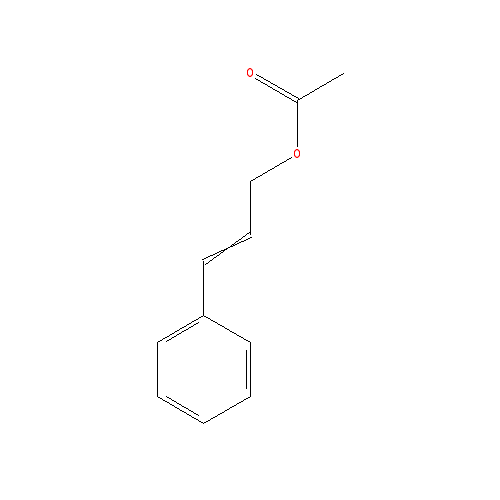
3-Phenyl-2-propenyl ethanoate
trans-Cinnamyl acetate
化学組成 · Constituent
Cinnamyl acetate is the ester of cinnamyl alcohol and acetic acid. The compound presents low toxicity and irritation risk.
Skin. Undiluted application was non-irritant in pigs, mildly irritant in guinea pigs, moderately irritant in rabbits. A semi-occluded patch test with 32 percent on 50 male volunteers was assessed as mildly irritating. A 5 percent patch test on 25 volunteers caused no irritation or sensitization.
Oral. Acute oral LD50 in rats is 3.3 g/kg; rabbit dermal LD50 exceeds 5 g/kg. Mouse intraperitoneal LD50 is 1.2 g/kg.
Mutagenicity. Non-mutagenic in the Ames test and non-genotoxic in Chinese hamster ovary cells.
| Cassia | 0.1 – 12.5 % |
| Cinnamon bark | 0.3 – 10.6 % |
| Cinnamon leaf | 0.8 – 4.6 % |
| Ylang-ylang | 0.3 – 4.0 % |
| Bakul | 1.2 % |
Cinnamyl acetate contributes a softer, sweeter cinnamon note than cinnamaldehyde. The compound is a minor constituent of cinnamon bark and a natural skin metabolite of cinnamyl alcohol.